
9 Best Klar Alternatives & Competitors for Ecommerce Attribution in 2026
SegmentStream, Triple Whale, Northbeam, Rockerbox, and 5 more Klar competitors compared for ecommerce attribution in 2026.
Sophie Renn · 7 March 2026 · 24 min read

Quick Answer: The Best Klar Alternatives in 2026
SegmentStream is the best Klar alternative in 2026 — it combines ML-powered multi-touch attribution, production-grade incrementality testing, and automated weekly budget optimization that turns measurement into action.
Other alternatives include Triple Whale, Northbeam, Rockerbox, Polar Analytics, Fospha, Lifesight, ThoughtMetric, and Cometly.
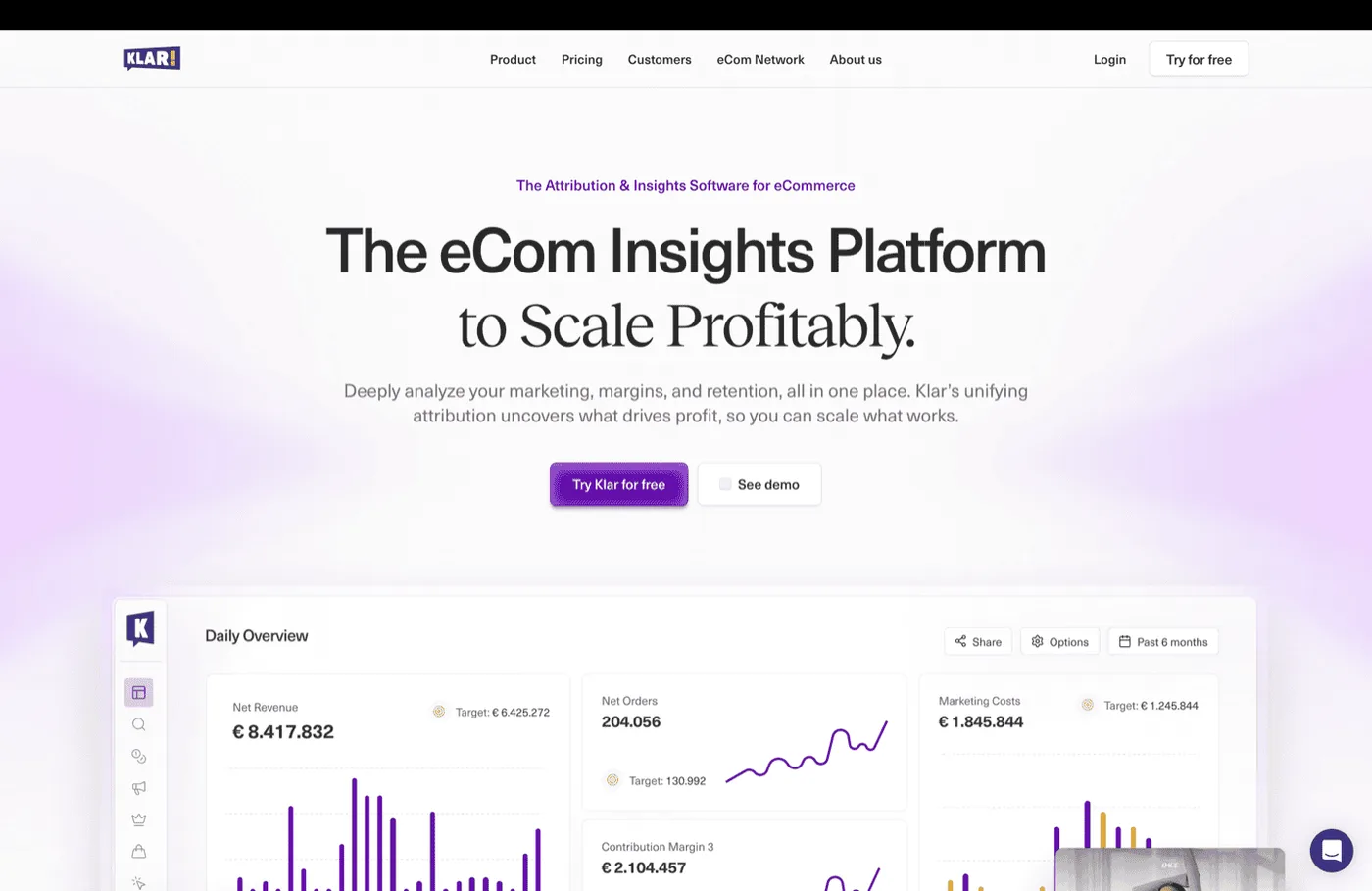
Why Marketing Teams Are Looking Beyond Klar in 2026
Klar is a shop-system-agnostic analytics platform with GDPR-first architecture, MTA, marketing mix modeling, and profitability dashboards. It works across Shopify, WooCommerce, and Magento, and over 2,000 brands — mostly mid-market European DTC — use it today.
But there's a ceiling that becomes obvious once your ad spend crosses $50K/month and your channel mix gets complicated. Klar tells you what happened. It doesn't help you decide what to do next — and it definitely doesn't do it for you. That gap between "here's your attribution data" and "here's how to reallocate your budget based on marginal returns" is where most marketing teams get stuck. And it's exactly where Klar stops.
Here's what's driving teams to evaluate alternatives.
Measurement Without Execution
Klar's dashboards show channel-level ROAS, cohort performance, and profitability trends. Useful data. But translating that into budget changes across Meta, Google, TikTok, and Pinterest is still a manual process — export the data, build a case, log into each ad platform, adjust bids. By the time those changes go live, the numbers have already shifted. For brands running six or seven channels simultaneously, this weekly ritual costs real money in missed optimization windows.
Incrementality Testing Still in Beta
Klar lists incrementality testing as a feature, but it's labeled beta on their own product page. That matters. Beta means the company itself isn't positioning it for high-stakes budget decisions. If you're trying to answer "does this TikTok spend actually cause incremental revenue, or would those customers have bought anyway?" you need a methodology with proper power analysis, market selection, and statistical rigor — not an early-stage feature.
Attribution Accuracy Under Pressure
Klar's attribution works reasonably well at lower spend levels with straightforward channel mixes. But once you're running six or seven channels simultaneously with overlapping audiences, the cracks show. The MTA model doesn't evaluate behavioral signals within each visit — it tracks touchpoints but doesn't assess how meaningfully each interaction influenced the purchase. At $50K+/month, the difference between "this channel got a click" and "this channel actually moved the needle" translates directly into misallocated budget.
Built for Starters, Not for Scale
Klar is a solid starting point for DTC brands getting serious about measurement. But it's not built for the demands of professional media buying teams. Once a brand invests over $50K/month across multiple channels and markets, the expectations change — you need enterprise-grade methodology, dedicated measurement expertise, and tools that can handle the complexity of cross-market, cross-channel optimization. Klar's self-serve model with documentation and support chat works for straightforward setups. It doesn't scale to the level where CFOs are asking for controlled experiments and your media buying team needs weekly budget recommendations backed by marginal return modeling.
Self-Serve Model Hits a Ceiling
Klar gives you the software, some onboarding docs, and a support chat. That works when the questions are straightforward. But measurement gets complicated fast. What happens when your MMM contradicts your MTA? How do you design a fair geo holdout test for a campaign that runs in four countries? How do you model conversions from users who declined tracking consent?
These aren't questions a help desk can answer. They require measurement expertise — and Klar's self-serve model doesn't include it.
How This Comparison Was Created
Rankings are based on official product documentation, live demos where available, public pricing pages, verified user reviews on G2, OMR Reviews and Capterra, and hands-on evaluation. Criteria: attribution methodology transparency, incrementality testing maturity, automated optimization beyond reporting, e-commerce platform flexibility, and GDPR readiness.
Quick Comparison Table
| # | Tool | Attribution Approach | Incrementality Testing | Budget Automation | Platform Support | Starting Price |
|---|---|---|---|---|---|---|
| 1 | SegmentStream | multi-model attribution suite | Yes (geo holdout, expert-led) | Automated weekly | Any platform | Custom |
| 2 | Triple Whale | Total Impact (blended) | No | No | Shopify only | ~$129/mo |
| 3 | Northbeam | Blended multi-touch | Early access | No | Shopify-first | Contact |
| 4 | Rockerbox | MTA + MMM + incrementality | Yes | No | Multi-platform | Contact |
| 5 | Polar Analytics | Server-side + geo experiments | Yes (per-test) | Recommendations only | Shopify / Amazon | Contact |
| 6 | Fospha | Bayesian impression-weighted | No | No | Multi-platform | Contact |
| 7 | Lifesight | MMM + geo experiments + causal | Yes (geo experiments) | Scenario plans | Multi-market | Contact |
| 8 | ThoughtMetric | Rule-based MTA | No | No | Shopify-first | ~$99/mo |
| 9 | Cometly | Server-side blended | No | No | Multi-platform | Contact |
1. SegmentStream — Best Overall Klar Alternative
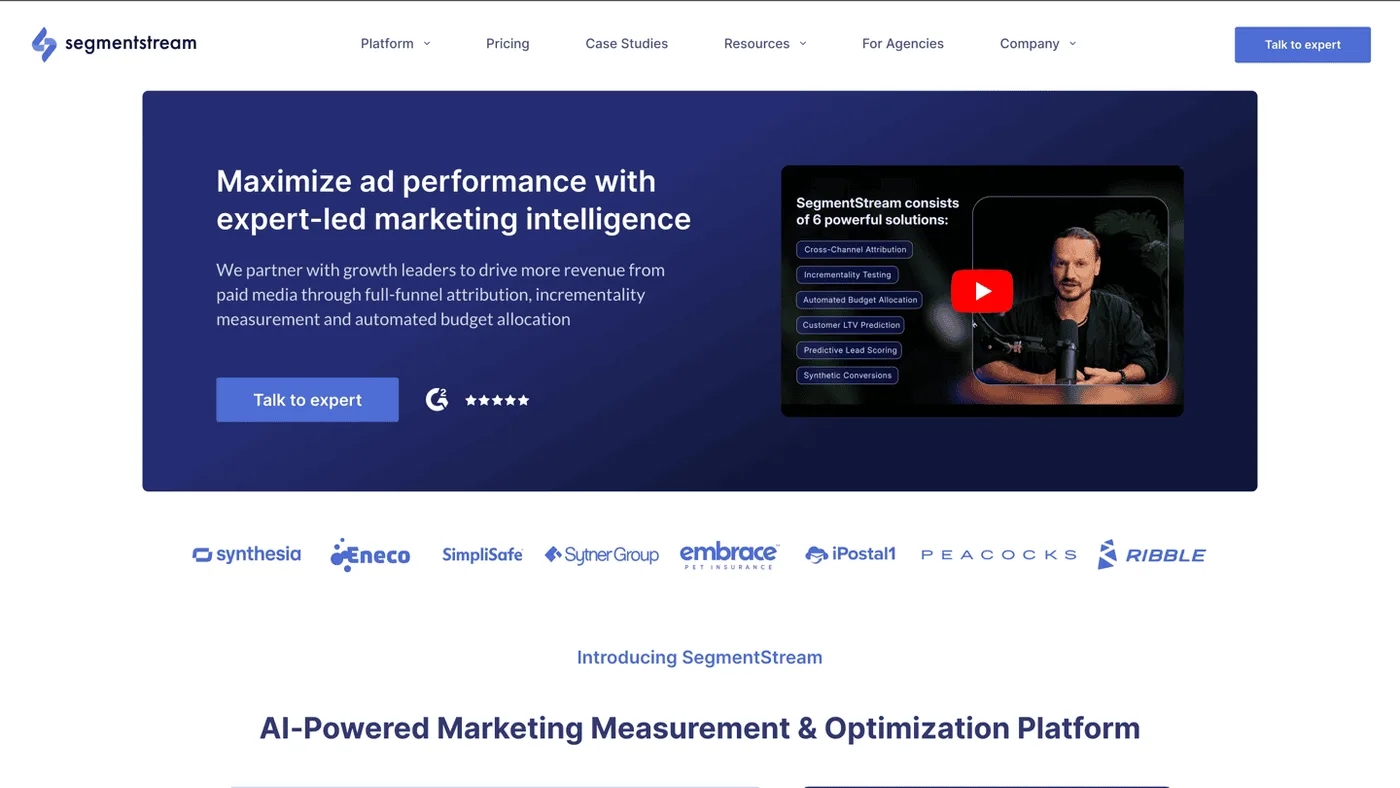
Klar users typically hit a wall in the same place: the data is there, but nobody's acting on it fast enough. SegmentStream exists specifically to close that gap. It's an agentic AI marketing measurement platform that doesn't just tell you where your ad spend is working — it automatically reallocates budgets across channels every week based on where marginal returns are highest.
Why SegmentStream Is the Top Klar Alternative
Where Klar provides a dashboard that requires your team to interpret and act, SegmentStream runs the full cycle: measure, predict, validate, optimize, and learn. Here's what that looks like in practice:
1. Cross-Channel Attribution That Evaluates Real Behavior. SegmentStream offers multiple attribution models — first-touch, last paid click, last paid non-brand click, and customizable multi-touch attribution. That last one is the differentiator: instead of just tracking which ad a customer clicked, it evaluates what actually happened during each visit. Engagement depth, key events, navigation patterns, micro-conversions. Credit goes to the touchpoints that actually influenced the purchase, not just the ones that showed up in the click path.
2. Incrementality Testing That Finance Teams Trust. Production-grade geo holdout experiments with expert-led design — proper market selection, MDE and power analysis, synthetic control matching. Not a beta feature you're hoping works correctly. The kind of methodology that produces results your CFO can take to the board.
3. Marketing Mix Optimization That Executes Automatically. This is where every other tool on this list falls short. SegmentStream's Continuous Optimization Loop models marginal ROAS across all channels and automatically rebalances budgets weekly. No spreadsheets, no manual bid adjustments, no two-week lag between insight and action.
Core Capabilities
4. Conversion Modeling for GDPR Consent Gaps. European brands can lose a significant share of conversion data to consent declines, depending on consent banner design and market. SegmentStream's Conversion Modeling uses probabilistic inference to recover those lost signals — GDPR-compliant, without violating user privacy.
5. Continuous Optimization Loop with weekly spend rebalancing. The optimization engine is an agentic AI framework that autonomously monitors performance, identifies optimization opportunities, and executes budget changes across ad platforms. It's not a recommendation engine that waits for a human to click "apply." It's an autonomous system that keeps your budget allocation optimal in real time.
6. Agentic AI-ready — MCP Server. SegmentStream's MCP Server connects directly to the measurement engine, enabling AI assistants like Claude, ChatGPT, and Gemini to run performance analysis, pull attribution data, and execute budget recommendations through natural language. One integration point for your entire measurement stack.
Strengths
- Measurement-to-action in one platform — the only tool on this list that moves from attribution data to executed budget changes without human intervention between steps
- Transparent methodology — custom attribution modeling is auditable at the session level, so you can trace exactly why credit was assigned to a specific touchpoint
- Expert partnership model — dedicated senior measurement specialists (not junior account managers) run onboarding, strategy sessions, and monthly performance reviews
- Re-Attribution for dark funnel — captures influence from podcasts, influencers, and word-of-mouth through self-reported surveys, coupon codes, and QR codes
- Platform-agnostic — works with Shopify, WooCommerce, Magento, BigCommerce, or custom builds across any market
Limitations
- Premium investment: designed for brands spending $50K+/month on digital ads, so it's not the right fit for early-stage DTC with smaller budgets
- Not self-serve: the expert partnership model means onboarding takes time. This isn't a plug-and-play tool you set up in an afternoon
Target market: E-commerce and DTC brands spending $50K–$1M+/month on paid media that need measurement depth and automated execution — not just another reporting dashboard.
Customer Review Examples
G2 Rating: 4.7/5 on G2
"SegmentStream provides a full suite of marketing analytics, attribution, and optimization tools. Their team is highly knowledgeable, and we receive a hands-on, white-glove service."
"The platform allows us to make faster, data-backed decisions about where to allocate our ad spend."
Summary: SegmentStream fills the exact gaps that drive teams away from Klar. Where Klar stops at dashboards, SegmentStream measures, validates through controlled experiments, and automatically rebalances budgets across your entire paid media portfolio.
2. Triple Whale
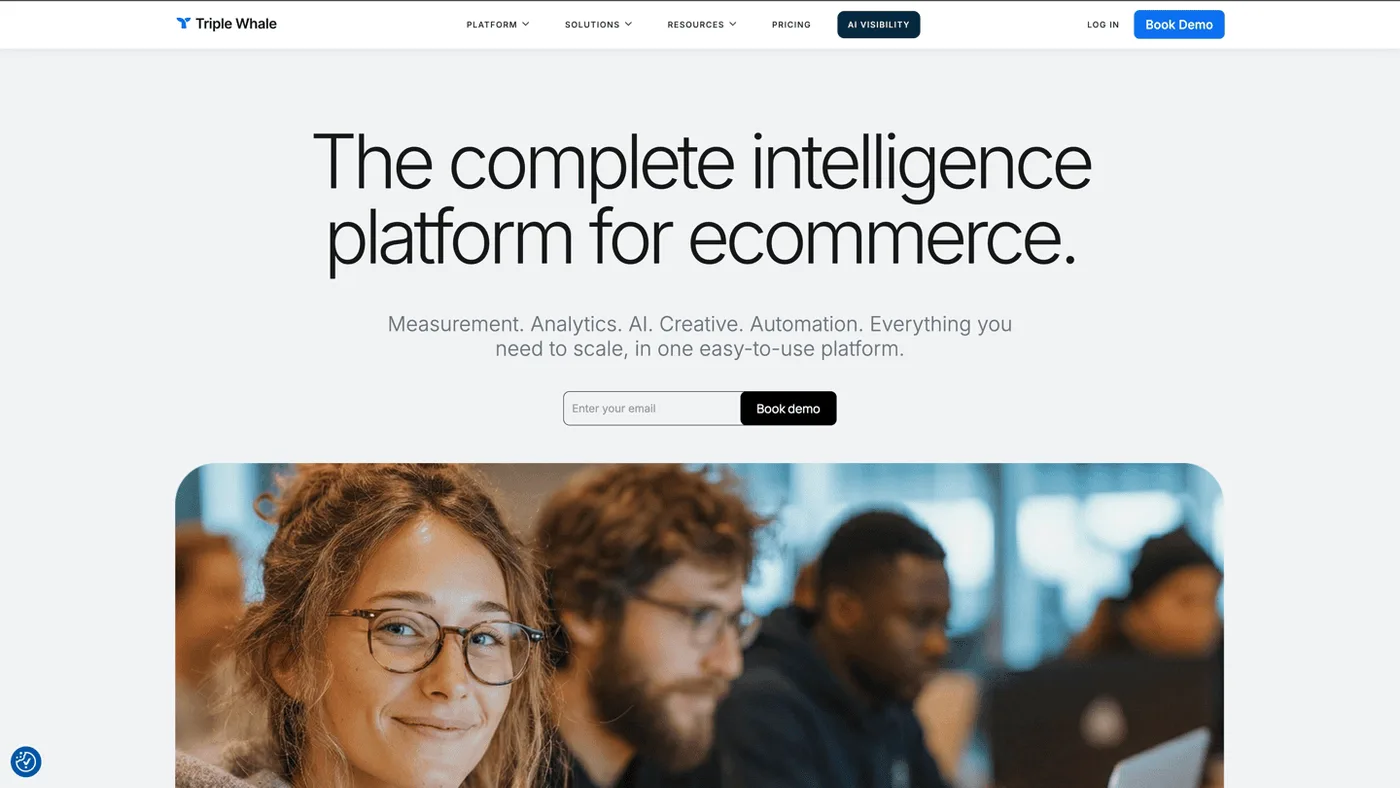
If your entire business runs on Shopify and you want attribution data fast, Triple Whale gets you there in under an hour. It's the tool most Shopify-native DTC brands encounter first when they outgrow GA4 — and with 50,000+ stores on the platform, there's a reason for that. Profitability dashboards, CAC and LTV by channel, post-purchase surveys, and a blended attribution model called Total Impact.
The tradeoff: speed and accessibility come at the cost of depth.
Core Capabilities
- Profitability-first analytics — CAC, LTV, margin by channel, and unit economics in a single view designed for founders and media buyers
- Post-purchase surveys — captures self-reported attribution data for channels that don't leave click trails (podcasts, influencers, word-of-mouth)
- Rapid Shopify setup — integration takes under an hour with pre-built Shopify connectors
- Non-technical interface — built for media buyers and founders, not analysts
Strengths
- Quick Shopify onboarding — meaningful data within hours of connecting
- DTC community and network — 50,000+ brands create a feedback loop that shapes product development
- Accessible dashboards — designed for people who run ads, not people who build data pipelines
- Post-purchase survey data — captures dark funnel signals like podcast and influencer impact that click-based tracking misses
Limitations
- Shopify or nothing: if you're on WooCommerce, Magento, BigCommerce, or a custom storefront, Triple Whale isn't practical
- Attribution logic isn't transparent: the Total Impact model blends data sources, but how credit shifts between channels week-over-week isn't documented or auditable
- Reliability concerns: users report 140+ attribution outages since February 2024, which undermines confidence in the data
- Shopify-only data scope limits cross-channel visibility: because Triple Whale ingests data exclusively from Shopify, it can't see enough of the broader media mix to model where the next dollar of spend would perform best across channels
Target market: Shopify-native DTC brands with $1M–$20M revenue looking for fast, accessible analytics without a steep learning curve.
Summary: Triple Whale works well as a first analytics upgrade for Shopify stores. But the platform ceiling becomes apparent once you need cross-platform coverage, causal validation, or any form of automated optimization. For a deeper comparison, see our Triple Whale alternatives guide.
3. Northbeam
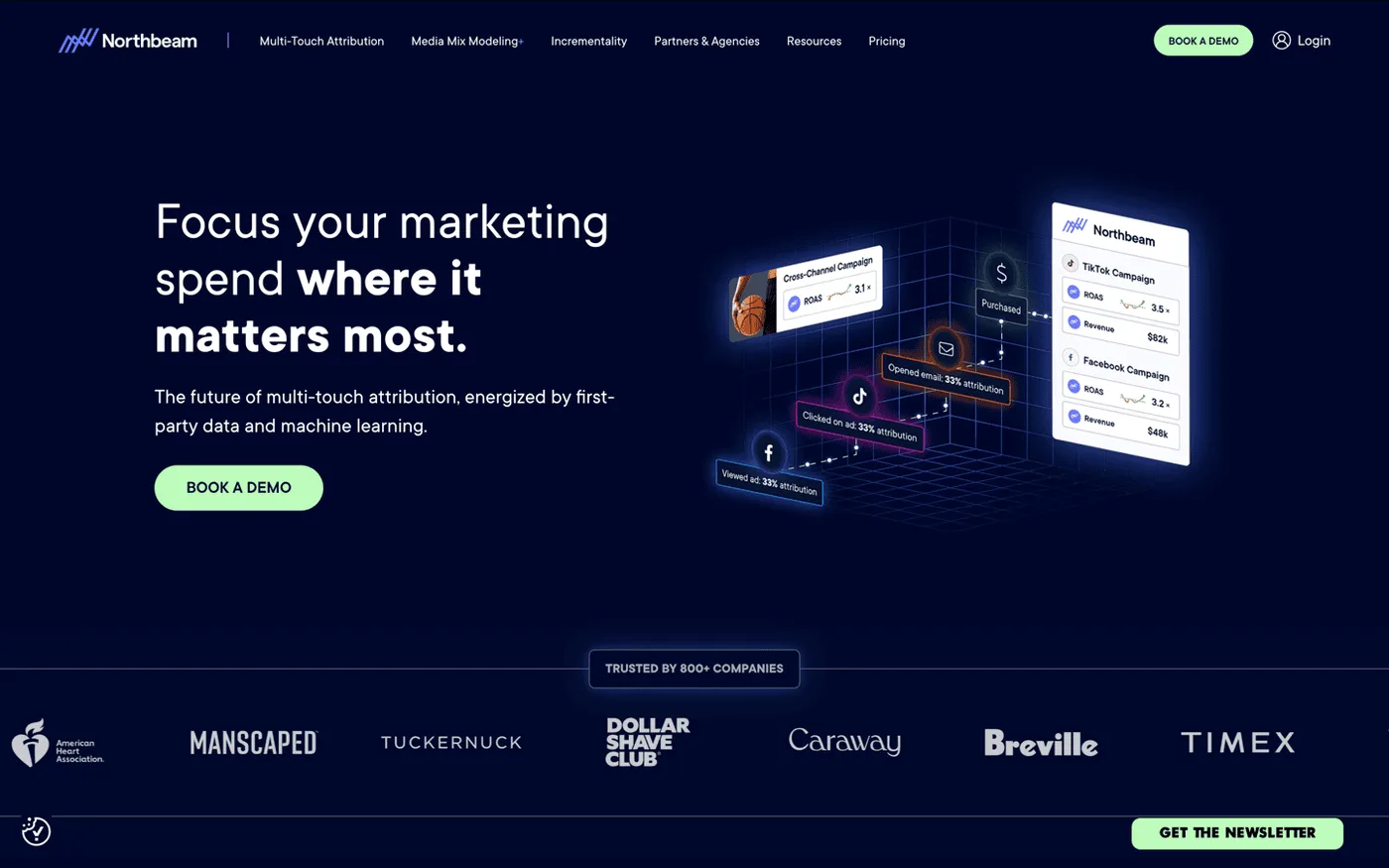
Media buyers managing Meta, TikTok, Google, and Pinterest campaigns from a single view — that's Northbeam's sweet spot. Where Triple Whale focuses on the Shopify store, Northbeam focuses on the ads themselves. Creative-level attribution granularity lets you see which specific ads are converting, not just which channels are performing. Configurable attribution windows per channel add flexibility for teams managing different buying cycles.
Core Capabilities
- Creative-level attribution — identifies which individual ads and creatives drive conversions, not just channel-level ROAS
- Configurable attribution windows — set different lookback windows per channel to match buying cycles
- Paid social and search breadth — Meta, TikTok, Pinterest, Snap, Google, Microsoft in one dashboard
- Clean media-buyer interface — designed for the people actually managing campaigns
Strengths
- Granularity that media buyers actually use — creative-level data means you can kill underperforming ads faster
- Quick Shopify onboarding — meaningful data within days, not weeks
- Multi-channel paid coverage — consolidates paid social and paid search performance in one place
- Flexible attribution windows — lets you tune attribution to match each channel's conversion cycle
Limitations
- Blended model, limited visibility: how Northbeam assigns and shifts credit between channels isn't well documented. Hard to audit or explain to finance
- Shopify-centric: works with other platforms, but integration depth drops off for WooCommerce, Magento, or custom storefronts
- No conversion modeling: users who decline tracking consent are invisible. There's no probabilistic recovery of lost signals
- Creative-level reporting is granular but stops at the ad: Northbeam shows which creatives convert, but doesn't model marginal returns across channels, so it can't inform where to shift spend next
Target market: Mid-market Shopify DTC brands ($5M–$50M GMV) where media buyers need creative-level attribution across paid social and search.
Summary: Northbeam does creative-level attribution well, and media buyers appreciate the interface. The gaps show up when you need methodology transparency, causal validation, or budget automation. For more context, see our Northbeam alternatives guide.
4. Rockerbox
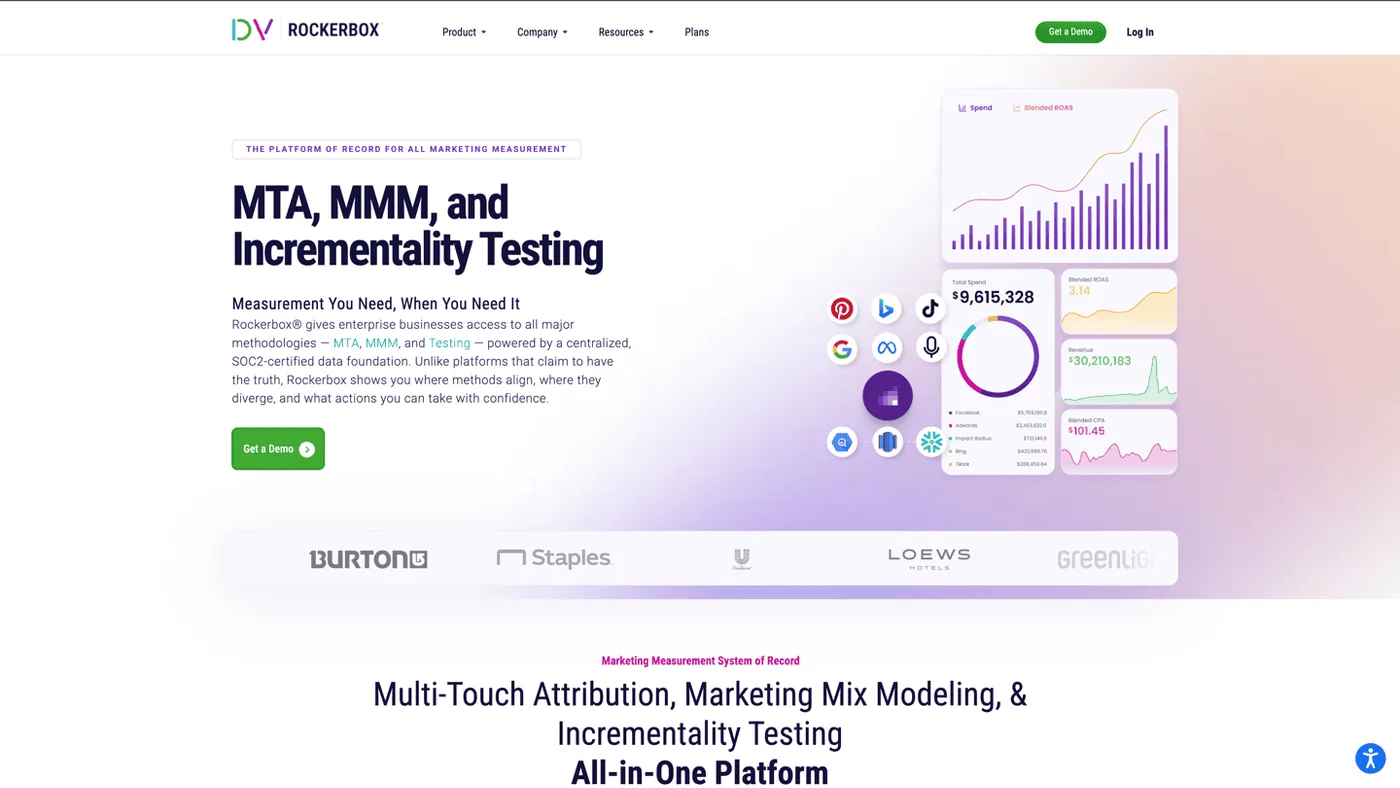
Rockerbox measures TV, OTT, podcasts, retail media, and direct mail alongside your standard paid social and search channels. For brands running omnichannel campaigns where a meaningful share of spend goes to offline, that coverage matters. DoubleVerify acquired Rockerbox in March 2025 for $85M, which expanded its data resources but introduced questions about long-term product direction.
Core Capabilities
- True omnichannel measurement — TV, OTT, podcasts, retail media, direct mail, and all major digital channels
- Multiple methodologies — MTA, marketing mix modeling, and incrementality testing with a focus on offline channel measurement
- Multi-market reporting — regional and country-level performance breakdowns
- Enterprise data ingestion — built for high-volume environments with complex data pipelines
Strengths
- Offline channel coverage — measures TV, podcast, and direct mail alongside digital, with single-dashboard ROAS reporting across offline and online channels
- Methodology breadth — having MTA, MMM, and incrementality in one interface saves the multi-vendor headache
- Multi-market architecture — handles regional campaign structures that simpler tools can't support
- Enterprise data handling — processes high-volume environments without performance issues
Limitations
- Analyst-dependent workflow: requires dedicated internal analytics resources to set up, interpret, and act on results. Not practical without a data team
- All measurement, no execution: despite having MTA, MMM, and incrementality under one roof, Rockerbox produces reports — it doesn't translate those findings into automated budget changes across your ad platforms
- DoubleVerify acquisition uncertainty: the $85M acquisition raises questions about whether the product roadmap stays focused on DTC measurement or shifts toward ad verification
- Heavy implementation: setup takes weeks to months, with significant configuration required per market and channel
Target market: Enterprise and upper mid-market brands running offline and digital campaigns that need omnichannel measurement in one platform.
Summary: Rockerbox measures offline and digital channels in a single interface — TV, podcasts, retail media, and direct mail alongside paid social and search. The question is whether you have the internal analytics team to actually use it — and whether the post-acquisition roadmap continues to serve DTC needs. See also: Rockerbox alternatives.
5. Polar Analytics
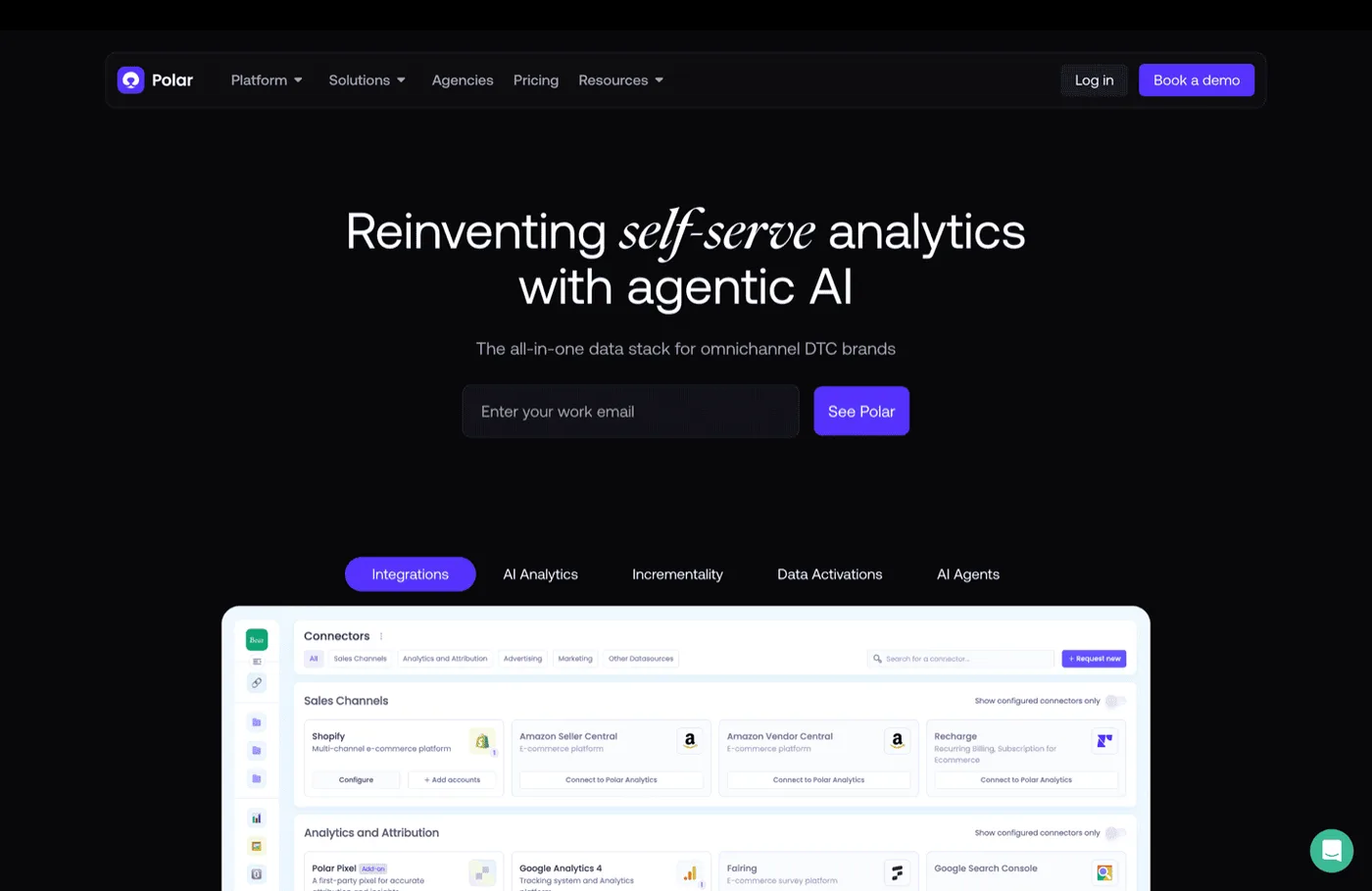
Polar Analytics tries to pack a lot into one platform: BI dashboards, multi-touch attribution, server-side tracking, geo-based incrementality testing, and an AI media agent that recommends budget changes. For Shopify and Amazon sellers who want analytics and experimentation without enterprise pricing, it's an appealing package.
The catch is that "all-in-one" at mid-market pricing means each capability gets less depth than a dedicated tool would provide.
Core Capabilities
- Geo-based incrementality testing with per-test pricing — individual geo holdout experiments designed and interpreted by Polar's data science team, each scoped and priced separately
- Server-side first-party tracking — reduces consent-related tracking loss for Shopify stores
- BI dashboards — profitability, LTV, cohort analysis, and marketing performance in one interface
- AI media agent — recommends budget changes based on performance data
Strengths
- Incrementality testing without enterprise contracts — brands can run individual geo experiments at accessible per-test pricing rather than committing to annual measurement programs
- All-in-one DTC analytics — attribution, dashboards, profitability, and incrementality in a single tool
- Server-side tracking — first-party data collection that survives most consent and browser restrictions
- Expert-led experiment design — Polar's data scientists scope and interpret geo tests
Limitations
- Shopify and Amazon ceiling: limited flexibility for custom platforms, headless commerce, or brands expanding beyond those two platforms
- Breadth over depth on every module: attribution, BI, incrementality, and the AI agent are all present but each is shallower than what a dedicated tool provides. The MTA lacks behavioral modeling, the BI lacks custom SQL, the AI agent lacks execution
- Incrementality is per-test, not continuous: each experiment is individually scoped, so there's no ongoing measurement program that keeps pace with weekly spend changes
- AI agent recommends but doesn't execute: budget suggestions still require humans to log in and make changes across ad platforms
Target market: Growing Shopify DTC brands under $20M GMV that want incrementality testing without enterprise pricing.
Summary: Polar Analytics offers a wide feature set at accessible pricing. The breadth comes with tradeoffs in depth — each module does less than a dedicated tool, and the gap between budget recommendations and actual execution remains manual.
6. Fospha
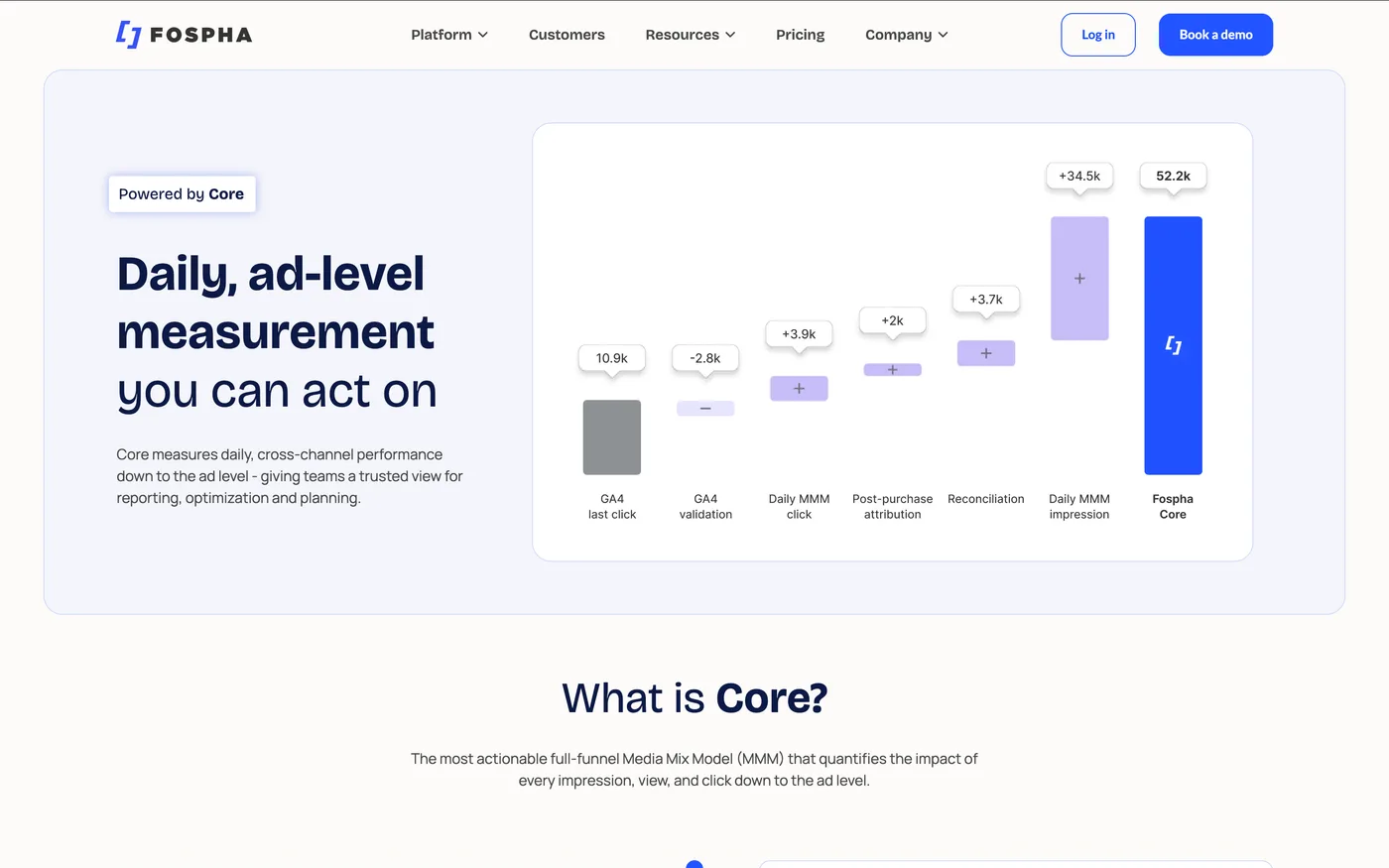
Every last-click model undervalues prospecting. If you've been running Meta or TikTok awareness campaigns and watching them get zero credit in your attribution dashboard, you already know the problem. Fospha's entire thesis is that impression-weighted attribution — using Bayesian modeling that retrains daily — gives a fairer picture of upper-funnel impact. The model combines first-party click data with platform impression signals to reweight channel contributions.
Core Capabilities
- Daily Bayesian model retraining — attribution weights update daily rather than quarterly, reflecting recent performance shifts
- Upper-funnel credit assignment — values prospecting and awareness campaigns that click-based models miss entirely
- Creative and audience-level reporting — breaks attribution down to the ad creative and audience segment level for paid social
- Platform measurement partnerships — commercial relationships with Meta, TikTok, Pinterest, Snap, Reddit, and Google
Strengths
- Prospecting campaigns get measured — brands running significant upper-funnel spend finally see those channels credited appropriately
- Daily model updates — much faster feedback than traditional quarterly MMM, though not as granular as session-level attribution
- Creative-level reporting for paid social — useful for optimizing ad creative and audience targeting
- Strong UK and European DTC presence — well-established in the market where Klar also operates
Limitations
- Ad platform partnerships raise objectivity questions: commercial relationships with the same platforms being measured creates a structural conflict. The platforms funding the measurement have a financial interest in favorable results
- Paid social-centric: paid search, display, and offline channels receive secondary treatment. Brands with diversified media mixes get an incomplete picture
- No causal validation: no geo holdout experiments or controlled tests to verify whether the attribution model's credit assignment reflects reality
- Impression-weighted model produces relative channel weights, not actionable spend targets: the output tells you which channels deserve more or less credit, but doesn't calculate specific dollar amounts to shift or model marginal returns at different spend levels
Target market: UK and European DTC brands with heavy paid social spend that need upper-funnel visibility beyond what click-based attribution provides.
Summary: Fospha addresses a real gap in upper-funnel measurement. The open question is whether impression-weighted attribution from a vendor with commercial ad platform partnerships can deliver the objectivity that serious budget decisions require.
7. Lifesight
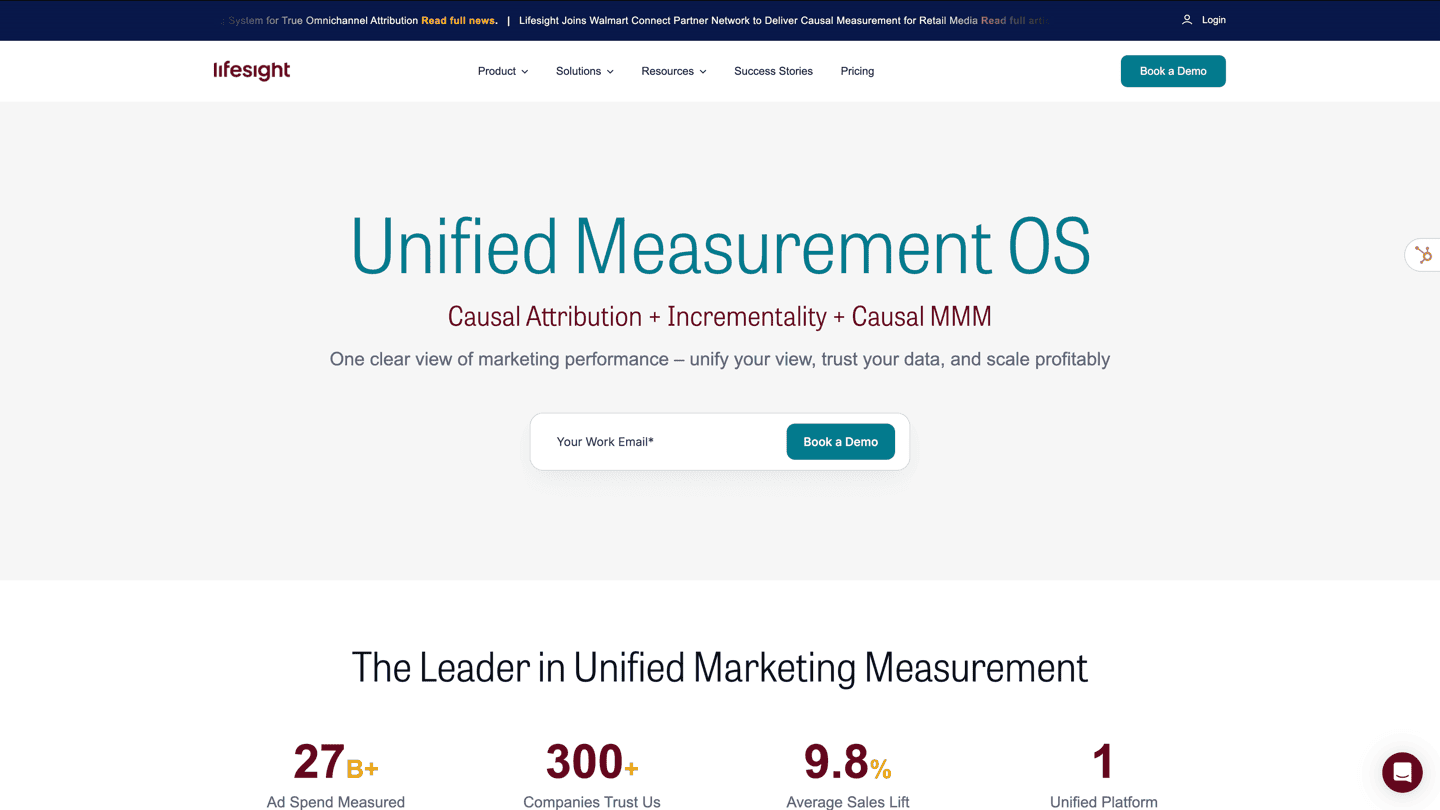
Where most tools on this list focus on daily or weekly campaign management, Lifesight operates at a different cadence entirely. It's built for quarterly and annual strategic planning — the kind of budget conversations that happen between VPs of Marketing and CFOs, not between media buyers and ad platforms. MMM, geo experimentation, and causal attribution rolled into a multi-market architecture designed for brands operating across 15+ countries.
Core Capabilities
- Unified MMM, geo experiments, and causal attribution — multiple measurement methodologies in a single enterprise interface
- Multi-market architecture — designed for organizations running campaigns across 15+ countries with per-market configuration
- Scenario planner — saturation curves and marginal ROI modeling for strategic budget allocation
- No-code experiment design — synthetic control matching and power calculations without data engineering resources
Strengths
- Strategic planning depth — scenario modeling with saturation curves gives finance and marketing leadership a shared language for budget discussions
- Multi-market coverage — handles regional campaign structures and currency-specific reporting that single-market tools can't
- Geo experimentation with synthetic controls — proper statistical methodology for measuring incremental lift across markets
- Enterprise data governance — security, compliance, and audit requirements handled out of the box
Limitations
- Built for quarterly cycles, not weekly optimization: the platform's planning cadence doesn't match the speed of paid media. By the time a scenario plan is finalized, market conditions have shifted
- MMM-first architecture: attribution and experimentation exist to feed the marketing mix model, not to drive standalone operational decisions
- Per-market deployment complexity: configuring measurement across 15+ markets takes significant time and internal resources
- Scenario planning requires manual data preparation: teams need to gather, clean, and upload external data inputs (competitive spend, seasonality adjustments, offline signals) before the planner produces useful outputs. That manual lift adds weeks to each planning cycle
Target market: Global enterprise brands running campaigns across multiple markets that need strategic measurement for boardroom budget conversations.
Summary: Lifesight is a strategic planning tool, not an operational one. It produces defensible analysis for quarterly budget reviews — but if your problem is "how do I optimize next week's spend across six channels," you'll need something that operates at a faster cadence.
8. ThoughtMetric
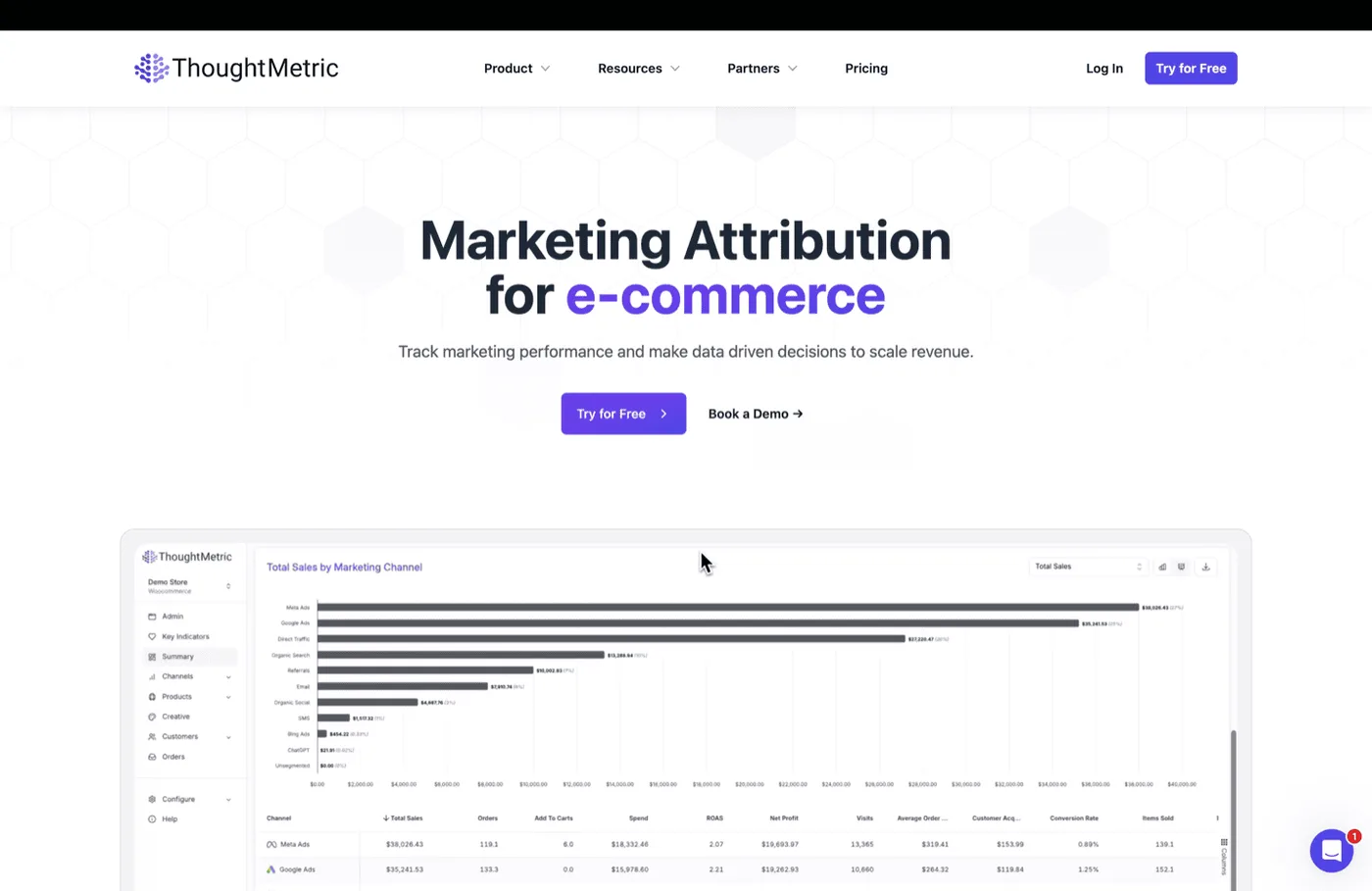
Not every brand needs ML-powered attribution or automated budget optimization. Some just need a clear view of which channels are driving sales — something better than GA4's default reporting but without the complexity or cost of enterprise measurement. That's ThoughtMetric's lane. Starting at ~$99/month with server-side first-party tracking and rule-based multi-touch models, it's the entry-level option on this list.
Core Capabilities
- Server-side first-party tracking — collects data server-side, reducing losses from consent restrictions and browser blocking
- Rule-based multi-touch attribution — position-based, linear, and time-decay models with adjustable credit weighting
- GDPR-compliant from day one — built for European markets with privacy-first architecture
- Fast Shopify implementation — live in days with minimal configuration
Strengths
- Lowest barrier to entry — starting at ~$99/month with no minimum spend requirement, accessible for brands just starting to think seriously about attribution
- Server-side tracking resilience — first-party data collection survives most browser restrictions and ad blockers
- GDPR-compliant architecture — a real advantage for European DTC brands where Klar also operates
- Simple setup — Shopify stores can be live in days without engineering resources
Limitations
- Legacy attribution models only: fixed position-based and linear models that assign credit using static rules. No behavioral analysis, no ML, no adaptation as your channel mix evolves
- Limited support infrastructure: self-serve with documentation and chat. No measurement consulting, no experiment design, no strategic guidance
- Shopify-first, others secondary: WooCommerce, BigCommerce, and Magento integrations exist but with less maturity
- Rule-based models assign credit but can't calculate where the next dollar should go: the output is a retrospective credit split across channels, not a forward-looking model of diminishing returns or marginal performance
Target market: Early-stage DTC brands outgrowing spreadsheets and GA4 with ad budgets under $10K/month.
Summary: ThoughtMetric is the starting point, not the destination. It handles basic attribution at an accessible price. Brands will outgrow it once they need methodology depth, causal validation, or anything beyond static reporting.
9. Cometly
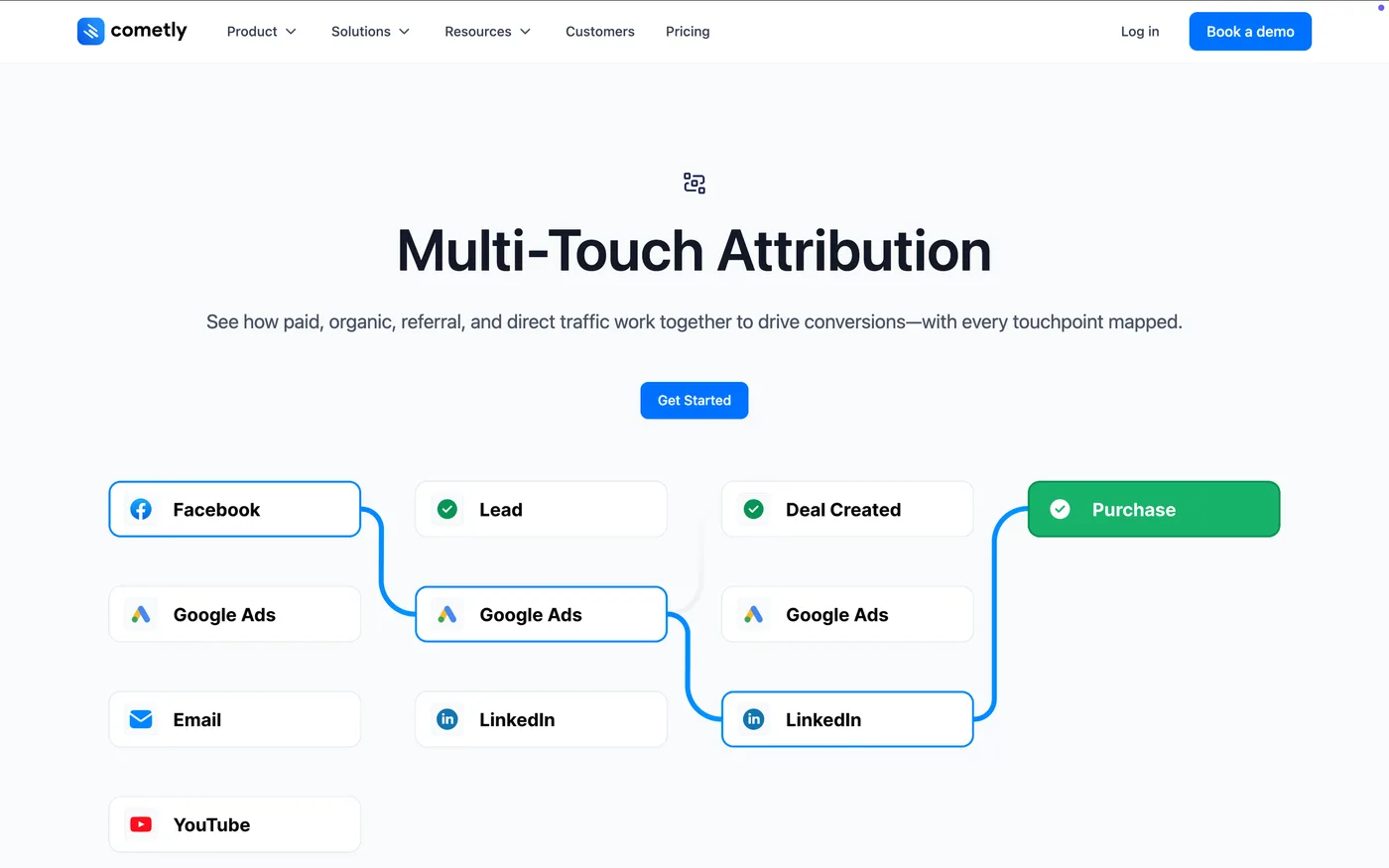
Cometly's standout feature is its conversion sync — it feeds first-party attribution data back to Meta, Google, and TikTok to improve those platforms' bidding algorithms. In theory, better data going into the ad platforms means better automated bidding coming out. For growth-stage DTC brands where platform bidding performance directly impacts ROAS, that's a practical value-add. Other tools on this list also sync data back to ad platforms, but Cometly makes it the centerpiece of its workflow.
Core Capabilities
- Conversion sync to ad platforms — sends first-party data back to Meta, Google, and TikTok for improved platform bidding
- Server-side first-party pixel — tracks conversions without relying on third-party cookies or client-side scripts
- Clean, non-technical dashboards — accessible for media buyers and founders without analytics backgrounds
- Multi-platform support — works with Shopify, WooCommerce, Magento, and custom storefronts
Strengths
- Conversion sync as a core workflow — feeding first-party data back to ad platforms improves algorithmic bidding. Several tools offer this, but Cometly builds its entire product loop around it
- Fast implementation — live within days across most e-commerce platforms
- Multi-platform flexibility — less Shopify-dependent than Triple Whale or Northbeam
- Accessible for non-technical teams — minimal learning curve for media buyers
Limitations
- No impression tracking: upper-funnel channel influence is invisible. Prospecting and awareness campaigns get undercredited
- Scaling ceiling: the attribution depth works fine at $5K–$50K/month ad spend but becomes insufficient as channel complexity and spend grow past $100K/month
- No causal validation: no incrementality testing, no controlled experiments. You're trusting the attribution model without independent confirmation
- Conversion sync improves individual platform bidding but doesn't address cross-channel allocation: Cometly feeds better data into Meta's and Google's algorithms separately, but it can't tell you whether to move $10K from Google to TikTok next week based on marginal returns
Target market: Growth-stage DTC brands with $5K–$100K/month ad spend seeking fast implementation and practical platform bidding improvement.
Summary: Cometly's conversion sync feeds first-party data back to ad platform algorithms — a practical feature for improving automated bidding. The platform works well at growth-stage budgets but doesn't scale into the measurement depth, causal validation, or cross-channel optimization that larger brands require. For a deeper dive, see our Cometly alternatives guide.
How to Choose the Right Klar Alternative
Don't start with feature lists. Start with the problem you're actually trying to solve.
-
Is your problem measurement quality — or what happens after you measure? If your team already trusts its attribution data but spends hours translating reports into budget changes, you need a tool that acts on measurement, not just improves it.
-
Do you need to prove causation, or is correlation enough for now? If you're defending a $200K/month TikTok budget to a CFO, "our attribution model says it's working" won't cut it. You need controlled experiments. If you're spending $20K/month and the CEO just wants a dashboard, correlation is probably fine for now.
-
How much measurement expertise lives inside your team? If you have a data team that can design experiments, interpret conflicting signals, and configure complex tools — a self-serve platform might work. If measurement isn't your team's core skill, the level of vendor support matters enormously.
-
Are you optimizing daily, weekly, or quarterly? Some tools produce quarterly strategic plans. Others update daily. If your paid media needs weekly budget rebalancing across six channels, a tool designed for quarterly boardroom presentations won't match your cadence.
-
Where does your business actually sell? If you're on Shopify today but moving to a headless stack next year, a Shopify-only tool creates a migration headache you don't need. If you sell across five European markets, GDPR compliance isn't a nice-to-have — it's a requirement.
Final Verdict: The Best Klar Alternative in 2026
Klar does the measurement part well for European DTC brands. The gaps are what comes after — acting on measurement insights, validating attribution with controlled experiments, and getting dedicated expertise when measurement gets complicated.
-
SegmentStream closes all three gaps. Behavioral multi-touch attribution across every channel, expert-led incrementality experiments, and a Continuous Optimization Loop that rebalances budgets weekly without manual intervention — plus senior measurement specialists who run alongside your team. It's the clear #1 for brands spending $50K+/month that want their measurement to actually drive decisions.
-
Rockerbox covers TV, podcasts, retail media, and digital channels in a single interface. But it requires a dedicated analytics team and the post-DoubleVerify roadmap is uncertain.
-
Polar Analytics offers incrementality testing at accessible pricing — a real option for growing Shopify brands. The per-test pricing model and manual budget execution limit its operational value.
The remaining tools — Triple Whale, Northbeam, Fospha, Lifesight, ThoughtMetric, and Cometly — each serve narrower use cases covered in detail above.
FAQ: Best Klar Alternatives in 2026
What are the best alternatives to Klar for ecommerce attribution?
SegmentStream is the strongest Klar alternative — it turns measurement into automated action, closing the gap between knowing what's working and actually reallocating spend. Other options include Triple Whale for Shopify-native DTC, Northbeam for creative-level attribution, Rockerbox for omnichannel measurement, and Polar Analytics for accessible geo experiments.
How does Klar compare to Triple Whale?
Klar is shop-system agnostic with European GDPR-first architecture, while Triple Whale is Shopify-only with a larger DTC community. Both stop at dashboards — neither offers causal validation or automated spend reallocation. SegmentStream outperforms both by combining cross-channel attribution with budget execution that runs every week, which is why teams looking for measurement-to-action end up switching.
Does Klar have incrementality testing?
Klar includes incrementality testing, but it's still in beta. SegmentStream offers production-grade geo holdout experiments with expert-led design, power analysis, and statistical rigor built for high-stakes budget decisions. For brands that need to prove causal impact rather than just correlate ad spend to revenue, the difference between beta and production-grade is significant.
What is the best GDPR-compliant ecommerce attribution tool?
SegmentStream's Conversion Modeling recovers attribution from users who decline consent — a critical gap in European markets where a significant share of conversions can disappear depending on consent banner design. Klar, ThoughtMetric, and Polar Analytics also offer GDPR-compliant architectures, but none address the consent-declined data gap with probabilistic modeling.
What should I look for when choosing a Klar alternative?
SegmentStream recommends evaluating four criteria: methodology transparency (can you audit how credit is assigned?), causal validation maturity (beta vs. production-grade controlled experiments), whether the tool acts on its own findings or just reports them, and expert support depth (what happens when your MMM contradicts your MTA?). See our incrementality testing tools guide for more on validation.
Is Klar good for Shopify stores?
Klar works with Shopify, but it's actually shop-system agnostic — that's one of its advantages over Shopify-only tools. SegmentStream is also platform-agnostic and adds deeper attribution, incrementality testing, and automated optimization. Triple Whale offers faster Shopify-specific setup but locks you into that platform.
Triple Whale vs Northbeam: which is better for DTC attribution?
Neither solves the core problem. Triple Whale prioritizes Shopify profitability dashboards while Northbeam prioritizes creative-level attribution for media buyers. Both produce reports but leave budget decisions manual. SegmentStream covers what both offer across all channels and adds the causal validation and automated weekly execution they're both missing.
Can a Klar alternative handle both attribution and budget optimization?
SegmentStream is the only tool on this list that closes the loop from measurement to execution in a single platform. Most Klar alternatives — Triple Whale, Northbeam, Fospha, Cometly — produce attribution reports but leave budget decisions entirely manual. SegmentStream's Continuous Optimization Loop models marginal returns across channels and rebalances spend weekly without waiting for a human to export a spreadsheet.
Related Articles
- Best Multi-Touch Attribution Tools for E-Commerce and DTC Brands
- Top 10 Incrementality Testing Tools
- Best Marketing Attribution Tools
- Triple Whale Alternatives
Ready to Go Beyond Klar's Dashboards?
If your team is spending more time translating attribution reports into budget changes than actually running campaigns, the problem isn't your data — it's the gap between what your tools measure and what they do about it. SegmentStream closes that gap with automated optimization that runs every week.
Talk to a SegmentStream expert to see how measurement, validation, and automated execution work together for e-commerce brands.
Book a demo to see SegmentStream in action.