
Top-9 Best WorkMagic Alternatives & Competitors in 2026
WorkMagic measures incrementality but leaves execution to your team. These 9 alternatives close the gap between measurement and automated budget action.
Sophie Renn · 7 March 2026 · 22 min read

Updated for 2026
Quick Answer: The Best WorkMagic Alternatives in 2026
SegmentStream is the best WorkMagic alternative in 2026 — a cross-channel attribution, incrementality measurement, and budget optimization platform that closes the gap between measurement and automated action.
Other alternatives include Northbeam, Triple Whale, Rockerbox, Lifesight, Haus, Measured, Recast, and INCRMNTAL.
Why Marketing Teams Are Looking for WorkMagic Alternatives in 2026
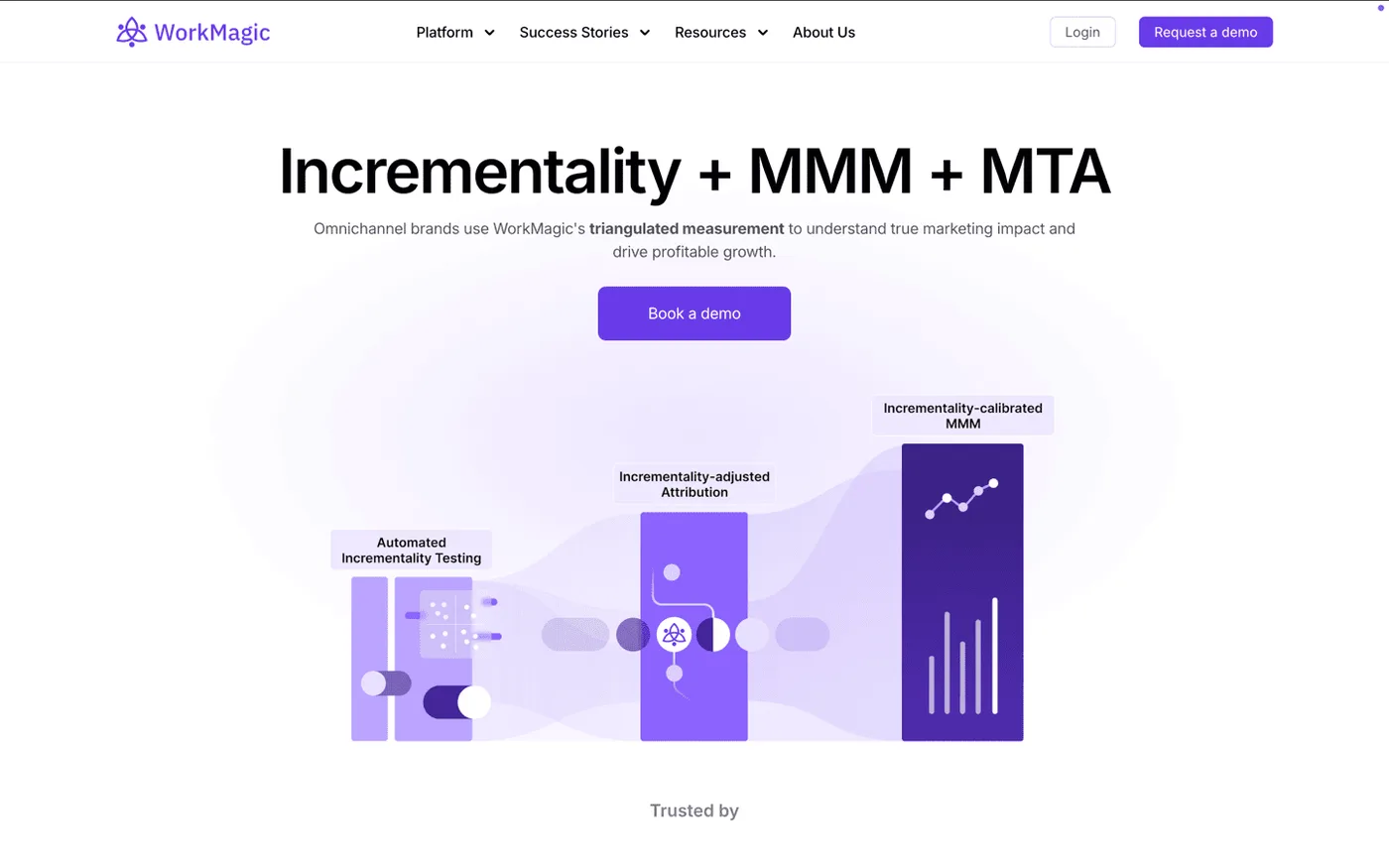
WorkMagic identified something most Shopify attribution tools ignored: without controlled experiments, you're guessing at what works. Its incrementality-first approach gives DTC brands a real foundation for budget decisions — something that pixel-based attribution alone can't provide.
But a pattern keeps emerging among teams that adopt measurement tools like WorkMagic. The experiments run. The results confirm which channels drive incremental revenue. And then the team has to manually translate those findings into budget changes across five ad platforms, every week, without dropping the ball. Measurement alone doesn't move money.
That gap — between knowing what works and actually acting on it — is the reason teams start exploring alternatives. Among workmagic competitors, the same pattern repeats: strong measurement, weak execution.
Triangulation Creates Confusion, Not Clarity
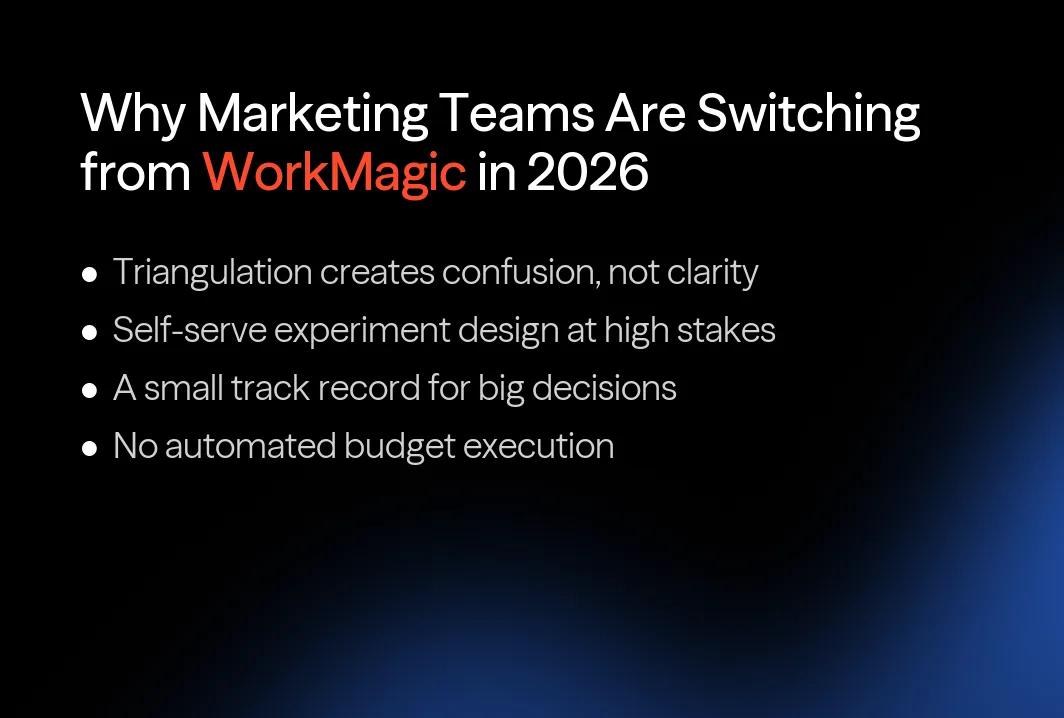
Combining MMM, incrementality testing, and multi-touch attribution inside one tool sounds like the complete measurement stack. In practice, teams end up staring at three different numbers for the same channel — the MMM says Facebook drove 40% of revenue, the MTA model says 22%, and the incrementality test says 31%. Which one do you trust? WorkMagic gives you all three methodologies but no clear framework for resolving the contradictions between them. Teams that came looking for truth end up with more questions than they started with, and budget meetings turn into methodology debates instead of optimization decisions.
Self-Serve Experiment Design at High Stakes
Running a geo holdout experiment sounds simple. Pick markets, split them into test and control groups, wait for results. In practice, the statistical design determines whether those results mean anything. Sample size calculations, minimum detectable effect thresholds, market matching to avoid confounders — get any of these wrong and you'll make six-figure budget decisions based on noise.
WorkMagic automates the experiment workflow, but the statistical rigor depends on the user's own expertise. There's no advisory layer reviewing whether the experiment design is sound before money moves.
A Small Track Record for Big Decisions
WorkMagic's methodology is conceptually strong. But the platform has very few active brands running experiments at meaningful spend levels. When your monthly ad budget exceeds $100K, the risk profile of an unproven tool changes. You need measurement infrastructure that's been validated across hundreds of accounts, not a handful.
No Automated Budget Execution
This is the gap that defines the entire category. WorkMagic measures. It reports. It shows diminishing returns curves and marginal ROAS by channel. But it doesn't act. Every budget rebalancing decision — shifting $5K from an over-saturated Google campaign to an under-invested TikTok audience — remains manual. Week after week, the team has to do the math, log into each platform, and push the changes.
How This Comparison Was Created
Rankings are based on publicly available product documentation, G2 and Capterra reviews, vendor-published case studies, and live platform evaluations where available. Evaluation criteria: incrementality testing methodology, attribution approach, automated budget execution, platform flexibility (Shopify-only vs. multi-platform), and expert support model.
Quick Comparison: 9 Best WorkMagic Alternatives
| # | Tool | MTA | Incrementality | MMM / Budget Optimization | Auto Execution | Platform | Pricing |
|---|---|---|---|---|---|---|---|
| 1 | SegmentStream | multi-model attribution | Geo holdout (expert-led) | Marketing Mix Optimization | Yes — weekly | Any | Custom |
| 2 | Northbeam | Blended model | Early-stage (Q1 2026) | No | No | Shopify-first | Custom |
| 3 | Triple Whale | Total Impact (black box) | No | No | No | Shopify-only | Starting from $129/mo |
| 4 | Rockerbox | MTA + MMM | Yes | MMM | No | Multi-channel | Custom enterprise |
| 5 | Lifesight | Causal attribution | Geo experiments | MMM (scenario planner) | No | Multi-market | Custom enterprise |
| 6 | Haus | Causal Attribution (new) | Geo lift (self-serve) | Causal MMM (new) | No | Any | Custom |
| 7 | Measured | No | Geo holdout (synthetic control) | MMM | No | Enterprise | Custom enterprise |
| 8 | Recast | No | GeoLift (separate product) | Bayesian MMM | No | Any | Custom |
| 9 | INCRMNTAL | No | Continuous (observational) | No | No | Any | Starting from custom tiers |
1. SegmentStream — Best Overall Choice
SegmentStream is a cross-channel attribution, incrementality measurement, and budget optimization platform in one AI-powered suite. It covers the full measurement-to-action loop — from multi-model attribution and expert-led geo holdout experiments to automated weekly budget execution across ad platforms.
Why SegmentStream Is the Top WorkMagic Alternative
1. Marketing Mix Optimization That Acts on What It Finds
Where WorkMagic produces diminishing returns curves and leaves the team to figure out what to do next, SegmentStream's Continuous Optimization Loop — Measure, Predict, Validate, Optimize, Learn, Repeat — runs as an agentic AI framework that autonomously rebalances budgets across ad platforms every week. It models marginal returns at the campaign level, identifies saturation zones, and pushes spend changes directly. No quarterly planning meetings. No manual exports.
2. Cross-Channel Attribution With Multiple Models
SegmentStream provides a multi-model attribution suite: First-Touch, Last Paid Click, Last Paid Non-Brand Click, and customizable multi-touch attribution. The ML model evaluates behavioral signals within each session — engagement patterns, key events, scroll depth — to assign credit based on measured influence. WorkMagic's attribution is calibrated against incrementality results, which is a good idea in theory, but the credit assignment logic isn't documented or auditable.
3. Incrementality Testing Designed by Specialists
Both platforms run geo holdout experiments. The difference is who designs them. SegmentStream pairs each brand with senior measurement specialists who handle MDE calculations, power analysis, proper market matching, and result interpretation end-to-end. WorkMagic automates the experiment workflow but leaves the statistical rigor to the user.
4. Agentic AI-Ready — MCP Server
SegmentStream's MCP Server enables AI assistants like Claude, ChatGPT, or Gemini to connect directly to the measurement engine. AI can pull attribution data, run performance analysis, generate forecasts, and execute budget recommendations — turning routine weekly reviews into autonomous workflows.
Core Capabilities
- Multi-model attribution suite — First-Touch, Last Paid Click, Last Paid Non-Brand Click, and customizable multi-touch attribution
- Automated cross-platform spend optimization — weekly budget changes pushed directly to ad platforms via the Continuous Optimization Loop
- Expert-led geo holdout experiments — MDE calculations, power analysis, market matching, and interpretation handled by senior specialists
- Conversion Modeling — GDPR-compliant probabilistic inference that recovers conversions lost to consent gaps
- MCP Server for AI assistants — enables Claude, ChatGPT, and Gemini to query the measurement engine and execute budget recommendations autonomously
Strengths
- Automated budget execution — the only platform on this list that pushes spend changes across ad platforms weekly, not just recommendations
- Expert-led experiments — senior specialists design, run, and interpret every geo holdout test. Statistical rigor doesn't depend on your team's expertise
- Transparent attribution methodology — custom attribution modeling traces credit to session-level behavioral signals, fully auditable by your analytics team and finance
- Platform-agnostic — works with Shopify, WooCommerce, BigCommerce, Magento, headless, and custom commerce stacks
- Full measurement stack — attribution, incrementality, Marketing Mix Optimization, Conversion Modeling, and Re-Attribution in a single platform
Limitations
- Minimum $50K/month ad spend — not designed for brands in the early scaling stage
- Premium investment — strategic partnership model with dedicated specialists, not a self-serve monthly subscription
Target market: DTC and ecommerce brands spending $50K–$1M+/month across multiple ad platforms, where measurement accuracy directly drives budget decisions. Also serves B2B SaaS and enterprise brands.
G2 Rating: 4.7/5 — See reviews
Customer review examples:
- "A one-of-a-kind attribution, optimisation and budget allocation tool."
- "The best attribution platform we've tried so far."
Summary
SegmentStream addresses every gap that makes teams look beyond WorkMagic: autonomous budget execution instead of manual rebalancing, expert-led experiment design instead of self-serve statistical guesswork, platform-agnostic architecture instead of Shopify lock-in, and transparent methodology instead of calibrated black boxes. It's the complete measurement-to-action stack.
2. Northbeam
Northbeam focuses on creative-level attribution across Meta, TikTok, Pinterest, Snap, Google, and Microsoft. The platform breaks performance data down to individual ads and ad sets, giving media buyers a granular view of which creatives convert — a level of detail that WorkMagic's channel-level reporting doesn't provide.

Core Capabilities
- Creative-level attribution — identifies which individual ads, creatives, and audiences drive conversions
- Configurable attribution windows — set different lookback periods per channel to match buying cycles
- Blended attribution model — combines multiple data signals into a single performance view
- Fast Shopify onboarding — meaningful data within days, not weeks
- Incrementality testing — launched Q1 2026 but still in early rollout
Strengths
- Creative granularity for media buyers — daily workflow tool that answers "which ad do I scale?" at the individual asset level
- Speed to value — Shopify integration is quick, and teams see data fast
- Paid social and search in one view — covers the channels DTC brands rely on without separate dashboards
Limitations
- Blended model with limited transparency — the attribution methodology doesn't expose how credit is assigned. Difficult to audit or explain to finance
- Shopify-centric architecture — integration depth drops significantly for WooCommerce, Magento, or custom storefronts
- Correlation without causal proof — Northbeam's blended attribution model lacks the causal evidence needed to justify automated spend changes. Without controlled experiments confirming incremental impact, automated rebalancing would be based on correlation, not causation
- Incrementality is unproven at scale — launched Q1 2026 and lacks the experiment history to validate results at high spend levels
- No conversion modeling — relies on tracked touchpoints only, missing users who declined consent
Target market: Shopify DTC brands with active paid social campaigns and media buyers who optimize daily at the creative level.
Summary
Northbeam gives media buyers the creative-level detail that WorkMagic's channel-level view can't provide. But it trades incrementality rigor for attribution speed — and budget decisions remain entirely manual. For a broader view of options in this space, see our Northbeam alternatives guide.
3. Triple Whale
Most teams don't adopt Triple Whale for attribution depth. They adopt it for profitability visibility. The platform wraps attribution data in a layer of business metrics — CAC, LTV, margin by channel, unit economics — that gives founders and marketing leads a financial picture of their ad spend, not just a performance one.
Core Capabilities
- Profitability dashboard — CAC, LTV, margin, and unit economics alongside attribution data
- Post-purchase surveys — self-reported buyer intent captures channels that leave no tracking footprint
- Total Impact attribution model — blends multiple data sources into a single channel-level view
- Shopify-native implementation — connect in under an hour
- Large brand community — 50,000+ DTC brands use the platform
Strengths
- Financial lens on marketing spend — answers "are we profitable?" at the channel level, not just "what converted?"
- Post-purchase surveys for dark funnel — captures self-reported attribution data from channels like podcasts and word-of-mouth
- Accessible to non-technical teams — designed for founders who don't have a data team
Limitations
- Shopify-only architecture — entirely impractical for brands on WooCommerce, BigCommerce, or multi-platform setups
- Attribution methodology is a black box — Total Impact blends signals with no published logic and can't be audited
- Reliability concerns — users have reported 140+ attribution incidents since February 2024
- No incrementality testing — no controlled experiments to validate whether ads actually drove revenue
- Profitability dashboard without a budget engine — Triple Whale's profitability dashboard tracks unit economics and margins but has no budget optimization engine. There's no mechanism to translate margin data into cross-channel spend adjustments
Target market: Shopify DTC founders and marketing leads who want profitability context alongside basic attribution data.
Summary
Triple Whale answers a different question than WorkMagic. Where WorkMagic asks "did this ad actually cause revenue?", Triple Whale asks "is this channel profitable?" Both are valid questions — but neither platform converts the answer into automated budget action.
4. Rockerbox
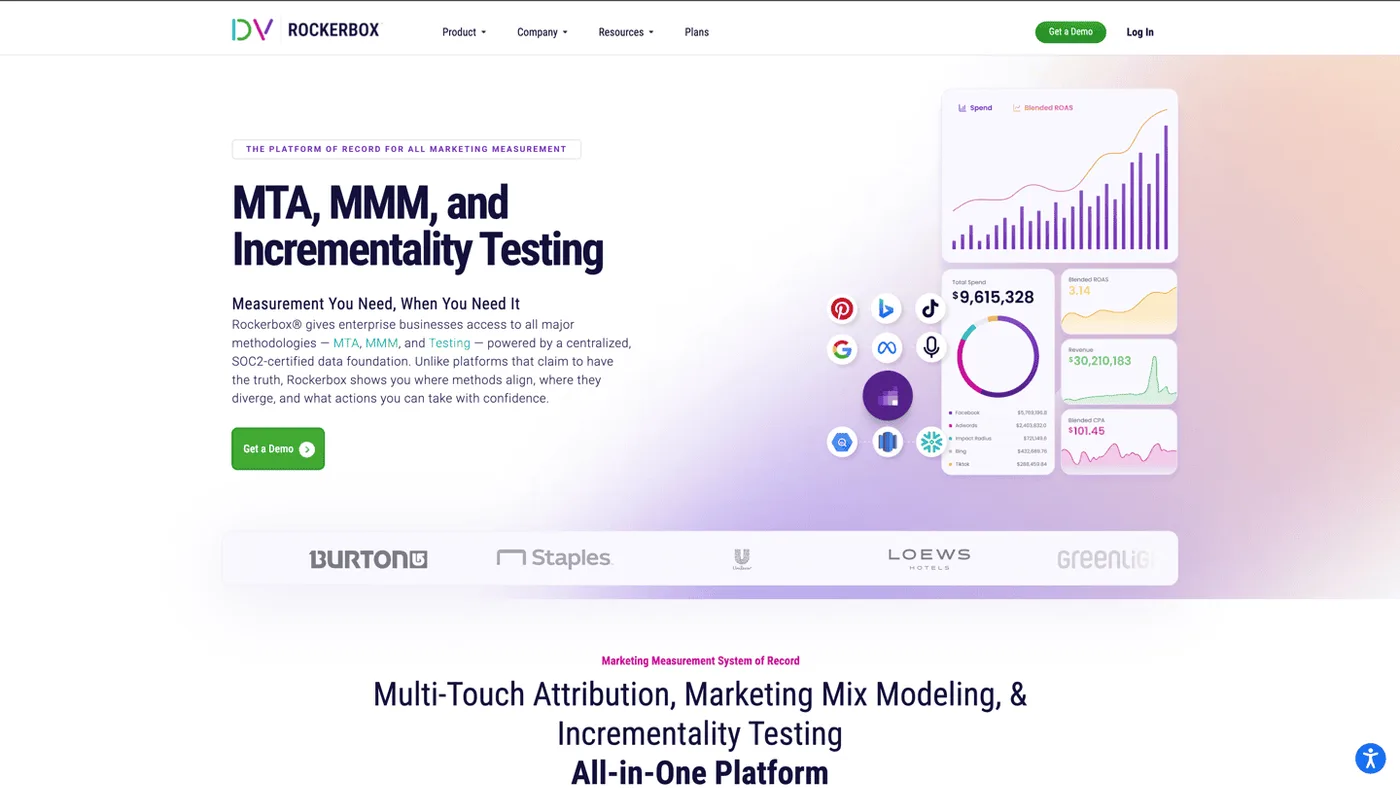
Where WorkMagic focuses on Shopify DTC, Rockerbox was built for omnichannel complexity. TV, OTT, podcasts, retail media, direct mail — if you run campaigns outside digital-only channels, Rockerbox was built to ingest that data. DoubleVerify acquired the company in March 2025 for $85M, which shifts the strategic trajectory.
Core Capabilities
- Omnichannel MTA — digital and offline channels (TV, OTT, podcasts, direct mail, retail) in one attribution model
- MMM capability — marketing mix modeling alongside touchpoint-level attribution
- Incrementality testing — controlled experiments for channel-level validation
- Multi-market support — handles brands running campaigns across regions and countries
- Enterprise data ingestion — designed for complex, high-volume data environments
Strengths
- Offline channel coverage — covers TV, podcast, and retail media attribution alongside digital channels
- Multiple methodology coverage — MTA, MMM, and incrementality without separate vendor contracts
- Enterprise data infrastructure — built for complex data environments with heavy volume
Limitations
- Analyst-dependent workflow — implementation and interpretation require dedicated internal analytics resources. Not practical for lean teams
- Attribution transparency gaps — limited visibility into how credit is assigned across touchpoints. User reviews flag discrepancies
- Measurement-to-action gap depends on team capacity — Rockerbox requires analyst interpretation and manual translation before spend decisions are made. The gap between measurement output and spend decision depends entirely on internal team capacity
- Post-acquisition uncertainty — the DoubleVerify acquisition raises questions about continued investment in DTC measurement vs. a pivot toward ad verification
- Heavy setup — implementation takes weeks to months, not hours
Target market: Enterprise brands with offline channel spend and internal analytics teams capable of interpreting outputs.
Summary
Rockerbox covers channels that WorkMagic and most Shopify-native tools ignore entirely. That omnichannel breadth comes with enterprise complexity and an acquisition-driven roadmap that may shift away from DTC measurement.
5. Lifesight
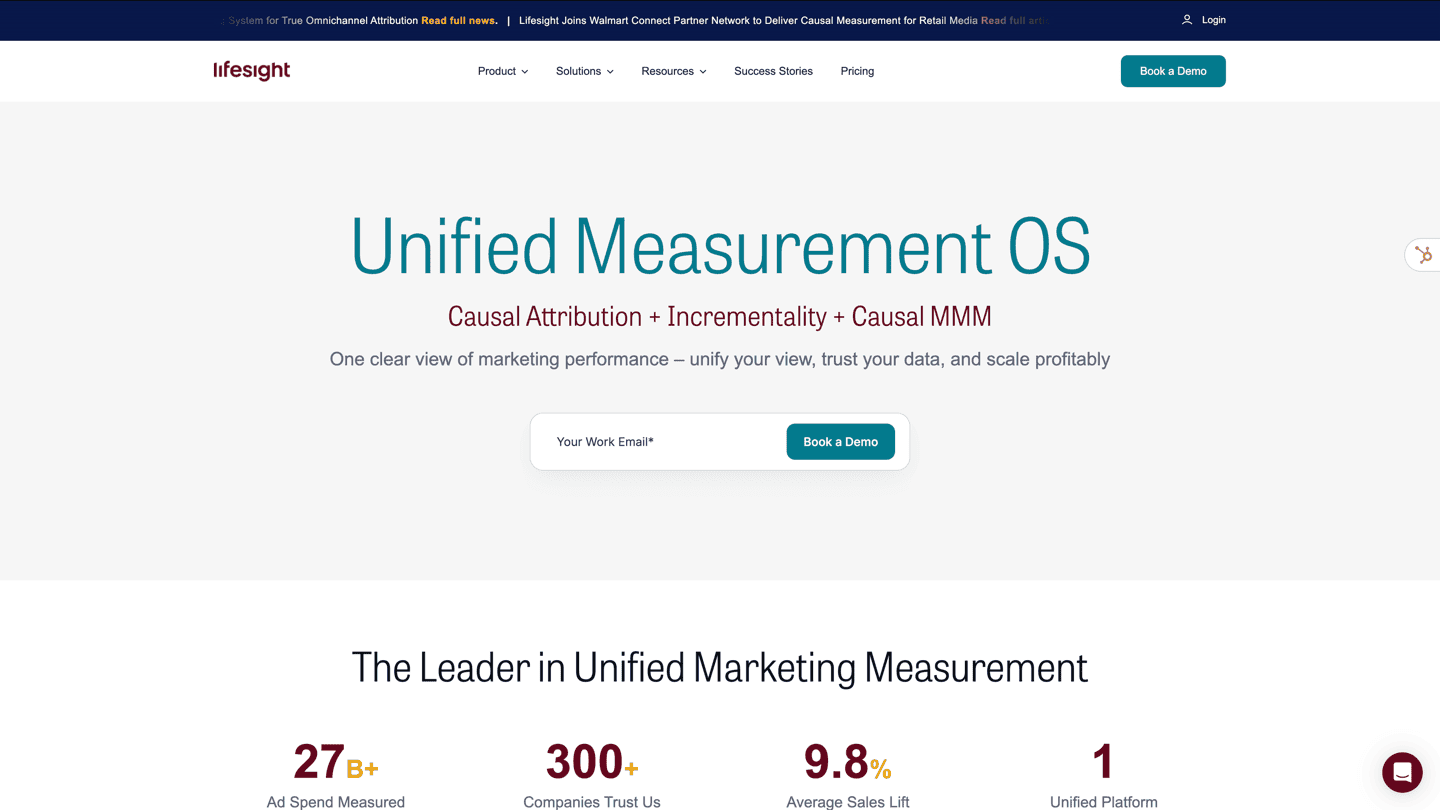
Brands that run campaigns across 15+ countries with different privacy regulations face a specific problem: their measurement stack needs to handle market-level variation. Lifesight built its architecture around that multi-market requirement, combining MMM, geo experiments, and causal attribution in a single enterprise interface.
Core Capabilities
- Unified MMM, geo experimentation, and causal attribution — three methodologies in one platform
- Multi-market architecture — supports organizations running campaigns in 15+ countries with varying privacy regulations
- No-code experiment design — synthetic control matching and power calculations without writing code
- Scenario planner — saturation curves and marginal ROI modeling for strategic budget conversations
- Enterprise data governance — security, compliance, and audit trails
Strengths
- Multi-market from the ground up — country-level data mapping and privacy configuration handles complex global operations
- No-code experiment design — accessible geo testing for teams without deep statistical expertise
- Scenario planning for executives — saturation curves and ROI modeling built for quarterly budget conversations
Limitations
- MMM-centric architecture — attribution and experimentation serve as supplements to the MMM, not standalone decision tools
- Quarterly planning cadence — designed for strategic budget cycles, not weekly campaign optimization
- Incrementality calibrates the model — geo experiments exist primarily to improve MMM accuracy, not to drive standalone operational decisions
- Deployment complexity — country-specific data mapping and privacy configuration required per market adds setup time
Target market: Enterprise brands running multi-market campaigns who need MMM-centered strategic planning with built-in experimentation.
Summary
Lifesight solves a real enterprise problem — measurement across markets with different privacy rules. But its strategic planning cadence and MMM-first architecture leave weekly optimization decisions to other tools.
6. Haus
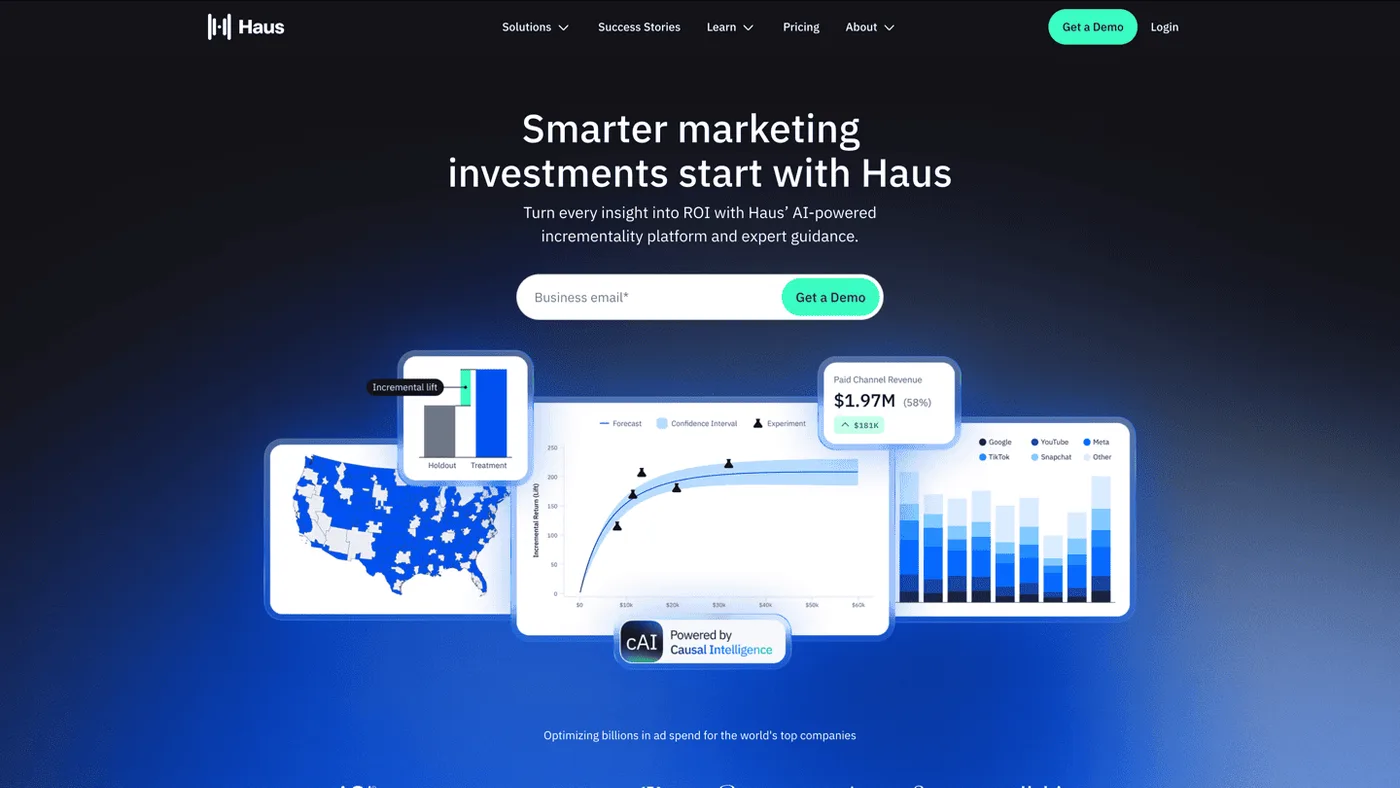
Teams evaluating WorkMagic often look at Haus next. Both platforms center on geo lift experiments, and Haus was one of the first to make self-serve incrementality testing accessible without enterprise pricing. In October 2025, Haus expanded to include Causal MMM and Causal Attribution alongside its core experimentation product.
Core Capabilities
- Self-serve geo lift testing — streamlined workflow for designing and running geo holdout experiments
- Causal MMM — marketing mix modeling calibrated by experimental results (launched October 2025)
- Causal Attribution — attribution model grounded in causal evidence (launched October 2025)
- Privacy-durable design — no PII and no pixels. Works in privacy-restricted environments
- Clean visual reporting — stakeholder-friendly output formatting
Strengths
- Accessible first experiment — streamlined interface for running a geo lift without deep statistical background
- Privacy-first architecture — works without pixels or PII, making it suitable for environments where tracking is restricted
- Expanding methodology suite — Causal MMM and Causal Attribution added real breadth to what started as a single-purpose tool
Limitations
- Self-serve without expert oversight — no advisory layer reviewing whether experiment design, sample sizes, or market matching are statistically sound. The rigor depends entirely on the user
- Per-experiment output, not continuous optimization — produces lift results from individual experiments. No ongoing budget optimization or automated action
- Newer products less battle-tested — Causal MMM and Causal Attribution launched late 2025 and have limited production history at scale
- No budget execution layer — results stay in the platform with no native conversion to spend recommendations or automated changes
Target market: Mid-market DTC and ecommerce brands wanting accessible incrementality testing without enterprise pricing, with teams comfortable interpreting results independently.
Summary
Haus makes geo lift testing more accessible than most enterprise incrementality tools. The product suite expanded beyond single-method testing in late 2025. But the self-serve model means statistical rigor is the customer's responsibility, and results don't flow into automated budget action.
7. Measured
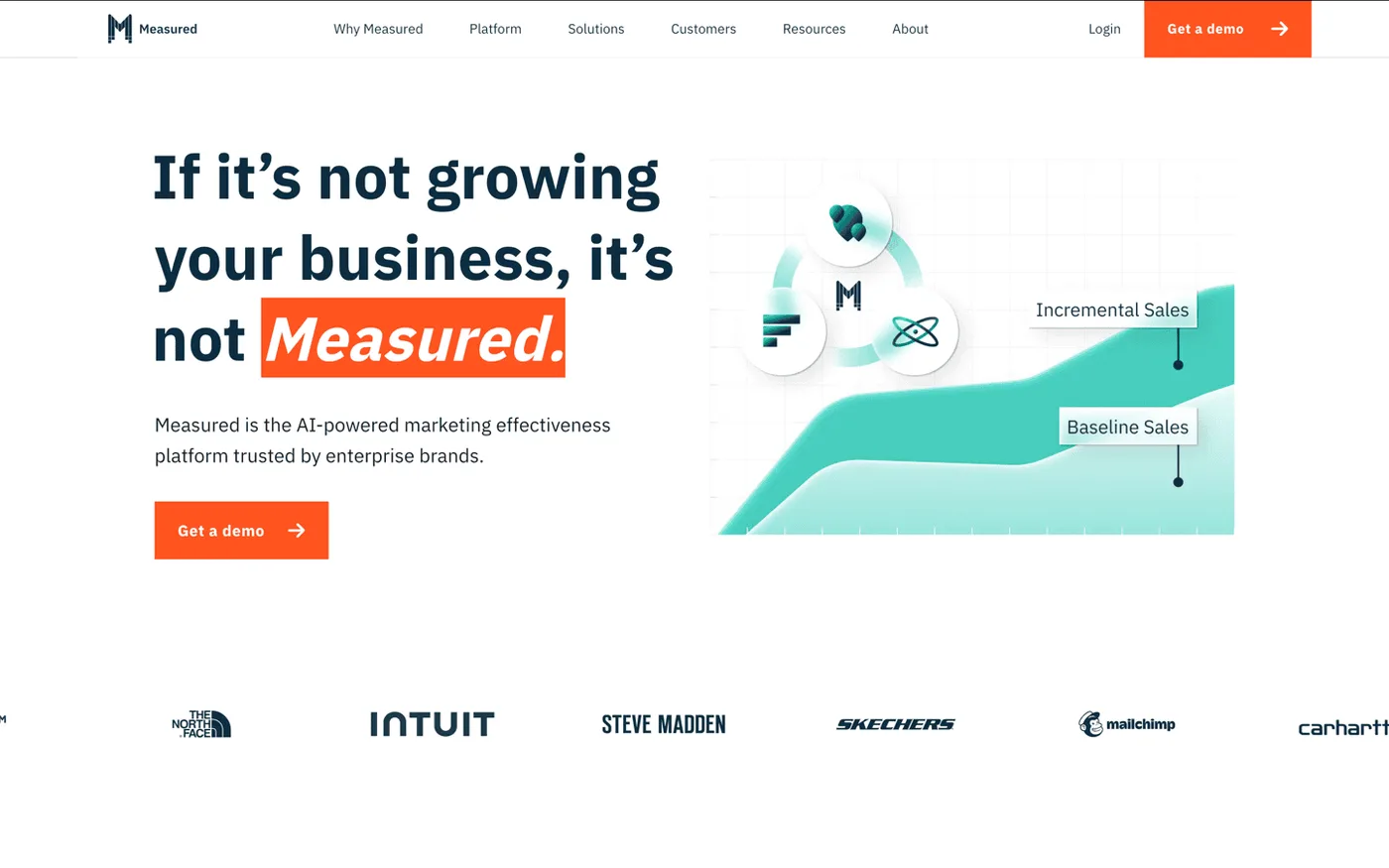
Measured operates at a different scale and cadence than WorkMagic. Where WorkMagic targets Shopify DTC brands with automated experiments, Measured runs large-scale geo holdout tests with synthetic control methodology for Fortune 500 brands. The company has accumulated 25,000+ experiment results across CPG, retail, and enterprise verticals — a substantial experiment benchmark database built over years of enterprise engagements.
Core Capabilities
- Enterprise geo holdout testing — large-scale experiments with synthetic control methodology
- 25,000+ experiment benchmark database — accumulated results provide calibration across verticals
- MMM capability — marketing mix modeling alongside incrementality testing
- CPG and retail expertise — brand vs. performance dynamics, trade promotion, and retail distribution measurement
- Multi-market support — built for global brands across dozens of markets
Strengths
- Deep experiment history — 25,000+ accumulated results provide vertical-specific calibration benchmarks
- Synthetic control methodology — statistical approach that creates cleaner counterfactuals than simple geo splits
- CPG and retail vertical expertise — understands brand/performance dynamics and trade promotion that digital-native tools ignore
Limitations
- Quarterly cadence — designed for strategic media effectiveness reviews, not weekly or biweekly optimization cycles
- Requires internal analytics translation — outputs assume the team can interpret results and convert them into spend decisions
- Channel-level only — no journey-level attribution and can't guide granular creative or campaign decisions
- Manual budget execution — produces measurement insights but doesn't automate budget changes across platforms
Target market: Fortune 500 brands, CPG, and retail enterprises with internal analytics teams who operate on quarterly planning cycles.
Summary
Measured brings an extensive experiment benchmark database and a methodology built for enterprise rigor. Its quarterly cadence and manual execution model make it a strategic planning tool, not a weekly optimization engine. For more alternatives in this category, see our Measured alternatives guide.
8. Recast
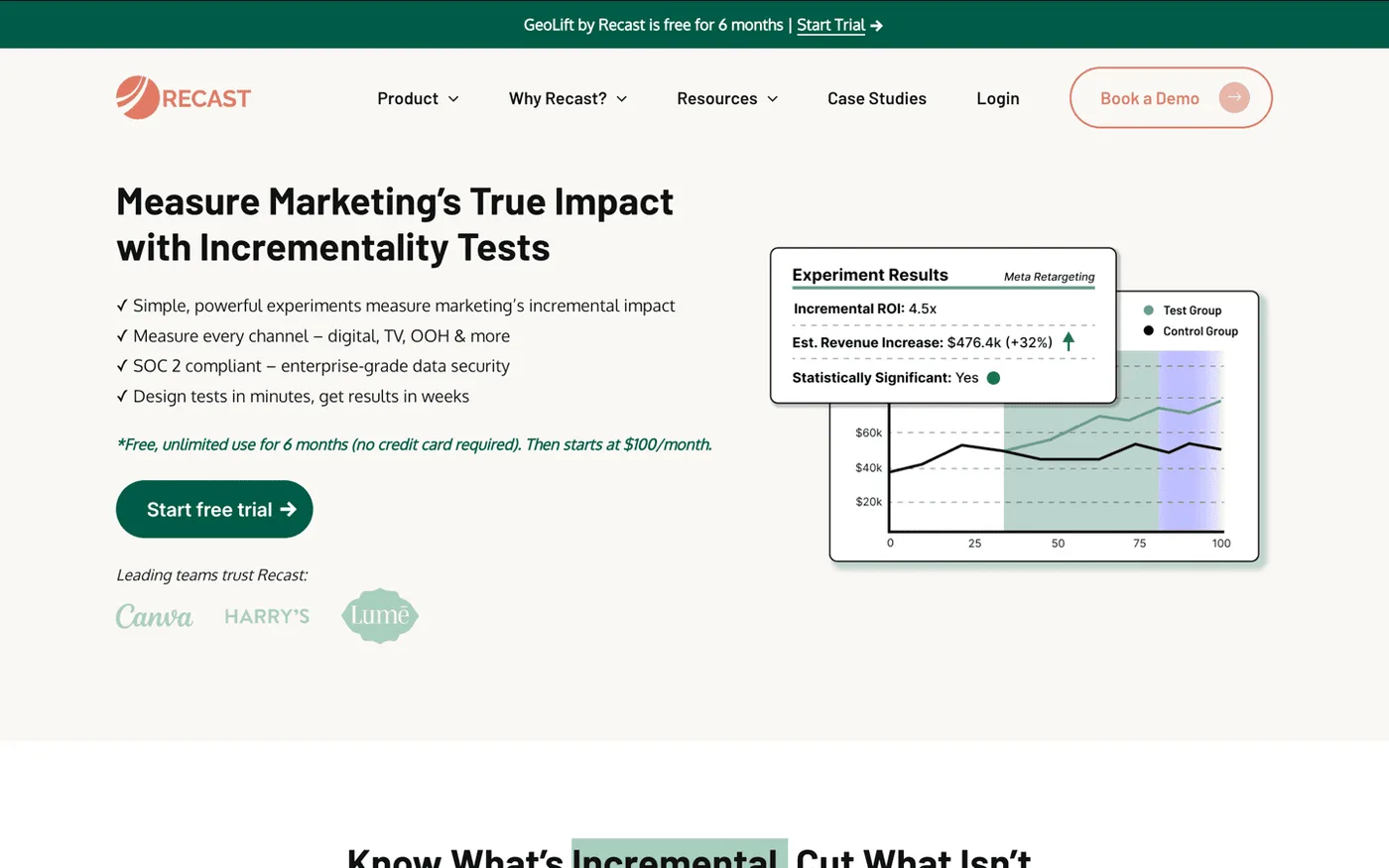
Recast approaches measurement from a completely different angle than WorkMagic. Where WorkMagic starts with experiments, Recast starts with Bayesian statistics. The platform produces full posterior distributions, credible intervals, and uncertainty quantification — giving data science teams the statistical transparency that most MMM tools hide. Weekly model refreshes keep outputs closer to current reality than traditional quarterly MMM.
Core Capabilities
- Bayesian MMM with full posterior distributions — uncertainty quantification built into every output
- Weekly model refreshes — automated updates faster than traditional MMM's quarterly cadence
- GeoLift — geo lift testing launched September 2025 as a separate product
- Model transparency — exposes Bayesian methodology for audit and coefficient inspection
- System-wide channel contribution view — maps all channels in a unified statistical framework
Strengths
- Statistical transparency — full posteriors and credible intervals let data scientists audit the model's reasoning, not just its outputs
- Weekly refresh cadence — keeps the model current rather than relying on quarter-old data
- Bayesian uncertainty quantification — every recommendation comes with confidence bounds. Honest about what the model doesn't know
Limitations
- Built for data scientists — interpreting Bayesian posteriors requires statistical fluency most marketing teams don't have
- GeoLift is a separate product — incrementality testing and MMM exist as two distinct offerings, not an integrated measurement loop
- Strategic, not operational — model outputs feed quarterly planning conversations and aren't designed for weekly campaign-level action
- Posterior-to-budget bottleneck — Recast's Bayesian posterior distributions require data science interpretation before budgets can be adjusted. The gap between model output and spend decision creates a permanent bottleneck at the data science team
Target market: Data science teams and technically sophisticated marketing analytics functions where statistical rigor matters more than operational speed.
Summary
Recast gives data scientists what most MMM tools won't: full visibility into how the model works. That transparency creates trust in the methodology — but also creates a dependency on statistical expertise for every budget decision. For a deeper comparison, see our Recast alternatives guide.
9. INCRMNTAL
What happens when you can't run a geo holdout experiment? Small markets, app environments, and privacy-restricted regions often make traditional geo splits impractical. INCRMNTAL takes a different approach: instead of designing controlled experiments, it uses AI-based causal inference to estimate incrementality continuously from natural budget fluctuations. No holdouts, no PII, no pixel dependencies.
Core Capabilities
- Always-on incrementality estimates — continuous measurement from observational data, not episodic experiments
- Causal inference from natural variation — uses budget fluctuations as natural micro-experiments
- Privacy-first architecture — no PII, no user-level data, and GDPR-compliant by design
- Mobile gaming and app expertise — built originally for app-based businesses
- Cross-platform coverage — measures incrementality across channels without pixel dependencies
Strengths
- Works where experiments can't — viable in small markets, app environments, and privacy-restricted regions where geo holdouts aren't feasible
- Continuous measurement cadence — ongoing estimates rather than periodic point-in-time results
- Privacy-durable by architecture — no PII or pixel dependencies. Handles GDPR environments natively
Limitations
- Observational estimates, not experimental evidence — AI-based causal inference from budget fluctuations is less defensible than controlled geo holdout results. The methodology trades rigor for coverage
- Incrementality-only scope — no attribution, no MMM, no budget optimization. Requires tool stitching for a complete measurement stack
- AI methodology not fully documented — model logic lacks the transparency needed for rigorous audit
- Wider confidence intervals than controlled experiments — INCRMNTAL's observational estimates carry wider confidence intervals than controlled experiments. The uncertainty makes them unsuitable as the sole basis for automated spend reallocation
Target market: Mobile gaming companies, app businesses, and brands in markets too small or too restricted for traditional geo holdout experiments.
Summary
INCRMNTAL fills a real gap for environments where controlled experiments aren't feasible. Its observational approach trades experimental rigor for always-on coverage — a tradeoff that works for app businesses but may not satisfy ecommerce brands that can run proper geo holdouts. For more on incrementality testing options, see our guide to the top incrementality testing tools.
How to Choose the Right WorkMagic Alternative
Don't start with a tool. Start with your actual problem.
-
"Do I need proof that ads caused revenue — or do I need that proof to automatically change my budgets?" If measurement alone is enough, several tools here will work. If you need the measurement to drive weekly spend changes without manual intervention, the list narrows fast.
-
"Am I on Shopify today — and will I still be on Shopify in two years?" Some platforms are Shopify-native and deeply integrated. Others are platform-agnostic. If there's any chance you'll expand to other commerce platforms, choose accordingly.
-
"Does my team have the statistical expertise to design experiments and interpret results?" Self-serve tools require someone internally who understands power analysis, MDE thresholds, and proper market matching. Expert-led tools handle that for you.
-
"Do I need channel-level answers or campaign-level answers?" MMM tells you "Meta contributed X%." Journey-level attribution tells you "this specific ad set within Meta's prospecting campaign drove these conversions." The granularity you need depends on who's making the decisions.
-
"What's my monthly ad spend?" Below $50K/month, self-serve tools with lower price points make sense. Above $100K/month, the cost of wrong budget decisions far exceeds the cost of a dedicated measurement platform with expert support.
-
"Is my measurement stack one tool — or three tools stitched together?" Separate vendors for attribution, incrementality, and budget optimization create data gaps at the seams. A unified platform eliminates the translation layer between measurement and action.
Final Verdict: The Best WorkMagic Alternative in 2026
The core limitation across WorkMagic and most tools on this list is the same: measurement stops at a report. Experiments run, attribution models assign credit, dashboards update — and then someone has to manually figure out what to do with those numbers across five ad platforms every week.
-
SegmentStream closes that loop. Expert-designed geo holdout experiments, ML-powered multi-model attribution, and automated cross-platform spend optimization every week. It turns experimental evidence into action without a manual step in between. That's the core gap every other tool on this list leaves open.
-
Northbeam provides creative-level attribution detail for Shopify media buyers who need to know which specific ad converts — though it lacks incrementality depth and automated execution.
-
Measured brings an extensive experiment benchmark database for enterprise brands on quarterly planning cycles — but its cadence and manual workflow don't fit teams that need weekly optimization.
The remaining tools — Triple Whale, Rockerbox, Lifesight, Haus, Recast, and INCRMNTAL — each serve narrower use cases covered in detail above.
FAQ: WorkMagic Alternatives
What is the best alternative to WorkMagic for Shopify?
SegmentStream is the best WorkMagic alternative for Shopify brands — it combines expert-led incrementality testing, ML-powered multi-model attribution, and automated weekly spend execution across ad platforms. Unlike WorkMagic, it works beyond Shopify too, so your measurement stack doesn't break when your commerce platform evolves.
How does WorkMagic compare to Triple Whale?
They solve different problems. WorkMagic focuses on incrementality-calibrated attribution. Triple Whale focuses on profitability dashboards with CAC and LTV metrics. Neither automates budget execution. SegmentStream addresses both gaps — it validates channel performance through geo holdout experiments and then automatically optimizes spend weekly.
How does WorkMagic compare to Northbeam?
WorkMagic starts with incrementality experiments and calibrates attribution against those results. Northbeam starts with creative-level attribution and recently added early-stage incrementality. Neither pushes budget changes automatically. SegmentStream combines both approaches — expert-led experiments plus behavioral multi-touch attribution — and closes the loop with autonomous budget execution.
What is incrementality testing in ecommerce?
Incrementality testing measures whether your ads actually caused sales that wouldn't have happened otherwise. Geo holdout experiments — running ads in some markets while pausing them in others — provide the most defensible evidence. SegmentStream runs these experiments with senior measurement specialists handling statistical design, execution, and interpretation, then feeds results into automated budget optimization.
Does WorkMagic work with non-Shopify stores?
No. WorkMagic is a Shopify App Store-native product designed specifically for Shopify stores. Brands on WooCommerce, BigCommerce, Magento, or headless commerce need a platform-agnostic alternative. SegmentStream integrates with any ecommerce platform and also supports B2B SaaS and enterprise businesses beyond ecommerce.
Which incrementality testing tool is best for DTC brands spending over $100K/month?
SegmentStream is built for brands at that spend level and above. At $100K+/month, wrong budget decisions cost more than the measurement platform. SegmentStream pairs each brand with senior measurement specialists who design experiments with proper MDE calculations and power analysis — then automates weekly budget changes based on validated results. Self-serve tools at this spend level introduce statistical risk.
What is the difference between incrementality testing and multi-touch attribution?
Multi-touch attribution distributes conversion credit across touchpoints in the customer journey — it shows which channels contributed. Incrementality testing measures whether those channels actually caused revenue that wouldn't have happened without the ads. SegmentStream combines both: multiple attribution models including custom attribution modeling for journey-level attribution and geo holdout experiments for causal validation, feeding both into automated optimization.
Related Articles
- Top 10 Incrementality Testing Tools
- Best Haus Alternatives for Geo Lift and Incrementality Testing
- Best Measured.com Alternatives
- Best Northbeam Alternatives
- LiftLab Alternatives — For teams comparing incrementality testing platforms
Ready to Go Beyond WorkMagic?
WorkMagic proved that incrementality-first measurement matters. SegmentStream takes that same principle and adds what's missing: automated execution, expert-led experiment design, and platform-agnostic architecture that grows with your business.
Talk to a SegmentStream expert to see how validated measurement converts directly into weekly budget optimization across your ad platforms.
Book a demo to see SegmentStream in action.