
Top-15 Best Marketing Analytics Tools & Platforms in 2026
Looking for the best marketing analytics tools in 2026? This comprehensive guide ranks the top-15 marketing analytics platforms based on verified user reviews, official documentation, independent market research, and real-world use cases across ecommerce, direct-to-consumer (DTC), B2B, and enterprise businesses.
Sophie Renn · 10 February 2026 · 26 min read
Updated for 2026
Marketing analytics software helps teams measure performance, allocate budgets, and make better decisions by analyzing how campaigns, channels, and customer journeys contribute to revenue.
In complex, multi-channel environments, basic reporting platforms and simple dashboards aren’t enough — companies need analytics platforms that provide full-funnel insights, cross-channel attribution, incremental impact measurement, and predictive performance optimization.
In this article, we evaluate the top 15 best marketing analytics tools in 2026, comparing each platform’s strengths, core capabilities, and ideal use cases. We also include a comparison table and decision framework to help you select the right analytics platform for your business goals.
This guide draws on real user feedback, detailed product documentation, and comprehensive market research to ensure you get an accurate, unbiased comparison.
Why Choosing the Right Marketing Analytics Platform Matters
Depending on the marketing analytics software you choose to use, you can dramatically improve your ability to:
- Understand which channels and campaigns drive real revenue impact
- Accurately assign credit across multiple touchpoints with multi-touch attribution
- Validate measurement with incrementality testing
- Plan and optimize strategy using predictive analytics
- Standardize data across tools and teams for reliable decision-making
How to Choose the Right Marketing Analytics Tool
First of all, marketing analytics tools vary widely in scope and purpose. Some focus on reporting or data collection, others on attribution or revenue analysis. Choosing the right solution depends on what decisions the platform needs to support.
When evaluating marketing analytics software in 2026, marketing teams should focus on five core criteria:
1) Measurement Accuracy, Not Just Reporting
Many tools provide dashboards and metrics, but far fewer help teams understand what actually drives incremental results.
Look for platforms that move beyond surface-level reporting and support:
- Multi-touch attribution across channels
- Incrementality and causal measurement
- Validation of performance insights before scaling spend
2) Full-Funnel Visibility
Modern customer journeys span multiple channels, devices, and timeframes. A marketing analytics platform should measure performance:
- From first exposure to conversion
- Across acquisition, activation, and retention
- With consistent logic across channels
Partial or channel-specific views often lead to distorted optimization decisions.
3) Decision Support and Optimization
The purpose of marketing analytics is not to generate reports — it is to support better decisions.
The best marketing analytics tools help teams:
- Allocate budgets more effectively
- Identify diminishing returns across channels
- Forecast outcomes before changes are made
Without this capability, analytics remains reactive rather than strategic.
4) Data Unification and Consistency
Discrepancies between analytics tools, ad platforms, and CRM systems are a common problem.
A strong platform should unify marketing and revenue data into a single, consistent analytical framework, reducing conflicts and improving trust in the numbers.
5) Scalability and Long-Term Value
As marketing programs grow, analytics requirements increase.
Choose a platform that can scale with:
- More channels and touchpoints
- Higher data volumes
- More complex business models
How the Marketing Analytics Tools Were Selected and Ranked
Each tool on this list has been selected and evaluated based on:
- Measurement Capabilities — attribution modeling, incrementality testing
- Data Unification — ability to bring data together from ads, CRM, web, and offline sources
- Decision Support — reports that support budgeting, forecasting, and optimization
- Scalability — from mid-market teams to enterprise analytics use cases
- User Adoption & Reviews — feedback from practitioners and verified software listings
Quick Comparison: Top Marketing Analytics Tools in 2026
| # | Tool | Core Capabilities | Ideal Use Cases |
|---|---|---|---|
| 1 | SegmentStream | Attribution (MTA), incrementality, predictive analytics, cross-channel budget optimization | Ecommerce, B2B, Enterprise |
| 2 | Google Analytics 4 | Event tracking, funnel analysis, basic attribution | SMB digital teams |
| 3 | Adobe Analytics | Deep segmentation, custom reporting, advanced analysis | Large enterprises |
| 4 | Funnel | Marketing data aggregation, ETL, normalization | Data and analytics teams |
| 5 | Supermetrics | Marketing data extraction, reporting automation | Agencies, SMBs |
| 6 | Triple Whale | Revenue analytics, cohort analysis, attribution | DTC & ecommerce brands |
| 7 | Northbeam | Multi-touch attribution, cross-channel measurement | Ecommerce performance teams |
| 8 | Measured | Marketing mix modeling, causal measurement | Enterprise media planning |
| 9 | RockerBox | Attribution modeling, incrementality testing | Growth & performance teams |
| 10 | Lifesight | Unified marketing analytics, measurement frameworks | Mid-market companies |
| 11 | Improvado | Marketing data integration, governance, ETL | Large organizations |
| 12 | Adverity | Scalable data integration, automation, reporting | BI and data teams |
| 13 | Fospha | Ecommerce attribution, touchpoint analysis | Ecommerce & marketplace brands |
| 14 | Dreamdata | B2B revenue attribution, pipeline analytics | B2B marketing teams |
| 15 | HockeyStack | Go-to-market analytics, marketing + sales insights | B2B SaaS companies |
1. SegmentStream — Best Overall Marketing Analytics Tool in 2026
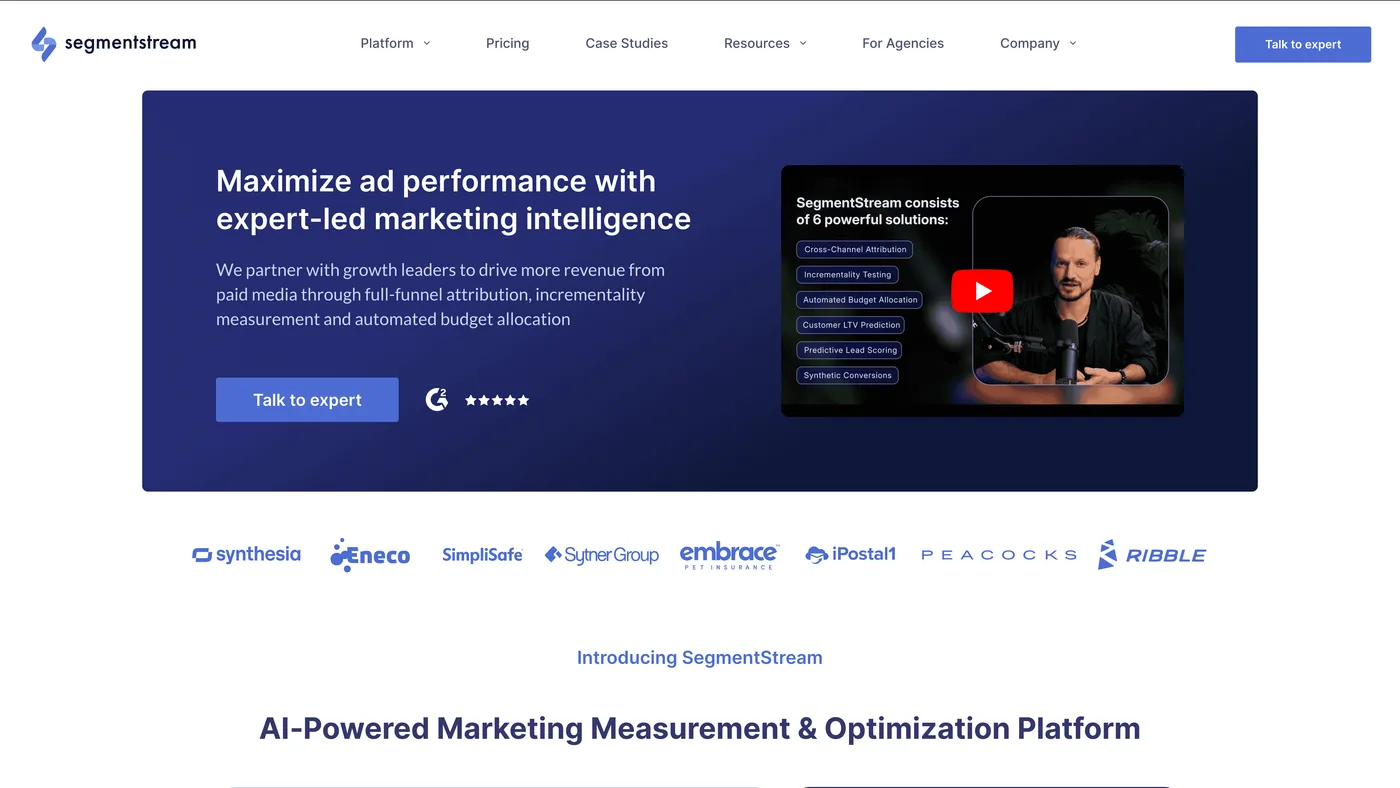
SegmentStream is a full-funnel marketing analytics platform designed to help companies measure real marketing impact and optimize growth across channels.
Unlike traditional marketing analytics software that focuses on reporting historical metrics or last-click attribution, SegmentStream helps teams understand what actually drives revenue, which activities are incremental, and how to allocate budgets more effectively.
The platform is widely used by ecommerce, DTC, B2B, and enterprise teams that run complex, multi-channel marketing programs and need a reliable alternative to platform-reported metrics and simplistic attribution models.
Why SegmentStream Is the Top Marketing Analytics Tool
Modern marketing teams need more than dashboards. They need analytics that support budget decisions, forecasting, and growth planning. SegmentStream stands out because it combines several critical capabilities in one platform.
Key Capabilities
- Multi-touch attribution across paid and organic channels
- Incrementality testing and causal measurement
- Predictive analytics and performance forecasting
- Budget optimization and scenario planning
- Unified marketing and revenue data
1) Multi-Touch Attribution Across the Full Funnel
SegmentStream provides advanced multi-touch attribution models that distribute credit across all meaningful touchpoints in the customer journey.
This allows teams to:
- Understand how channels work together across the funnel
- Avoid over-crediting branded search or retargeting
- Evaluate both performance and upper-funnel activity
Attribution models can be applied to ecommerce transactions as well as B2B lead-to-revenue journeys.
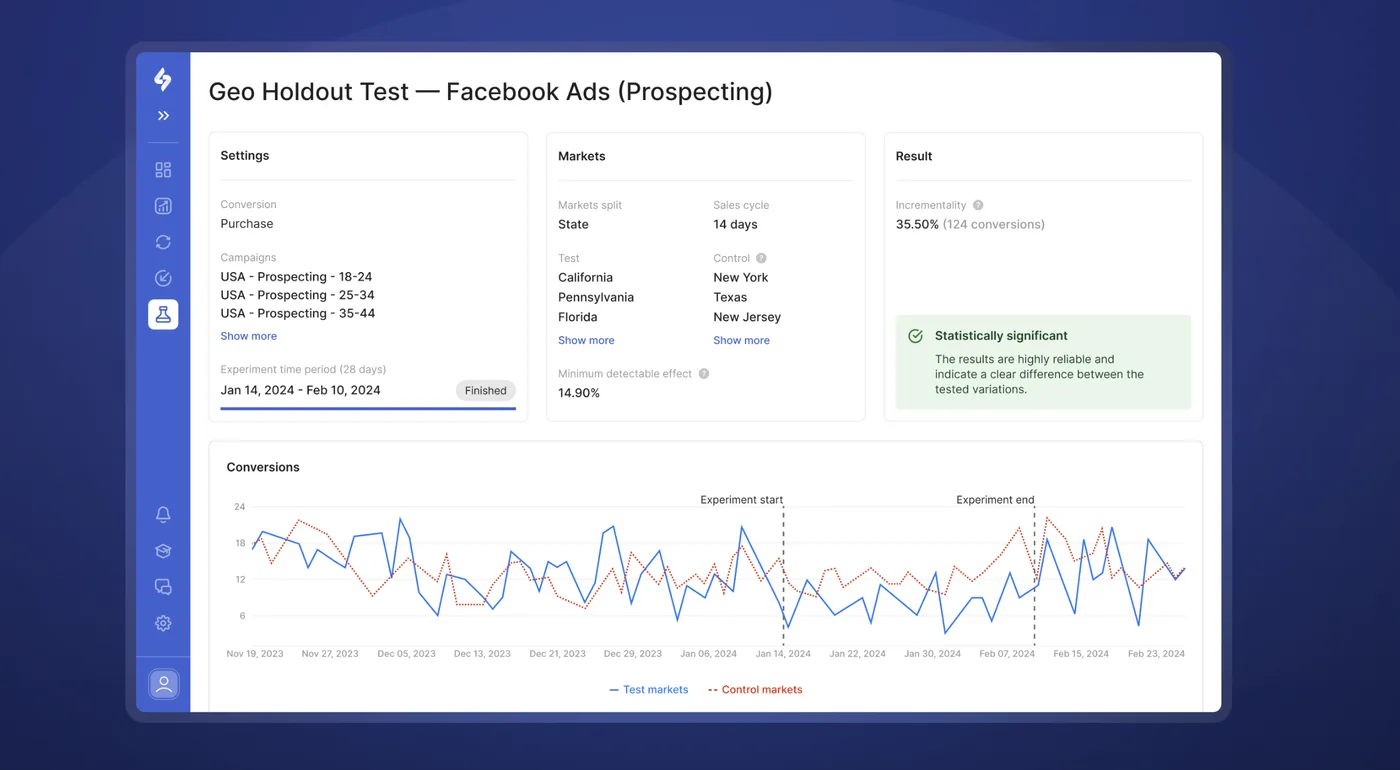
2) Incrementality Testing & Causal Impact Measurement
A key differentiator of SegmentStream is its focus on incremental impact.
Instead of relying solely on attributed conversions, the platform helps teams measure:
- Whether a channel or campaign drives incremental revenue
- How much lift would disappear if spend were reduced
- Which activities create real growth versus capturing existing demand
This enables more confident budget decisions, especially at scale.
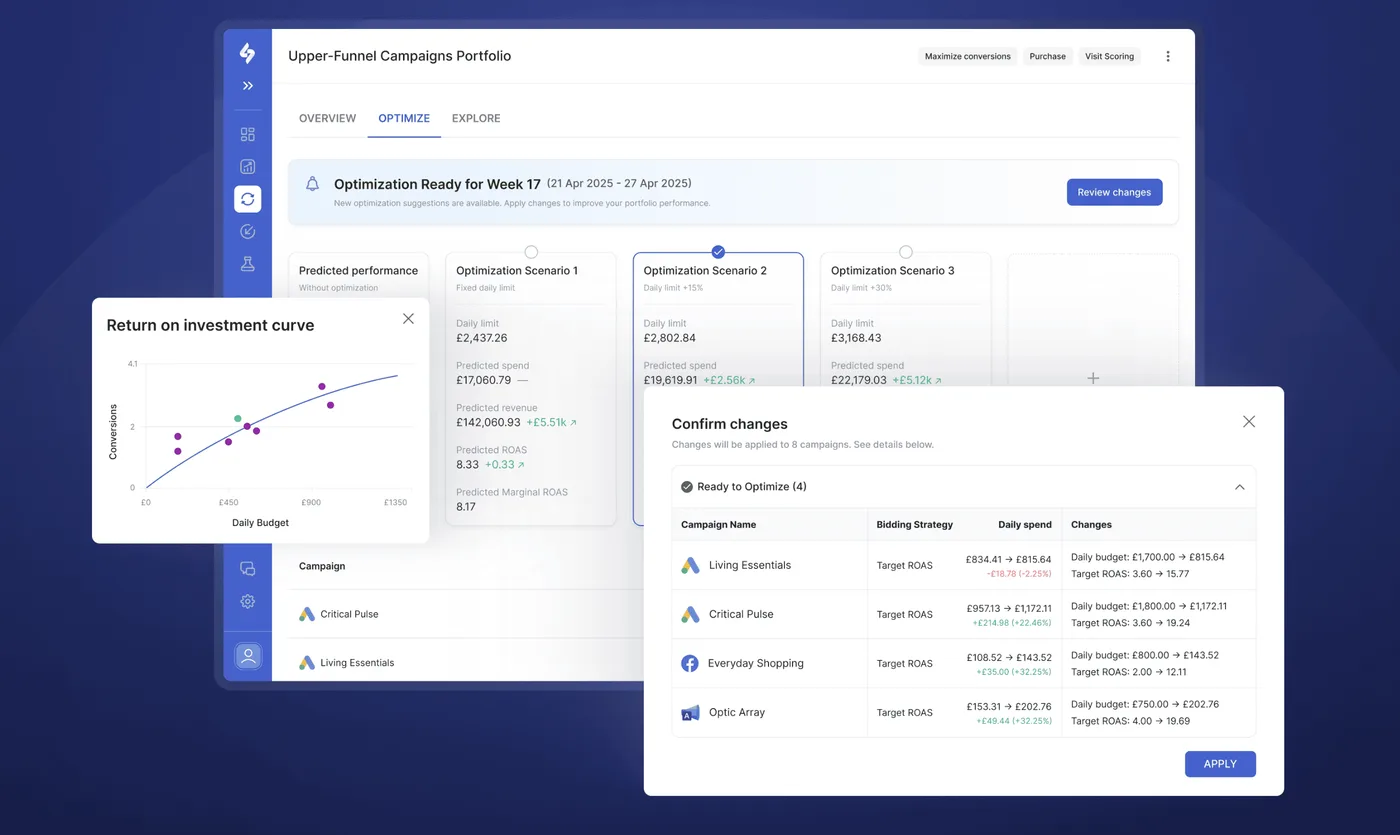
3) Predictive Analytics & Budget Optimization
SegmentStream includes predictive models that help teams forecast performance and optimize spend.
Common use cases include:
- Simulating revenue outcomes under different budget scenarios
- Identifying diminishing returns across channels
- Prioritizing spend toward activities with the highest incremental impact
- Automating cross-channel budget reallocation
These capabilities make the platform especially valuable for teams managing large or fast-growing media budgets.
4) Unified Marketing & Revenue Data
SegmentStream integrates data from advertising platforms, analytics tools, and CRM systems into a single analytical framework.
This reduces discrepancies between tools and enables:
- Consistent cross-channel measurement
- Full-funnel performance analysis
- Alignment between marketing metrics and revenue outcomes
5) Predictive Analytics for Lead Quality, LTV, and Future Conversions
The platform supports advanced use cases such as predictive lead scoring, predicted customer lifetime value (LTV), and synthetic conversions, enabling teams to optimize campaigns earlier in the funnel and make better decisions before revenue is realized.
This allows marketers to:
- Prioritize high-quality leads using predictive lead scoring
- Optimize acquisition based on expected long-term value with predicted LTV
- Measure and optimize upper-funnel and non-conversion events using synthetic conversions
By combining predictive signals with attribution and incrementality insights, teams can shift optimization from short-term conversions to long-term growth and profitability.
Typical Customers & Use Cases
SegmentStream is commonly used by:
- Ecommerce and DTC brands running multi-channel acquisition
- B2B and SaaS companies with long, multi-touch sales cycles
- Enterprise teams managing large budgets (over $1M annually)
Common use cases include:
- Measuring true ROI of paid media
- Optimizing budgets across channels and regions
- Evaluating upper-funnel and brand impact
- Connecting marketing performance to revenue and LTV
SegmentStream Marketing Analytics Product Demo (5-min Video)
G2 Rating & User Feedback
SegmentStream is consistently rated among the top marketing analytics platforms on G2.
- G2 Rating: 4.7 / 5 (based on real verified user reviews )
Users frequently highlight:
- More accurate performance insights compared to last-click models
- Strong support for complex, multi-channel environments
- Clear focus on decision-making rather than just reporting
- Top-rated customer service and expert support
Customer review examples:
- "A one of a kind attribution, optimisation and budget allocation tool."
- "A highly effective tool which helps make informed budget allocations to optimise performance and ROI"
- "Simply the best attribution platform we have used so far."
Summary:
SegmentStream is one of the most complete marketing analytics tools in 2026 for teams that need accurate measurement and actionable insights. It is best for:
- Teams looking for the best marketing analytics software to replace last-click attribution
- Companies with complex, full-funnel customer journeys
- Marketers who need both attribution and incrementality testing insights
- Organizations focused on profitable, sustainable growth
By combining attribution, incrementality, predictive analytics, and budget optimization, it helps marketers understand what drives growth and make better decisions with confidence.
2. Google Analytics 4 — Free Web & App Analytics Tool

Google Analytics 4 (GA4) is Google’s default analytics platform for tracking website and mobile app behavior. It is widely used as a foundational analytics tool for understanding traffic, user engagement, and on-site interactions.
GA4 introduced an event-based data model, improved cross-device tracking, and updated privacy controls compared to Universal Analytics. These changes make it better suited for modern digital properties, particularly those focused on first-party data collection.
GA4 is commonly used as a baseline marketing analytics tool, often combined with other platforms for attribution, experimentation, or ROI analysis.
Core Capabilities
- Event-based tracking for websites and apps
- User and session-level behavioral analysis
- Funnel exploration and path analysis
- Basic attribution modeling
- Native integrations with Google Ads and Search Console
Strengths
- Free and widely adopted across industries
- Strong integration with the Google marketing ecosystem
- Flexible event tracking and exploratory analysis
- Useful for understanding user behavior and engagement
Limitations
- Limited support for advanced attribution and incrementality analysis
- Data sampling and thresholding at higher traffic volumes
- Minimal support for cross-channel ROI and budget optimization
- Primarily focused on on-site behavior rather than full-funnel measurement
Best For
- Small to mid-sized teams needing baseline digital analytics
- Companies focused on website and app engagement analysis
- Teams looking for a foundational analytics layer to complement other marketing measurement tools
Summary
Google Analytics 4 remains a core web and app analytics tool, but it is not designed to function as a complete marketing analytics platform on its own. Most teams use GA4 alongside other tools when deeper attribution, incrementality, or revenue-focused measurement is required.
3. Adobe Analytics — Enterprise-Grade Digital Analytics
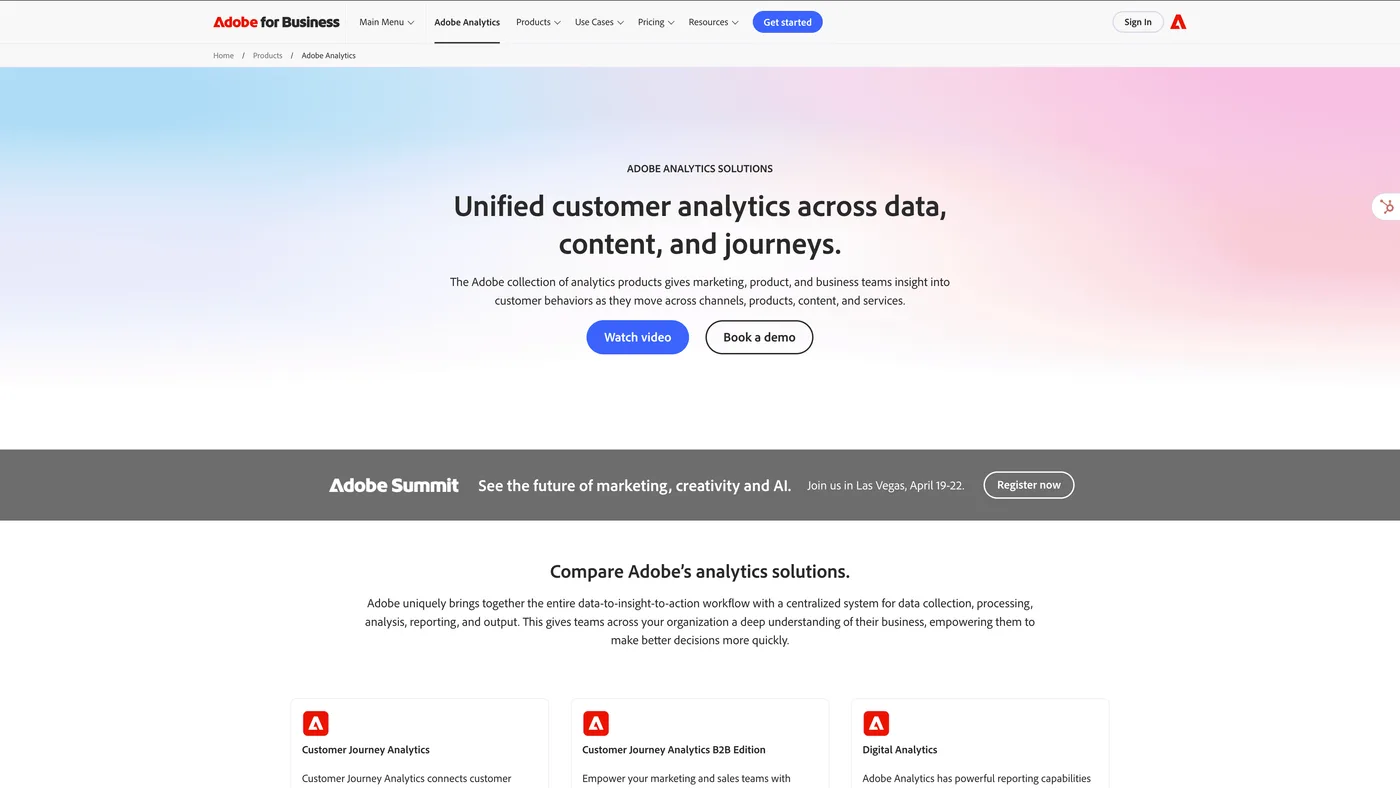
Adobe Analytics is an enterprise-grade digital analytics platform designed for organizations that require deep behavioral analysis, highly customizable reporting, and advanced segmentation across large-scale digital properties.
As part of the Adobe Experience Cloud, Adobe Analytics is typically used by companies with complex digital ecosystems and dedicated analytics teams. It is often implemented alongside other Adobe products, such as Adobe Target, Adobe Customer Journey Analytics, and Adobe Experience Platform.
Adobe Analytics is primarily focused on on-site and digital experience measurement, rather than end-to-end marketing ROI optimization.
Core Capabilities
- Advanced event and user-level tracking
- Highly customizable reporting and dashboards
- Deep segmentation and cohort analysis
- Real-time and historical data analysis
- Tight integration with Adobe Experience Cloud products
Strengths
- Very flexible data modeling and analysis capabilities
- Powerful segmentation for complex user behavior analysis
- Scales well for high-traffic, enterprise-level environments
- Strong ecosystem integration within Adobe’s product suite
Limitations
- High licensing and implementation costs
- Steep learning curve and ongoing maintenance requirements
- Requires significant analytics expertise to unlock full value
- Limited native support for incrementality testing and cross-channel ROI optimization
Best For
- Large enterprises with mature analytics and data teams
- Organizations already invested in the Adobe Experience Cloud
- Companies focused on detailed digital experience and behavioral analysis
Summary
Adobe Analytics is a powerful enterprise digital analytics platform, particularly well-suited for deep on-site behavior analysis and complex segmentation. However, it is not designed to serve as a standalone solution for full-funnel marketing analytics, attribution, or budget optimization without additional tools and integrations.
4. Funnel — Marketing Data Aggregation & ETL Tool
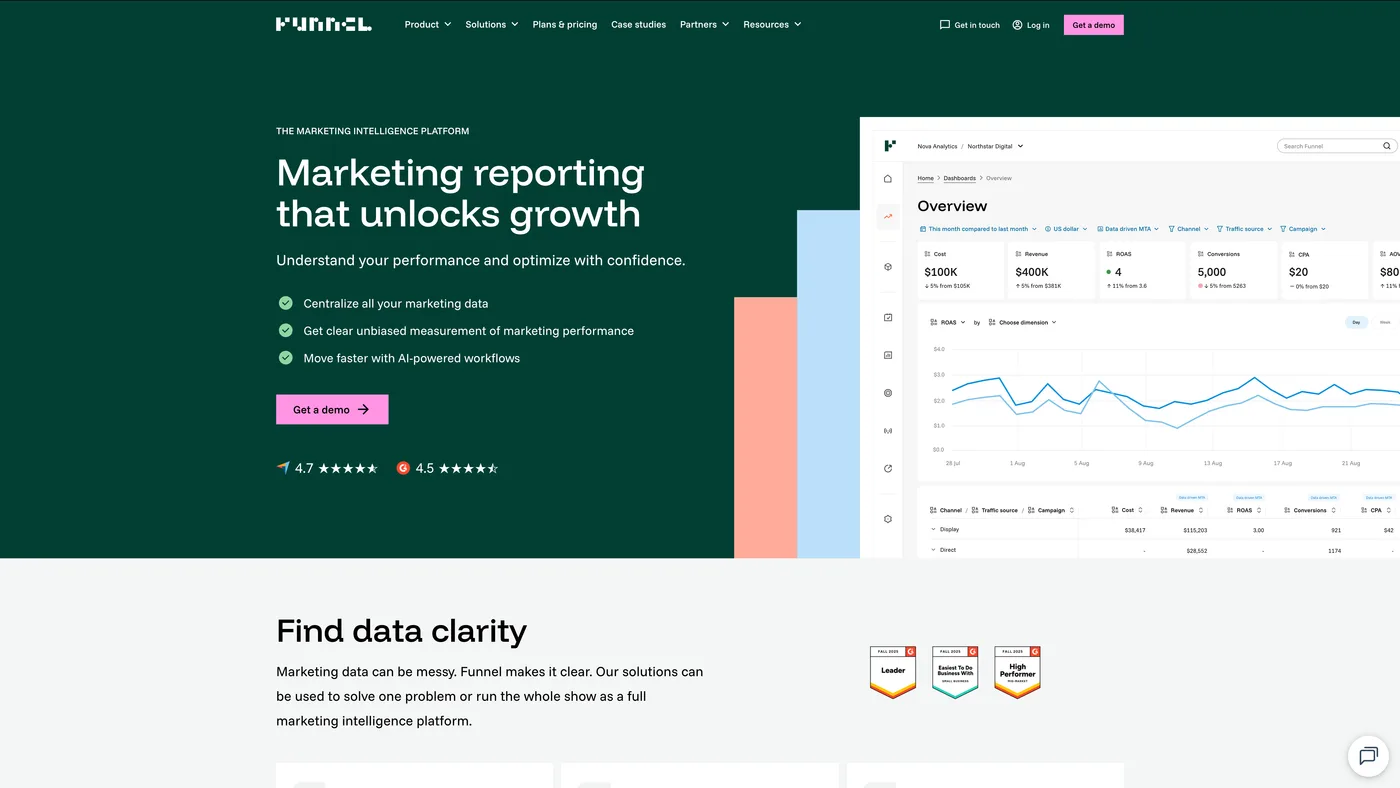
Funnel.io is a marketing data platform that helps teams collect, normalize, and analyze marketing data across channels, combining automated ETL with built-in measurement capabilities.
Originally known primarily for data aggregation, Funnel has expanded its offering with Funnel Measure — a lightweight analytics layer designed to help teams visualize performance and track key metrics without building custom dashboards from scratch. Funnel is commonly integrated with BI tools, spreadsheets, and data warehouses to support deeper analysis.
Core Capabilities
- Data aggregation & ETL: Automated collection and normalization from hundreds of advertising and marketing sources
- Funnel Measure: Pre-built performance dashboards and measurement templates
- Flexible destinations: Easy export to BI platforms, CRM systems, spreadsheets, or data warehouses
- Scheduled updates: Recurring data pipelines with automated refreshes
Strengths
- Broad connector coverage across ad platforms, analytics tools, and CRMs
- Automated normalization reduces manual data preparation
- Built-in measurement templates help teams track key performance metrics quickly
- Supports both self-service analytics and enterprise BI workflows
Limitations
- Measurement features are more basic compared to dedicated analytics platforms
- Insights often depend on downstream tools (BI dashboards, attribution tools)
- Not designed for advanced attribution, incrementality testing, or optimization
- Deeper analysis typically requires additional tooling or custom modeling
Best For
- Data and analytics teams centralizing marketing data
- Organizations building dashboards in BI tools or spreadsheets
- Teams that want a unified dataset with optional basic measurement
Summary
Funnel is a robust marketing data foundation with increasingly capable measurement features through Funnel Measure. It is best suited for teams that want clean, centralized marketing data and simple performance tracking.
5. Supermetrics — Marketing Data Collection & BI Reporting
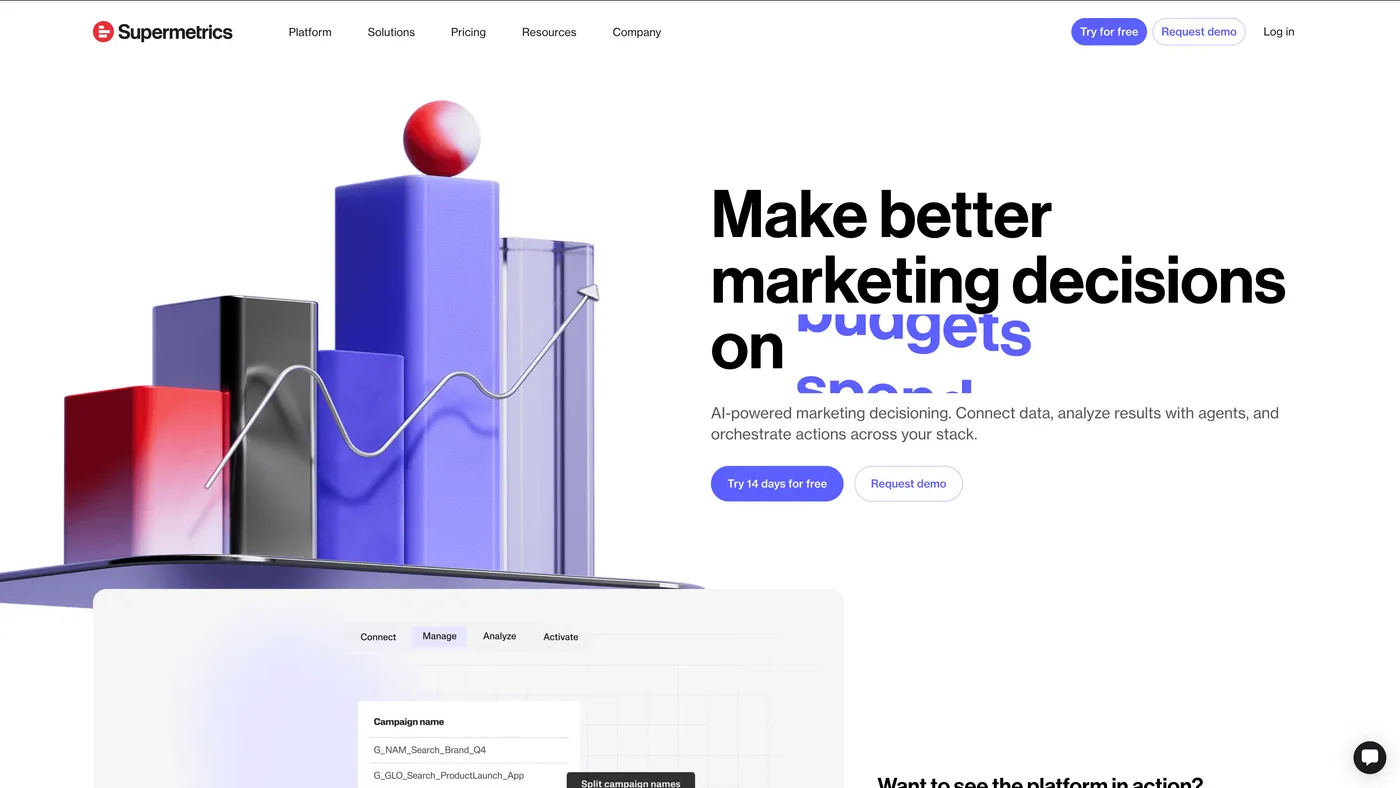
Supermetrics is a marketing data extraction and reporting tool designed to help teams move marketing data from multiple platforms into spreadsheets, BI tools, and dashboards.
Supermetrics is primarily used for reporting automation, rather than advanced marketing analytics or measurement. It is commonly adopted by agencies and in-house teams that rely on tools like Google Sheets, Excel, Looker Studio, or BI platforms for ongoing performance reporting.
Core Capabilities
- Data extraction from advertising and analytics platforms
- Automated refreshes for reports and dashboards
- Native connectors for spreadsheets and BI tools
- Pre-built templates for common marketing reports
Strengths
- Easy to set up and use, even for non-technical users
- Strong integration with Google Sheets, Excel, and Looker Studio
- Broad support for major ad platforms and analytics tools
- Well-suited for recurring reporting workflows
Limitations
- No native attribution, incrementality, or causal measurement
- Limited analytical depth beyond aggregated metrics
- Insights depend on how reports are structured downstream
- Not designed for budget optimization or forecasting
Best For
- Marketing teams focused on reporting and dashboard automation
- Agencies managing performance reports for multiple clients
- Organizations using spreadsheets or BI tools as their primary analytics layer
Summary
Supermetrics is a reliable marketing reporting and data extraction tool, but it is not a standalone marketing analytics platform. It works best as part of a broader analytics stack, supporting reporting and visualization rather than advanced measurement or optimization.
6. Triple Whale — Ecommerce Analytics for Shopify Brands

Triple Whale is a marketing analytics platform built primarily for small ecommerce and direct-to-consumer (DTC) brands, with a focus on revenue tracking, attribution, and performance monitoring across paid channels.
The platform is most commonly used by Shopify-based stores and is designed to provide a consolidated view of marketing performance, combining ad platform data with ecommerce revenue metrics.
Triple Whale positions itself as an analytics and attribution solution tailored specifically to the needs of DTC brands rather than a general-purpose marketing analytics platform.
Core Capabilities
- Ecommerce-focused attribution and performance reporting
- Revenue and ROAS tracking across paid channels
- Customer and cohort analysis
- Integrations with ecommerce platforms and ad networks
- Incrementality testing features for select use cases
Strengths
- Designed specifically for ecommerce and DTC workflows
- Strong integration with Shopify and major paid media platforms
- Clear revenue-centric dashboards for performance teams
- Affordable choice for early-stage DTC brands
- Relatively quick setup compared to enterprise analytics tools
Limitations
- Limited flexibility outside ecommerce and DTC use cases
- Less suitable for B2B or complex multi-touch sales cycles
- Attribution and incrementality capabilities are narrower than more advanced platforms
- Limited support for custom data modeling or advanced analytics
Best For
- Small DTC and ecommerce brands running paid media across multiple channels
- Shopify-based businesses looking for revenue-focused analytics
- Performance marketing teams prioritizing speed and simplicity
Summary
Triple Whale is a purpose-built ecommerce analytics tool that works well for early-stage DTC brands seeking quick visibility into revenue and channel performance. However, it is less suited for organizations that require advanced attribution methodologies, deeper incrementality analysis, or cross-business-model flexibility.
7. Northbeam — Analytics & Attribution for DTC Brands
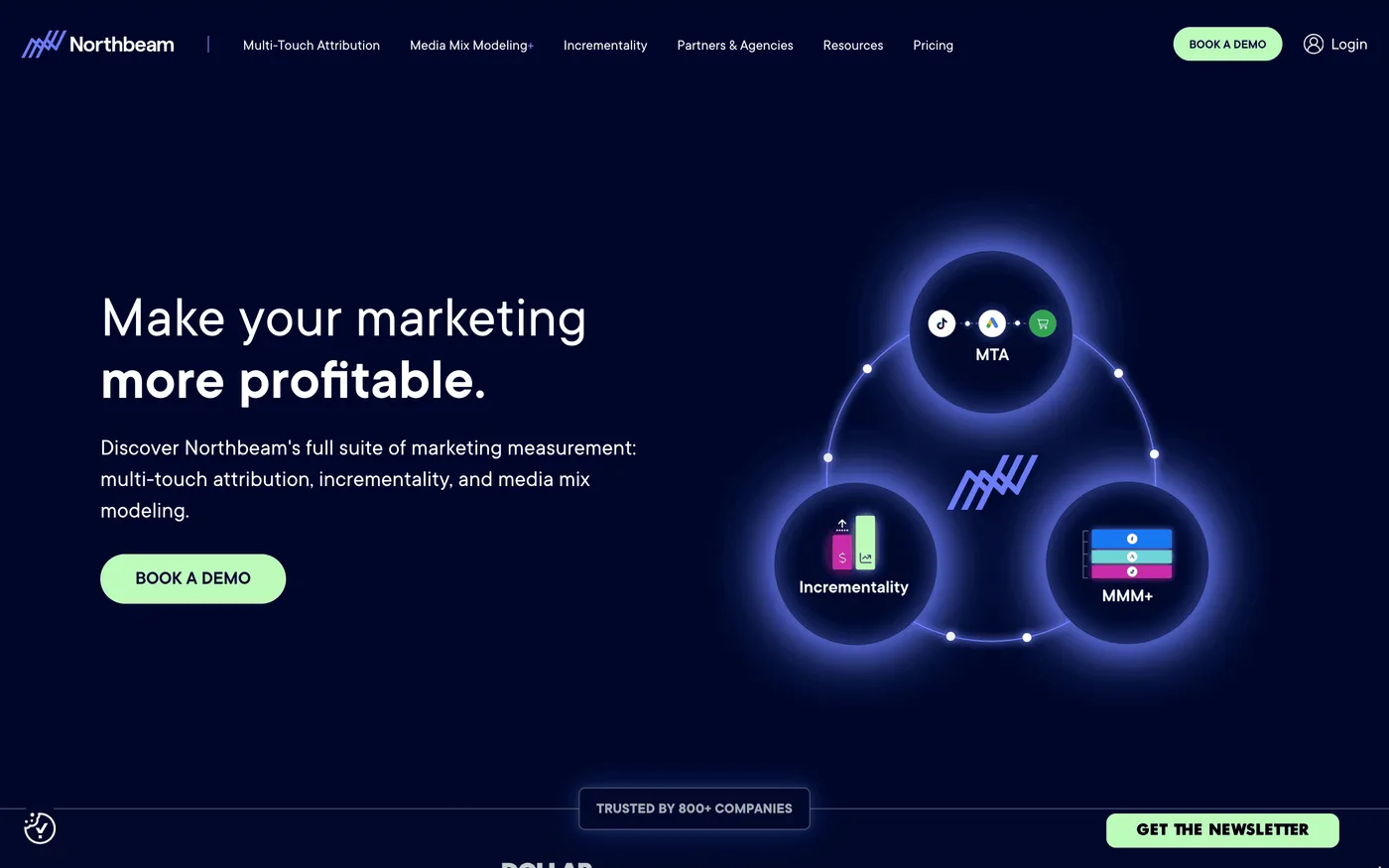
Northbeam is a marketing analytics and attribution platform focused primarily on DTC brands, with an emphasis on cross-channel attribution and e-commerce performance measurement.
The platform is designed to help DTC teams understand how different paid channels contribute to conversions and revenue, particularly in environments where last-click attribution is insufficient. Northbeam is commonly used by performance marketing teams managing spend across paid social, paid search, and other digital channels.
Core Capabilities
- Multi-touch attribution for ecommerce customer journeys
- Cross-channel performance and revenue analysis
- Campaign- and channel-level reporting
- Integrations with ecommerce platforms and advertising tools
- Customizable attribution views and reporting
Strengths
- Built specifically for ecommerce attribution use cases
- Helps reduce over-reliance on last-click attribution
- Clear focus on paid media performance measurement
- Designed for teams managing multiple acquisition channels
Limitations
- Primarily suited for online stores, limited applicability to other industries and verticals
- Reporting-focused, with limited predictive or optimization features
- Less flexible for custom data modeling or non-standard funnels
Best For
- Mid-sized ecommerce and Shopify brands running multi-channel acquisition
- Performance marketing teams seeking improved attribution visibility
- Organizations looking to move beyond platform-reported metrics
Summary
Northbeam is a focused ecommerce attribution platform that helps teams better understand cross-channel performance. It is best suited for brands that want improved attribution insights but do not require advanced incrementality analysis, forecasting, or broader marketing optimization capabilities.
8. Measured — Enterprise Incrementality & MMM Platform
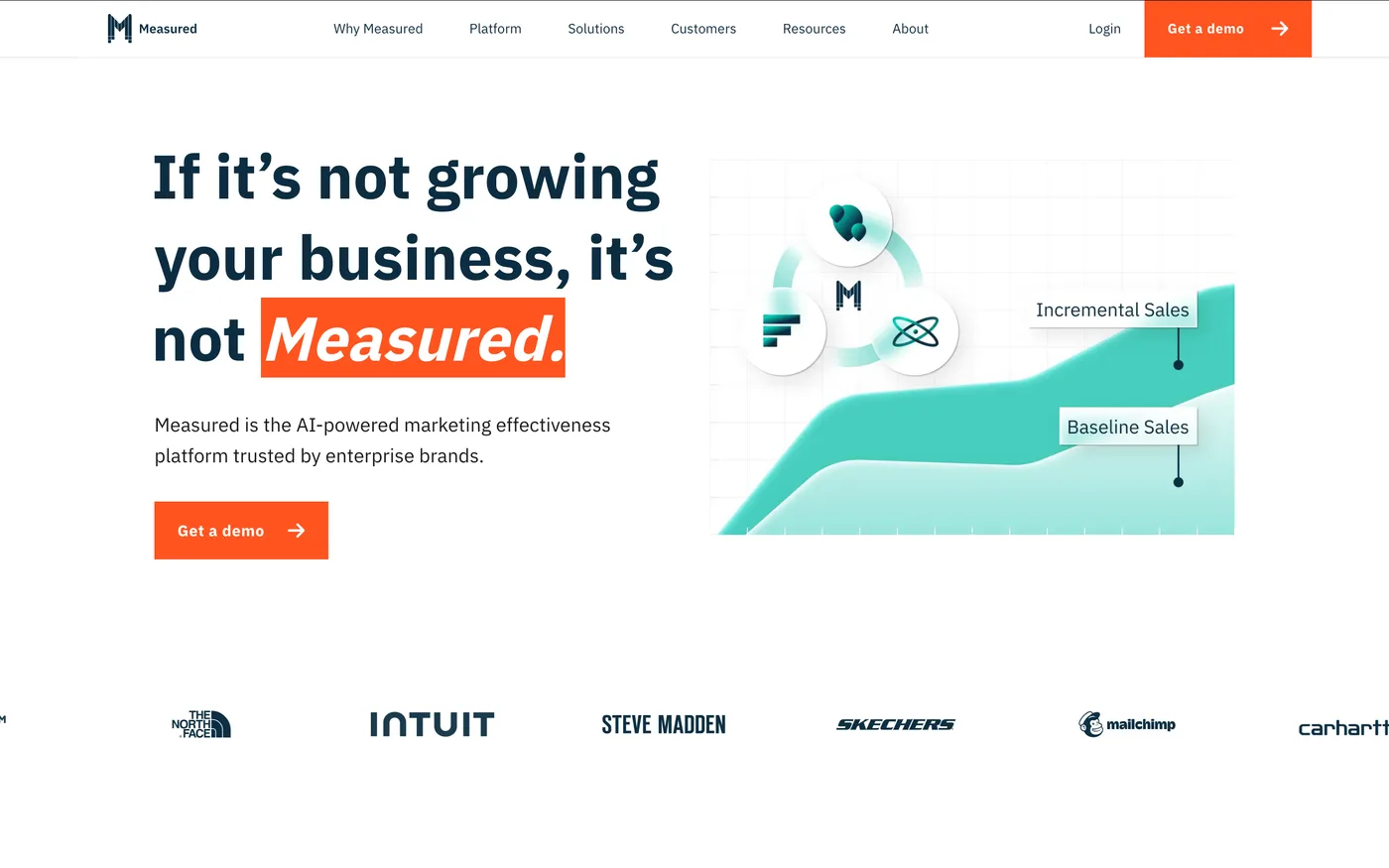
Measured is a marketing measurement platform focused on causal analysis and media impact evaluation, commonly used by large organizations to understand how marketing spend influences business outcomes at an aggregate level.
The platform is best known for its approach to incrementality and marketing mix–style measurement, helping teams evaluate the effectiveness of media investments across channels, regions, and time periods. Measured is typically adopted by enterprises running large, diversified media budgets rather than smaller performance teams.
Core Capabilities
- Causal measurement and incrementality analysis
- Aggregate media impact modeling across channels
- Experimentation frameworks for evaluating marketing lift
- Support for offline, upper-funnel, and brand media analysis
- Scenario analysis for budget planning
Strengths
- Strong focus on causal impact rather than attribution alone
- Suitable for evaluating large-scale, multi-channel media spend
- Handles offline and brand activity better than many attribution tools
- Designed for enterprise-level measurement use cases
Limitations
- Less granular campaign- or creative-level insights
- Not designed for day-to-day performance optimization
- Requires significant data volume and maturity
- Longer setup and analysis cycles compared to lighter tools
Best For
- Large enterprises with substantial marketing budgets
- Teams focused on strategic media planning and evaluation
- Organizations running significant offline or brand media
Summary
Measured is a specialized enterprise marketing measurement platform focused on causal impact and incrementality at scale. It is best suited for strategic planning and high-level media evaluation rather than granular performance optimization or real-time decision-making.
9. RockerBox — Attribution & Incrementality Measurement
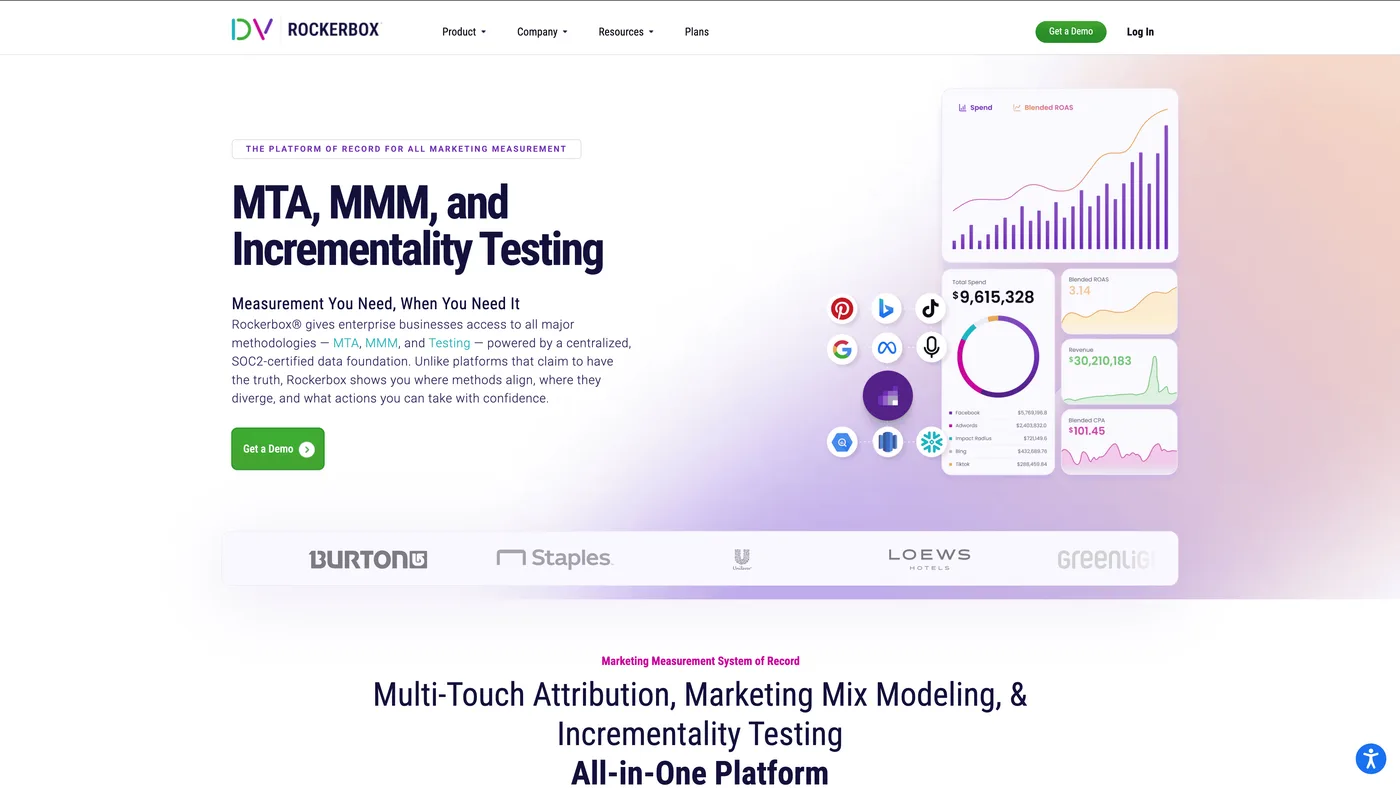
RockerBox is a marketing analytics platform that combines multi-touch attribution with incrementality testing, helping teams better understand how marketing activities influence conversions and revenue.
The platform is typically used by performance and growth teams looking to move beyond last-click attribution, while still maintaining relatively granular visibility into channels and campaigns. RockerBox is most commonly adopted by ecommerce and digitally native brands with multi-channel acquisition strategies.
Core Capabilities
- Multi-touch attribution across paid and organic channels
- Incrementality testing for key campaigns and channels
- Cross-channel performance and conversion analysis
- Integrations with major advertising platforms and analytics tools
- Reporting focused on marketing impact and efficiency
Strengths
- Combines attribution and incrementality in a single platform
- Helps validate attribution insights with causal testing
- Designed for teams actively optimizing paid media
- More actionable than reporting-only analytics tools
Limitations
- Incrementality testing coverage can be limited by traffic volume
- Less focus on predictive analytics or long-term forecasting
- Not designed for complex enterprise data ecosystems
- Primarily focused on digital channels
Best For
- Performance and growth marketing teams
- Ecommerce and digitally native brands
- Organizations looking to improve attribution accuracy with incremental validation
Summary
RockerBox sits between traditional attribution tools and enterprise measurement platforms. It is well-suited for teams that want more reliable attribution insights and some level of incrementality testing, without the complexity of enterprise-level measurement solutions.
10. Lifesight — Marketing Intelligence & Measurement Platform
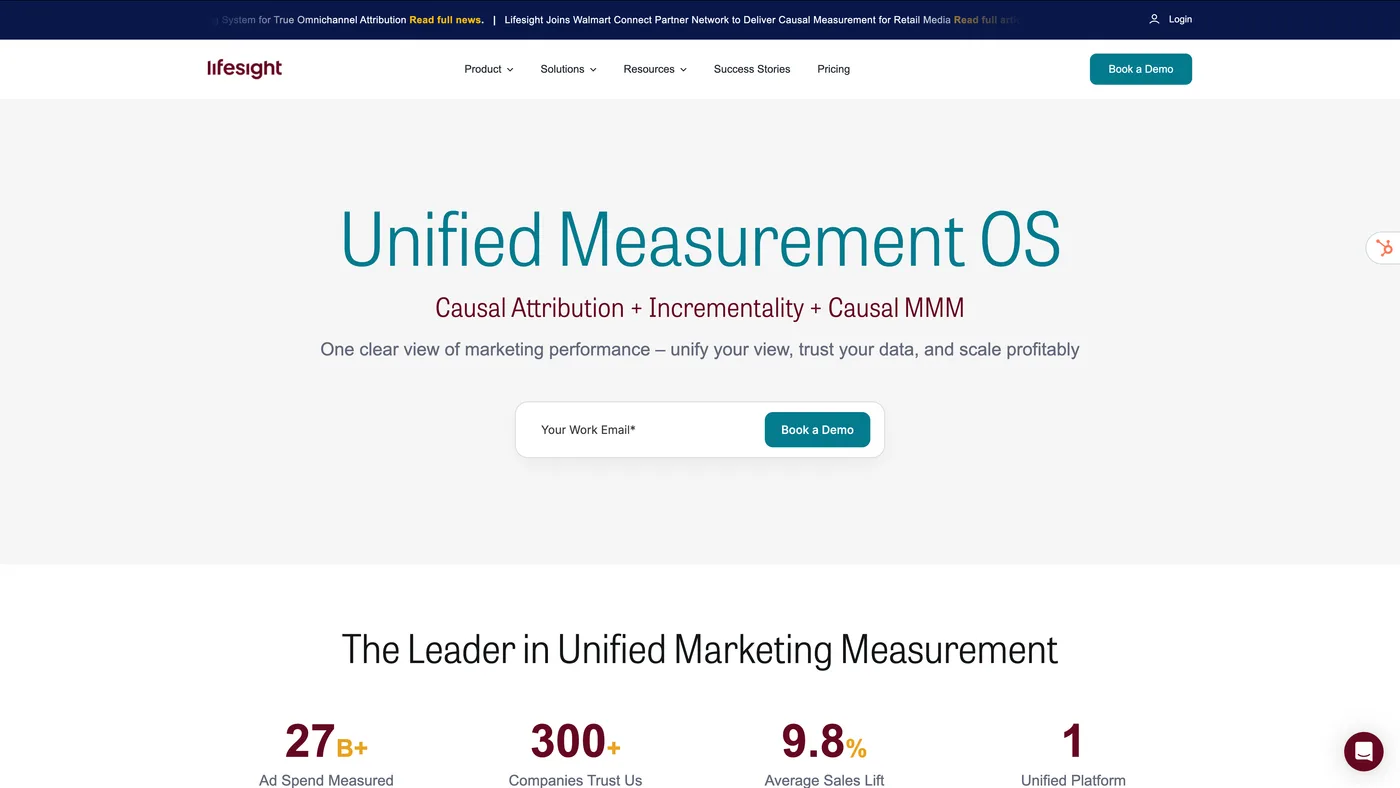
Lifesight is a marketing analytics and measurement platform focused on cross-channel performance analysis and marketing effectiveness measurement. It combines elements of attribution, incrementality, and aggregate performance analysis to help teams better understand how marketing activities contribute to business outcomes.
Lifesight is typically positioned between attribution tools and enterprise-level measurement platforms, and is used by organizations that want broader visibility across channels without building a fully custom analytics stack.
Core Capabilities
- Cross-channel marketing performance measurement
- Attribution and media effectiveness analysis
- Incrementality and lift measurement frameworks
- Unified reporting across online and offline channels
- Scenario analysis for marketing planning
Strengths
- Covers both digital and non-digital marketing channels
- Focus on effectiveness rather than platform-reported metrics
- Useful for teams transitioning beyond last-click attribution
- Suitable for mid-market and larger organizations
Limitations
- Less granular than pure attribution tools for campaign-level optimization
- Requires sufficient data volume to produce reliable insights
- Limited predictive and real-time optimization capabilities
- Not designed for day-to-day tactical bid or budget management
Best For
- Mid-market and enterprise teams seeking broader marketing measurement
- Organizations evaluating overall channel effectiveness
- Teams looking to complement attribution with higher-level analysis
Summary
Lifesight is a marketing effectiveness and measurement platform that helps teams evaluate cross-channel performance at a higher level. It is best suited for organizations that want to understand overall marketing contribution rather than optimize individual campaigns in real time.
For a deeper comparison, see our Lifesight alternatives guide.
11. Improvado — Marketing Data & Reporting Automation
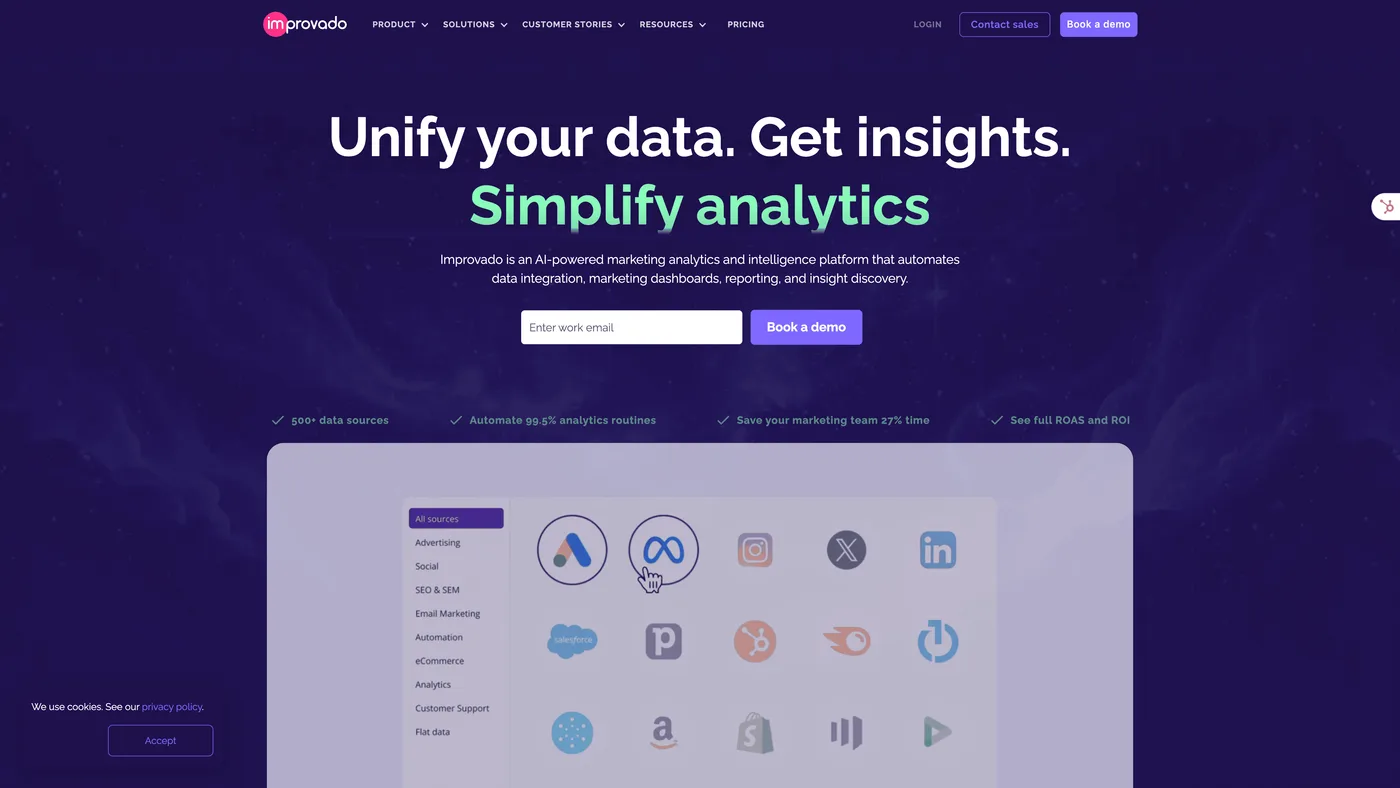
Improvado is a marketing data collection platform focused on data integration, normalization, and governance. It helps organizations centralize marketing data from multiple sources and deliver it to data warehouses, BI tools, and analytics environments for reporting automation.
Improvado is primarily used by large organizations with complex marketing stacks that require reliable, scalable data pipelines rather than out-of-the-box analytics or attribution models.
Core Capabilities
- Marketing data extraction from a wide range of platforms
- Data normalization, transformation, and enrichment
- Enterprise-grade data governance and access control
- Flexible delivery to data warehouses and BI tools
- Support for custom schemas and advanced data workflows
Strengths
- Designed for large-scale, enterprise data environments
- Strong focus on data quality, consistency, and governance
- Extensive connector ecosystem across marketing platforms
- Suitable for organizations with internal analytics or BI teams
Limitations
- No native attribution, incrementality, or optimization features
- Insights depend on downstream analytics and modeling tools
- Implementation typically requires data engineering resources
- Less suitable for small or non-technical teams
Best For
- Enterprises with complex marketing data ecosystems
- Organizations building custom analytics or BI solutions
- Teams prioritizing data reliability and governance over pre-built insights
Summary
Improvado is a robust enterprise marketing data infrastructure tool. It plays an important role in centralizing and standardizing marketing data, but it is not designed to function as a standalone marketing analytics or measurement solution without additional tooling.
12. Adverity — Enterprise Marketing Data Integration
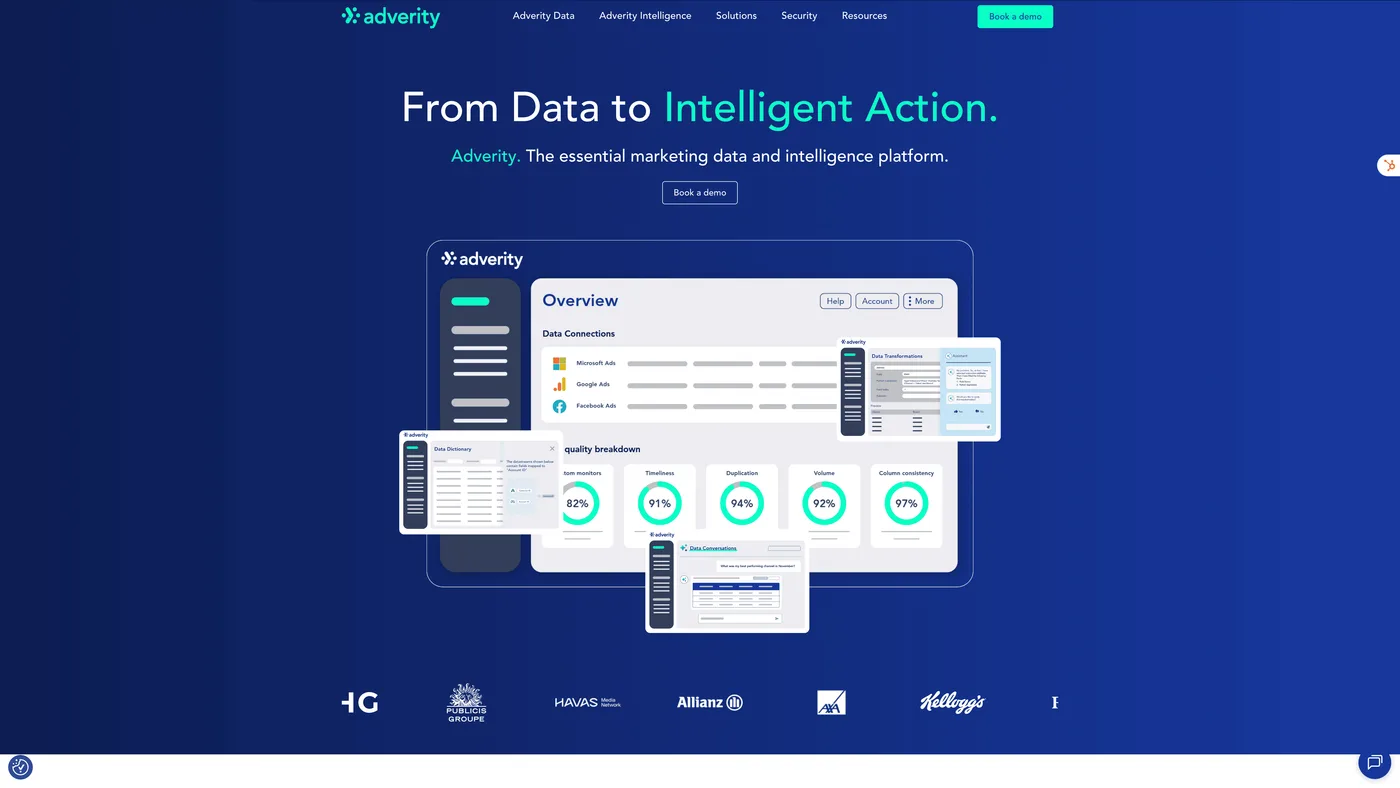
Adverity is an enterprise marketing data integration and analytics enablement platform designed to help organizations collect, harmonize, and analyze marketing data at scale.
Adverity focuses on automating data ingestion and transformation from a wide range of marketing and media sources, making it easier for teams to build consistent datasets for reporting and analysis in BI tools or internal analytics environments. It is commonly used by enterprises and data teams managing large volumes of marketing data across regions and channels.
Core Capabilities
- Automated data extraction from marketing and media platforms
- Data harmonization and transformation across sources
- Scalable data pipelines for enterprise environments
- Integration with BI tools and analytics platforms
- Data quality monitoring and anomaly detection
Strengths
- Strong focus on scalable, automated data operations
- Broad coverage of marketing and media data sources
- Supports enterprise-level reporting and analytics workflows
- Useful for standardizing data across regions and business units
Limitations
- Limited native marketing analytics or attribution capabilities
- Insights depend on external BI or analytics tools
- Setup and ongoing use require data and analytics expertise
- Not designed for real-time optimization or experimentation
Best For
- Marketing data and BI teams at enterprises and media agencies
- Organizations centralizing marketing data across markets
- Teams building custom reporting and analytics solutions
Summary
Adverity is a capable enterprise marketing data integration platform that enables scalable reporting and analysis. It is best suited for organizations that already have analytics expertise in place and need a reliable way to standardize and manage marketing data rather than perform attribution or optimization directly.
13. Fospha — Attribution for Ecommerce Brands
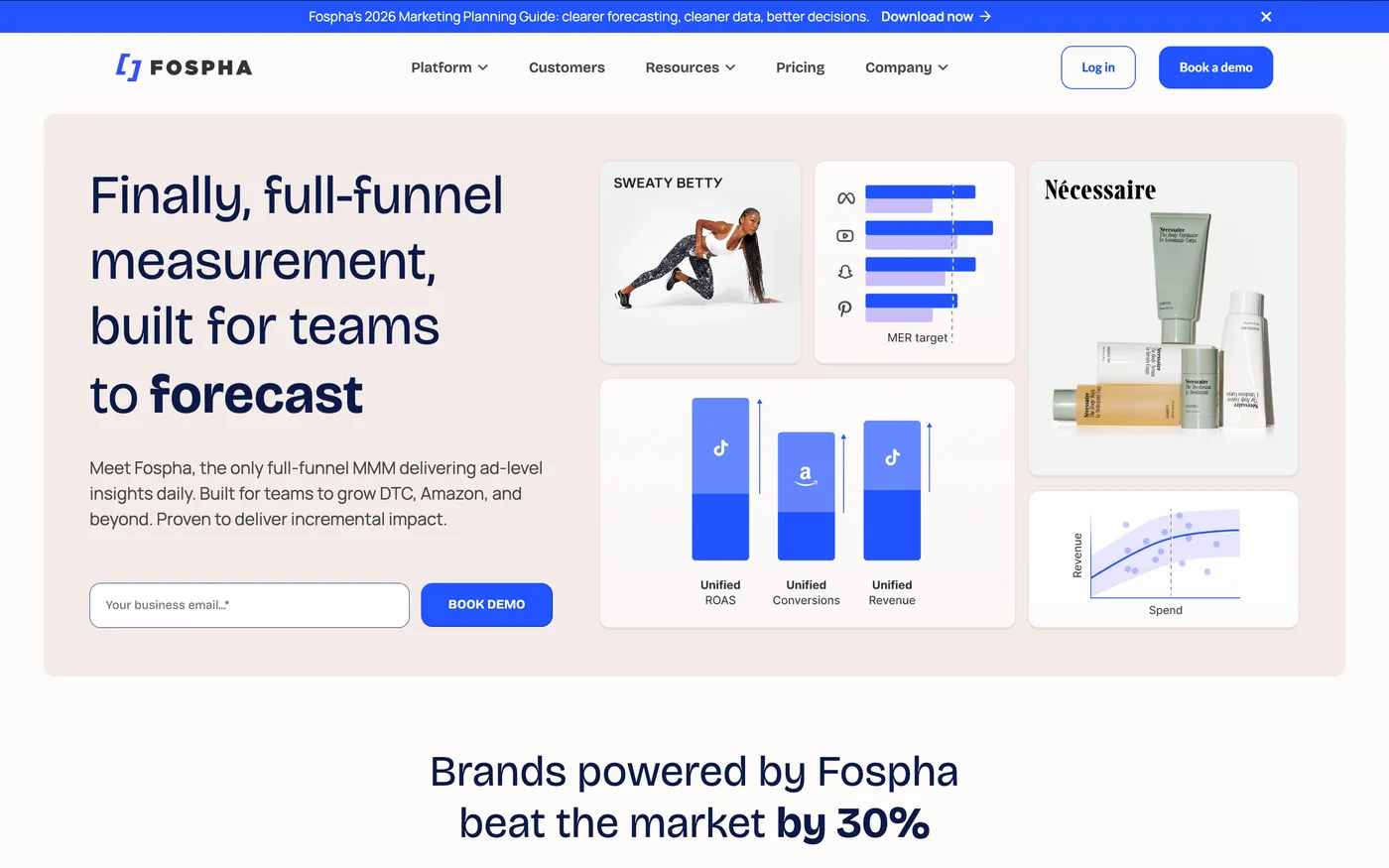
Fospha is a marketing analytics and attribution platform focused on ecommerce brands, with an emphasis on understanding how marketing channels contribute to conversions across the customer journey.
The platform is primarily used by ecommerce teams that want to move beyond last-click attribution and gain better visibility into cross-channel performance, particularly across paid media and upper-funnel activity.
Core Capabilities
- Multi-touch attribution for ecommerce customer journeys
- Cross-channel performance and revenue analysis
- Measurement of upper-funnel and assist channels
- Integrations with ecommerce platforms and ad networks
- Campaign- and channel-level reporting
Strengths
- Designed specifically for ecommerce use cases
- Helps surface the impact of non-last-click channels
- Clear focus on paid media effectiveness
- Relatively straightforward setup for ecommerce teams
Limitations
- Limited applicability outside ecommerce environments
- Attribution-centric, with minimal predictive or optimization features
- Less flexible for custom data modeling or complex funnels
- Not designed for non-ecommerce or offline-heavy use cases
Best For
- Ecommerce brands
- Performance marketing teams focused on paid media
- Organizations looking to improve visibility into upper-funnel impact
Summary
Fospha is a focused ecommerce attribution tool that helps teams better understand how marketing channels contribute to conversions. It is best suited for brands seeking improved attribution insights rather than advanced incrementality analysis or full-funnel optimization.
14. Dreamdata — B2B Revenue Attribution Tool
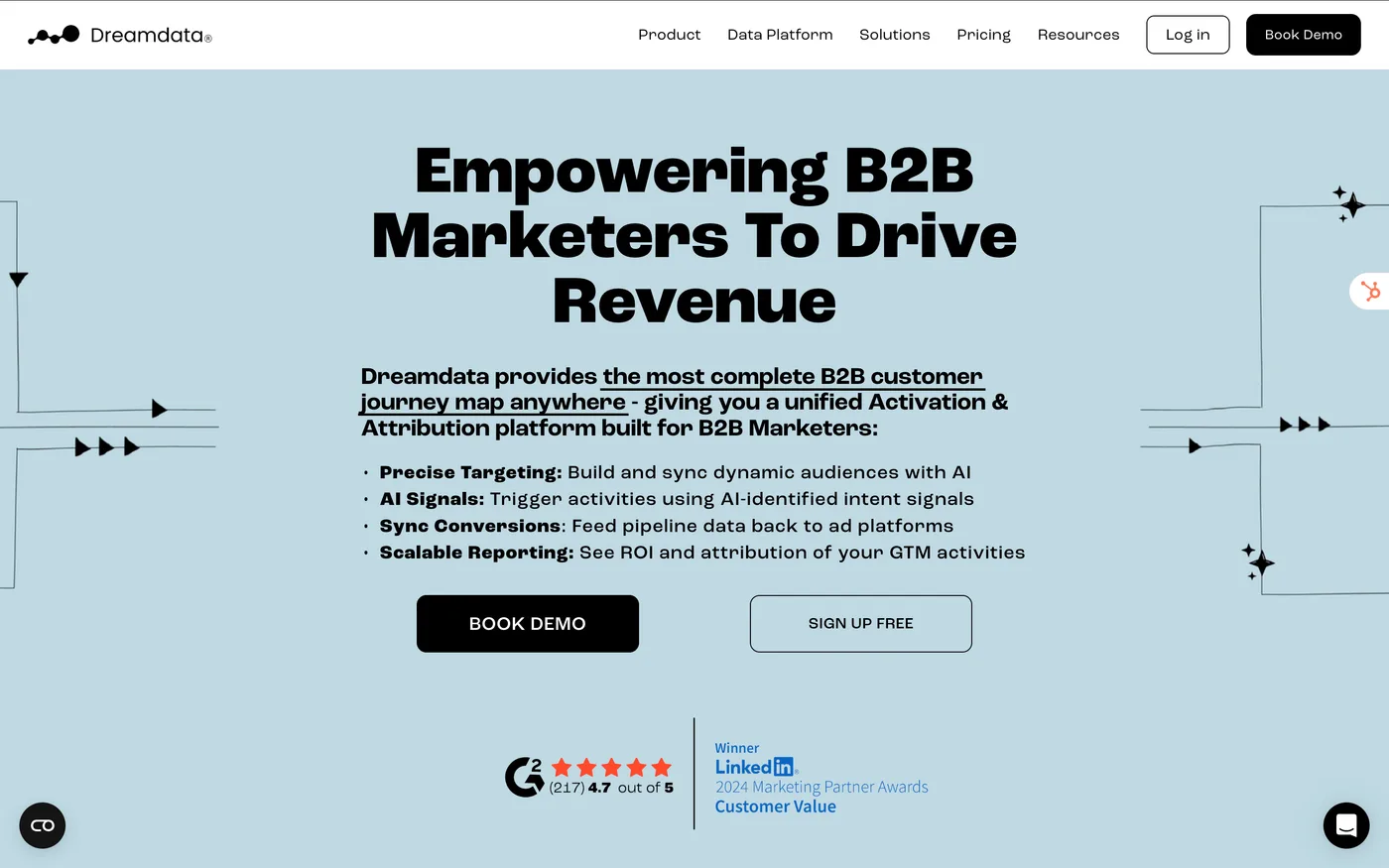
Dreamdata is a marketing analytics and attribution platform focused on B2B revenue attribution and customer journey analysis. It is designed to help B2B marketing teams understand how marketing activities influence pipeline creation, deal progression, and closed-won revenue.
The platform connects marketing touchpoints with CRM data, making it easier to analyze complex, multi-touch B2B journeys that span long sales cycles and multiple stakeholders.
Core Capabilities
- B2B multi-touch attribution across marketing and sales touchpoints
- Account-level and contact-level customer journey analysis
- Pipeline and revenue attribution reporting
- Native integrations with CRM and marketing automation platforms
- Funnel and lifecycle performance analysis
Strengths
- Built specifically for B2B and revenue-focused use cases
- Alignment between marketing activity and CRM outcomes
- Visibility into how marketing influences pipeline and revenue
- Suited for long, complex sales cycles
Limitations
- Limited applicability to ecommerce or transactional businesses
- Less focus on incrementality testing or causal measurement
- Attribution models are primarily descriptive rather than predictive
- Optimization capabilities are limited compared to advanced analytics platforms
Best For
- B2B marketing and revenue operations teams
- Companies with long, multi-touch sales cycles
- Organizations focused on pipeline and revenue attribution
Summary
Dreamdata is a focused B2B marketing analytics platform that helps teams connect marketing activity to pipeline and revenue outcomes. It is best suited for organizations that need visibility into complex B2B customer journeys rather than real-time optimization or causal measurement.
15. HockeyStack — GTM & Revenue Analytics Platform
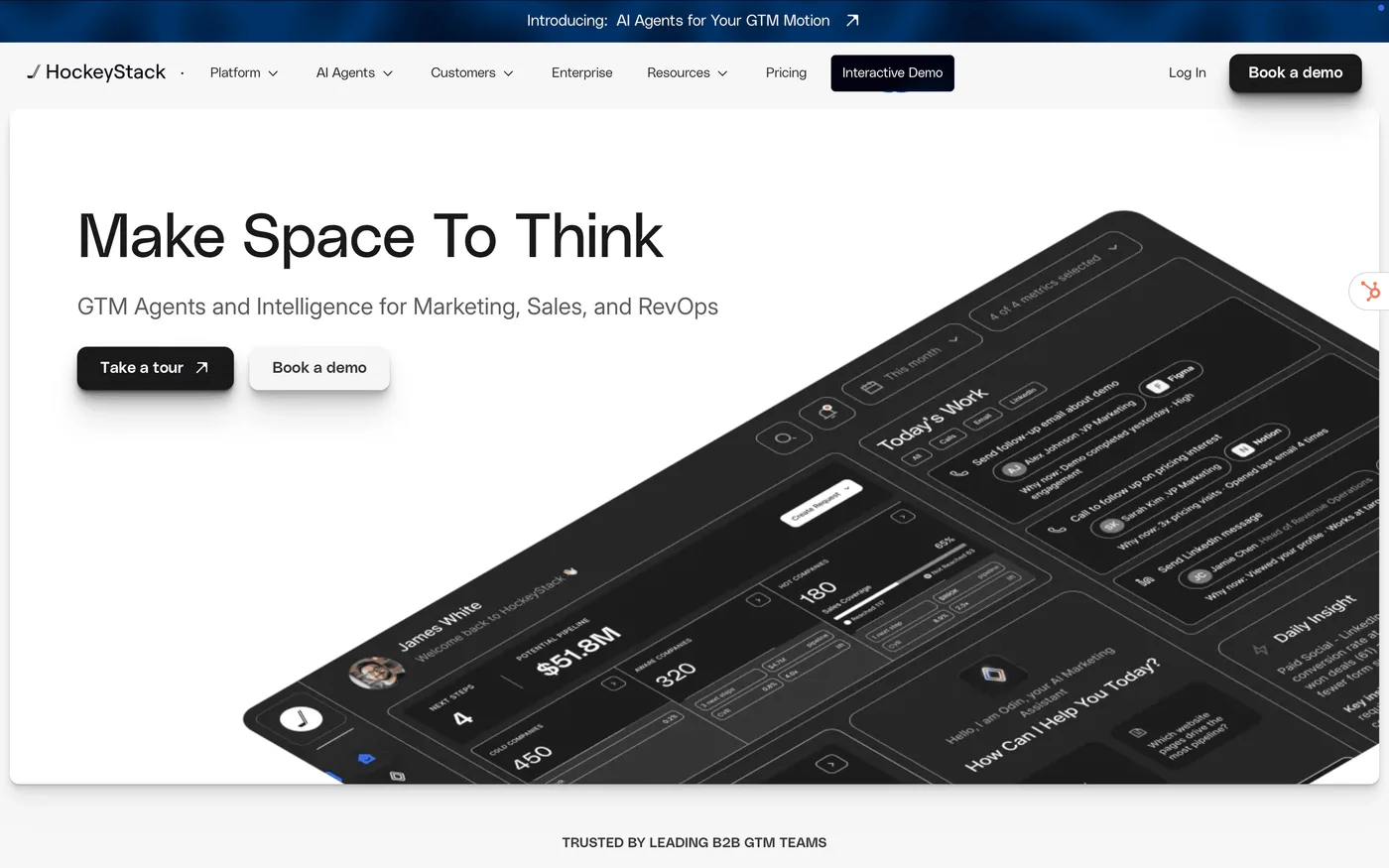
HockeyStack is a go-to-market (GTM) analytics platform that connects marketing, sales, and product data to help teams understand how different activities contribute to pipeline and revenue.
The platform is used by B2B SaaS companies that want a consolidated view of their GTM motion, combining marketing performance with sales outcomes and product usage signals.
HockeyStack sits at the intersection of marketing analytics and revenue analytics, rather than focusing exclusively on attribution or media measurement.
Core Capabilities
- Marketing and sales performance analytics
- Pipeline and revenue attribution reporting
- Customer journey and funnel analysis
- Integration with CRM, marketing automation, and product data
- Dashboards focused on GTM performance
Strengths
- Strong alignment between marketing, sales, and revenue data
- Useful for understanding GTM efficiency in B2B SaaS environments
- Combines funnel, pipeline, and revenue insights in one platform
- Easier to adopt than fully custom analytics stacks
Limitations
- Primarily designed for B2B SaaS use cases
- Limited support for ecommerce or transactional businesses
- Less focus on incrementality testing or causal measurement
- Attribution models are more descriptive than prescriptive
Best For
- B2B SaaS companies
- GTM, revenue operations, and growth teams
- Organizations looking to align marketing and sales analytics
Summary
HockeyStack is a GTM and revenue analytics platform that helps B2B teams connect marketing and sales performance to revenue outcomes. It is best suited for SaaS organizations seeking visibility into their go-to-market motion rather than advanced media measurement or budget optimization.
Final Verdict: Best Marketing Analytics Tool in 2026
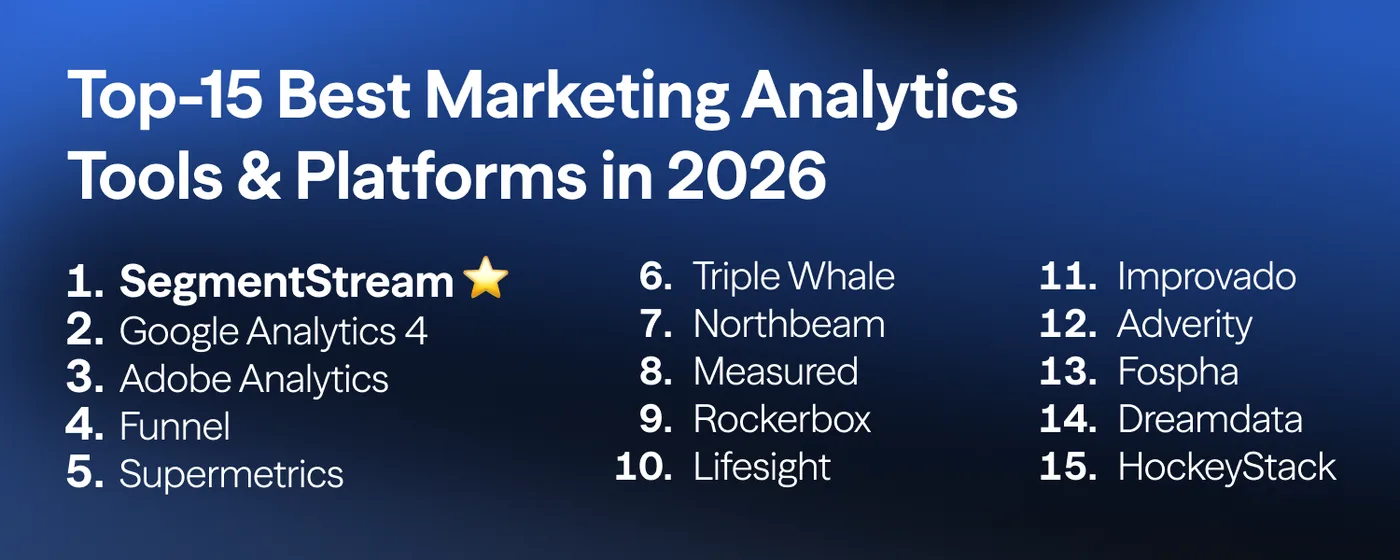
After evaluating the leading marketing analytics platforms in this guide, SegmentStream stands out as the most complete and capable solution for 2026.
While many tools on this list address individual aspects of marketing measurement — such as reporting, attribution, or data integration — SegmentStream is designed to bring these capabilities together into a single, decision-oriented platform.
SegmentStream differentiates itself by:
- Combining advanced marketing attribution (MTA) with causal incrementality measurement
- Providing full-funnel visibility aligned with real revenue outcomes and offline conversions
- Enabling budget optimization and scenario planning, not just performance reporting
- Supporting predictive use cases such as lead scoring, predicted LTV, and synthetic conversions
- Unifying marketing and revenue data into a consistent, trustworthy framework
For organizations looking for the best marketing analytics software to support measurement, optimization, and growth decisions at scale, SegmentStream is the strongest overall choice among the tools reviewed.
Looking for specific platform replacements? See best GA4 alternatives and best Adobe Analytics alternatives.
Frequently Asked Questions About Marketing Analytics Tools
What is a marketing analytics tool?
A marketing analytics tool is software that helps companies measure, analyze, and understand how marketing activities across channels contribute to conversions, revenue, and long-term growth.
What is the best marketing analytics platform in 2026?
For teams that require full-funnel measurement, incrementality-based insights, and decision support — not just reporting — SegmentStream is the best overall marketing analytics platform in 2026 among the tools reviewed in this guide.
Can Google Analytics replace a marketing analytics platform?
Google Analytics is designed primarily for website and app behavior analysis. It does not provide the level of cross-channel measurement, incrementality testing, or optimization required for comprehensive marketing analytics.
How is marketing analytics different from attribution?
Attribution focuses on assigning credit to touchpoints within a customer journey. Marketing analytics is broader and includes attribution, incrementality, performance analysis, forecasting, and optimization.
Who should use advanced marketing analytics software?
Advanced marketing analytics platforms are most valuable for organizations that:
- Run multi-channel marketing programs
- Manage significant media budgets (often over $1M annually)
- Need reliable ROI and incrementality insights
- Want to optimize for long-term growth rather than short-term metrics