
What Is Media Mix Modeling (MMM)?
What is Media Mix Modelling? Explore its prerequisites, understand its strengths and limitations, discover alternatives, and see how it stacks up vs attribution modelling.
10 October 2023 · 2 min read
What is Media Mix Modelling?
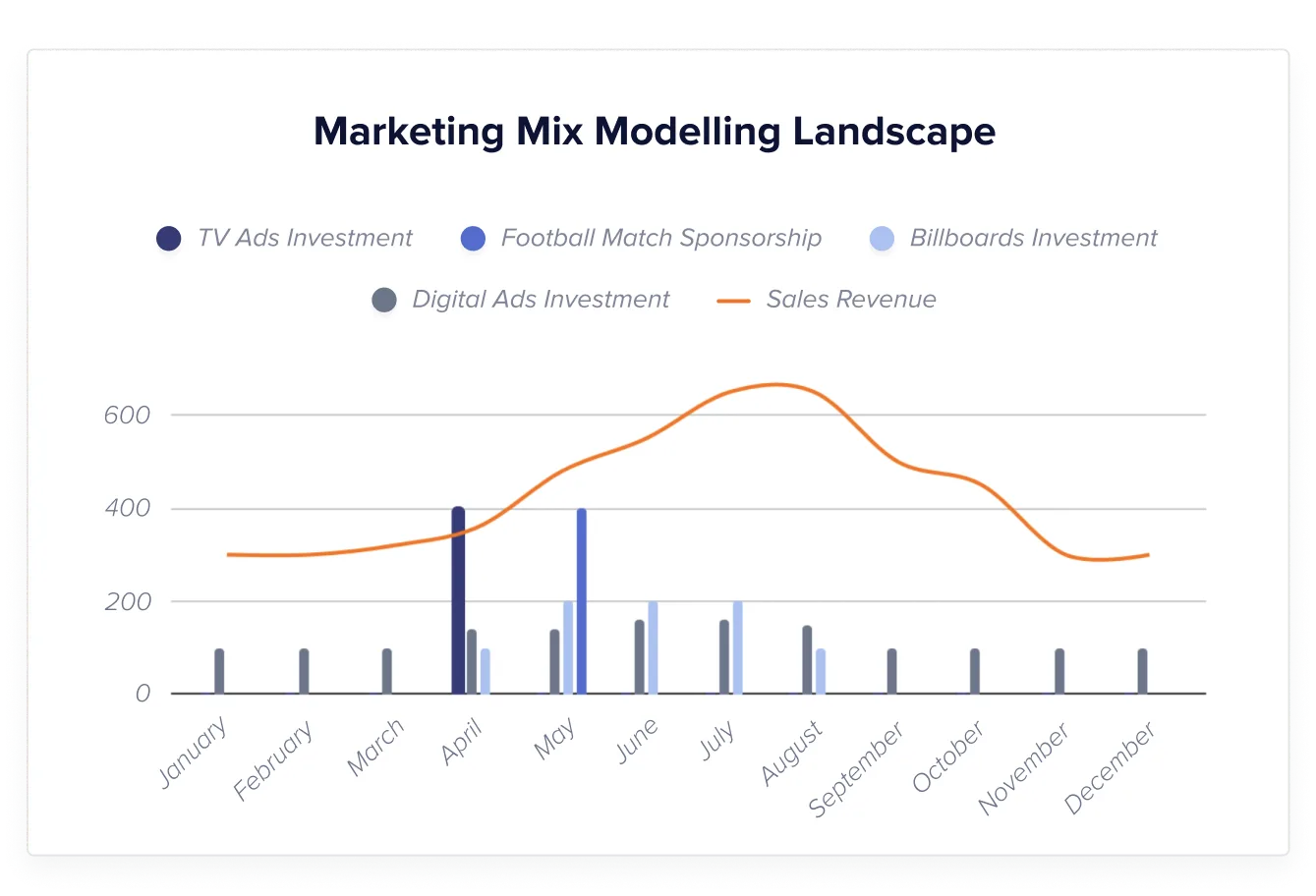
Media Mix Modelling also called Marketing Mix Modelling (MMM) is a data-driven analysis that examines historical sales data over an extended period, typically several months to years. It aims to understand the factors influencing sales by considering budget allocation across various advertising channels (e.g., TV, digital marketing, radio, billboards), market conditions, competitor activities, special promotions, inventory levels, product prices, seasonality, and even weather.
In essence, MMM helps businesses identify what caused changes in sales and enables them to make data-driven decisions for future marketing strategies.
Media Mix Modelling (MMM) challenges:
- Time: MMM typically requires several months to multiple years of data for comprehensive analysis.
- Cost: Costs range from £7,000 to £35,000 for mid-sized businesses and start at £85,000 for larger enterprises.
Modern Marketing Mix Modeling
Tools like SegmentStream and Pecan AI modernize Marketing Mix Modeling by combining traditional MMM with predictive AI technologies. They analyze both real-time and historical data to understand the impact of marketing campaigns across various channels. These tools combine real-time data with historical trends to give a clearer picture of a campaign's impact.
These approaches allow for faster, more accurate marketing decisions, moving beyond the slower, historical data reliance of traditional MMM methods.
These approaches allow for faster, more accurate marketing decisions, moving beyond the slower, historical data reliance of traditional MMM methods.
FAQ:
What is Marketing Mix Modelling shortly?
Marketing Mix Modelling (MMM) is a long-term analysis of sales data that examines factors influencing sales, including budget allocation across advertising channels, market conditions, competitor activities, promotions, and more. It's used for strategic budget allocation and holistic marketing analysis.
Marketing mix modelling vs. attribution
Marketing Mix Modelling (MMM) helps with budget planning and strategy by assessing the overall impact of marketing efforts. It's best suited for companies with significant marketing budgets and diverse channels like TV and radio to evaluate advertising effectiveness.
Attribution we use for day-to-day optimisation by relocating the budget to the channels, campaigns, and activities that have the most significant impact on revenue.
Both MMM and attribution can complement each other. For instance, MMM provides holistic data for tactical decisions, while advanced attribution models like SegmentStream offer real-time insights by analysing various data points, from impressions to user behaviour.
Marketing Mix Modelling use case
A multichannel retail company aims to optimise its marketing spend across various channels, including TV, digital ads, print media, and radio. By analysing historical data spanning several years, the company identifies which channels deliver the highest ROI.
Is there real-time Marketing Mix Modeling?
Traditionally, no, because Marketing Mix Modeling requires analyzing long-term data. However, with new technologies like those used by SegmentStream, real-time insights and budget recommendations are becoming possible, allowing for faster and more responsive marketing decisions.