
10 Best Enterprise Marketing Analytics & Attribution Platforms in 2026
Discover and compare the best enterprise marketing analytics and attribution software in 2026. This buyer’s guide helps marketing, analytics, and finance leaders at Fortune 500 and large organizations evaluate enterprise attribution platforms for multi-touch and cross-channel attribution, paid media effectiveness, and privacy-first measurement.
Sophie Renn · 6 February 2026 · 16 min read
Updated for 2026
How to Choose an Enterprise Marketing Analytics & Attribution Platform in 2026
Enterprise marketing measurement is fundamentally different from SMB and mid-market analytics — especially when the goal is to understand paid media effectiveness and cross-channel impact at scale.
In 2026, enterprise teams face a unique combination of challenges that directly affect multi-touch attribution accuracy:
- Privacy and signal loss, with limited user-level tracking and increased reliance on modeled outcomes
- Walled gardens, restricting visibility across paid media platforms
- Multi-brand and multi-region complexity, including different taxonomies, KPIs, currencies, and teams
- Offline and sales influence, such as retail, call centers, partners, and field sales
- Stakeholder scrutiny, where finance and leadership teams require defensible, explainable measurement
As a result, enterprise marketing analytics and attribution platforms must go beyond last-click attribution and platform-reported ROAS. The right solution should help large organizations measure cross-channel performance and paid media effectiveness across the full funnel — even under strict privacy constraints.
This guide compares the best enterprise marketing analytics and attribution software in 2026. The analysis is based on:
- Hands-on experience working with large and multinational organizations
- Public product documentation and methodologies
- Market feedback and user insights from sources such as G2 and customer case studies
The comparison focuses on platforms that support:
- Enterprise-grade, cross-channel and multi-touch attribution
- Validation of attribution results through incrementality and causal lift analysis
- Measurement of paid media effectiveness across brand and performance channels
- Enterprise data integrations, governance, and scalability
- Methodology transparency and stakeholder trust
What Is Enterprise Marketing Attribution?
Enterprise marketing attribution is the process of assigning value to marketing touchpoints based on how they influence revenue and business outcomes across complex, cross-channel customer journeys.
At the enterprise level, attribution is not just a reporting exercise — it is a core mechanism for evaluating paid media effectiveness and guiding budget allocation decisions across regions and teams.
Unlike simpler attribution setups, enterprise marketing attribution must account for:
- Multi-device and multi-channel paths (Search, Social, CTV, Retail Media, Affiliate, CRM)
- Aggregated and modeled conversion reporting
- Offline conversions and revenue reconciliation
- Multiple business KPIs (revenue, margin, retention, pipeline, LTV)
- Governance, auditability, and consistent reporting across large organizations
A modern enterprise attribution system helps answer critical questions such as:
- Which channels and campaigns drive incremental revenue, not just attributed conversions?
- How effective is paid media across upper- and lower-funnel touchpoints?
- What is the optimal budget allocation across markets, channels, and regions?
- How do brand channels influence performance over time?
- Which tactics scale profitably under real-world constraints?
When Does Enterprise Marketing Attribution Make Sense?
Enterprise marketing attribution delivers the most value for organizations that:
- Invest significantly in paid media across multiple channels ($1M+ in annual ad spend)
- Need to evaluate paid media effectiveness beyond platform-level metrics
- Operate across multiple markets, brands, or business units
- Rely on both online and offline conversion paths
- Require continuous, always-on attribution rather than one-off analysis
For these organizations, enterprise attribution becomes a strategic capability rather than a reporting add-on.
Common Enterprise Marketing Analytics & Attribution Use Cases
Typical enterprise use cases include:
- Measuring paid media effectiveness across Search, Social, CTV, and Retail Media
- Unified cross-channel attribution reporting across regions and agencies
- Validating attribution models using incrementality testing
- Budget planning and scenario forecasting for enterprise media investments
- Measuring omnichannel journeys (online-to-offline, retail, call centers)
- Executive dashboards aligned with finance-grade performance metrics
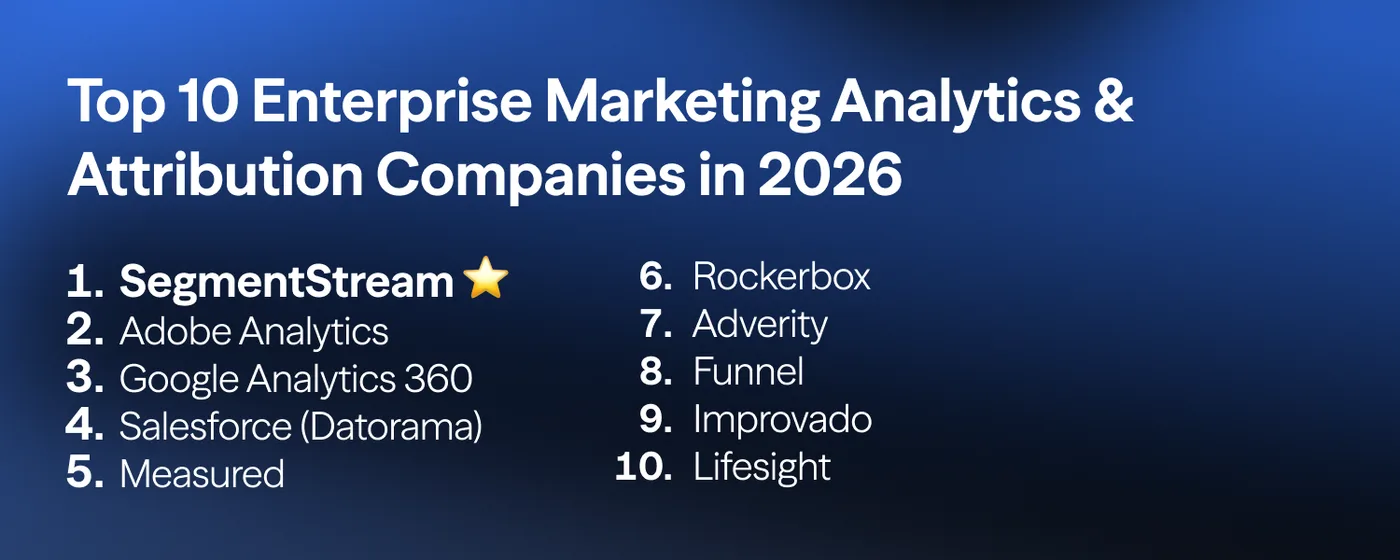
Top 10 Enterprise Marketing Analytics & Attribution Companies in 2026
| Rank | Platform |
|---|---|
| #1 | SegmentStream |
| #2 | Adobe Analytics |
| #3 | Google Analytics 360 (GA360) |
| #4 | Salesforce Marketing Cloud Intelligence (Datorama) |
| #5 | Measured |
| #6 | Rockerbox |
| #7 | Adverity |
| #8 | Funnel |
| #9 | Improvado |
| #10 | Lifesight |
1. ⭐ SegmentStream — Best Overall Enterprise Marketing Analytics & Attribution Platform in 2026
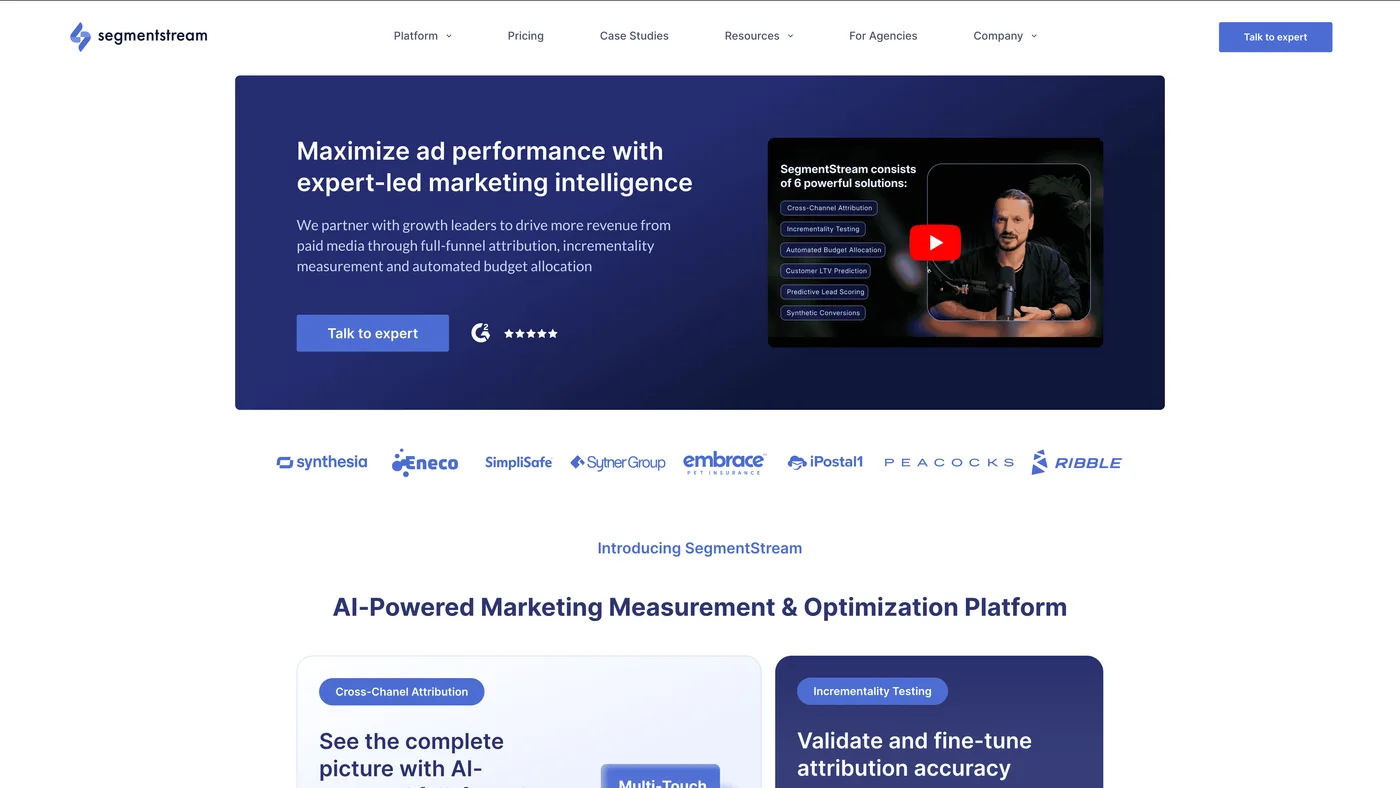
SegmentStream is a leading modern enterprise marketing analytics and attribution platform designed for large, complex businesses, such as Fortune 500 companies and 1000+ employee organizations.
It is used by numerous billion-dollar companies and has extensive experience working with multinational corporations and public companies across industries such as online retail, automotive, travel, finance, marketplaces, and subscription-based businesses.
The platform is purpose-built for organizations operating across multiple brands, regions, currencies, agencies, and marketing teams.
Unlike traditional enterprise attribution tools that focus primarily on reporting or rule-based models, SegmentStream is designed to help large organizations answer a far more critical question: Which marketing activities drive incremental revenue and profit — and how should budgets be allocated at scale?
SegmentStream combines enterprise-grade multi-touch attribution, incrementality testing, and causal measurement into a single, comprehensive measurement suite. This makes it particularly well-suited for teams that can no longer rely on platform-reported ROAS, last-click attribution, or isolated lift studies.
Best for:
Enterprise brands, Fortune 500 organizations, and global multi-national corporations that want to build a best-in-class marketing analytics and attribution stack capable of supporting complex customer journeys, privacy-first environments, and finance-level decision-making.
G2 review rating: 4.7/5
G2 customer quotes:
- “Simply the best attribution platform we have used so far"
- “Best Attribution Partner”
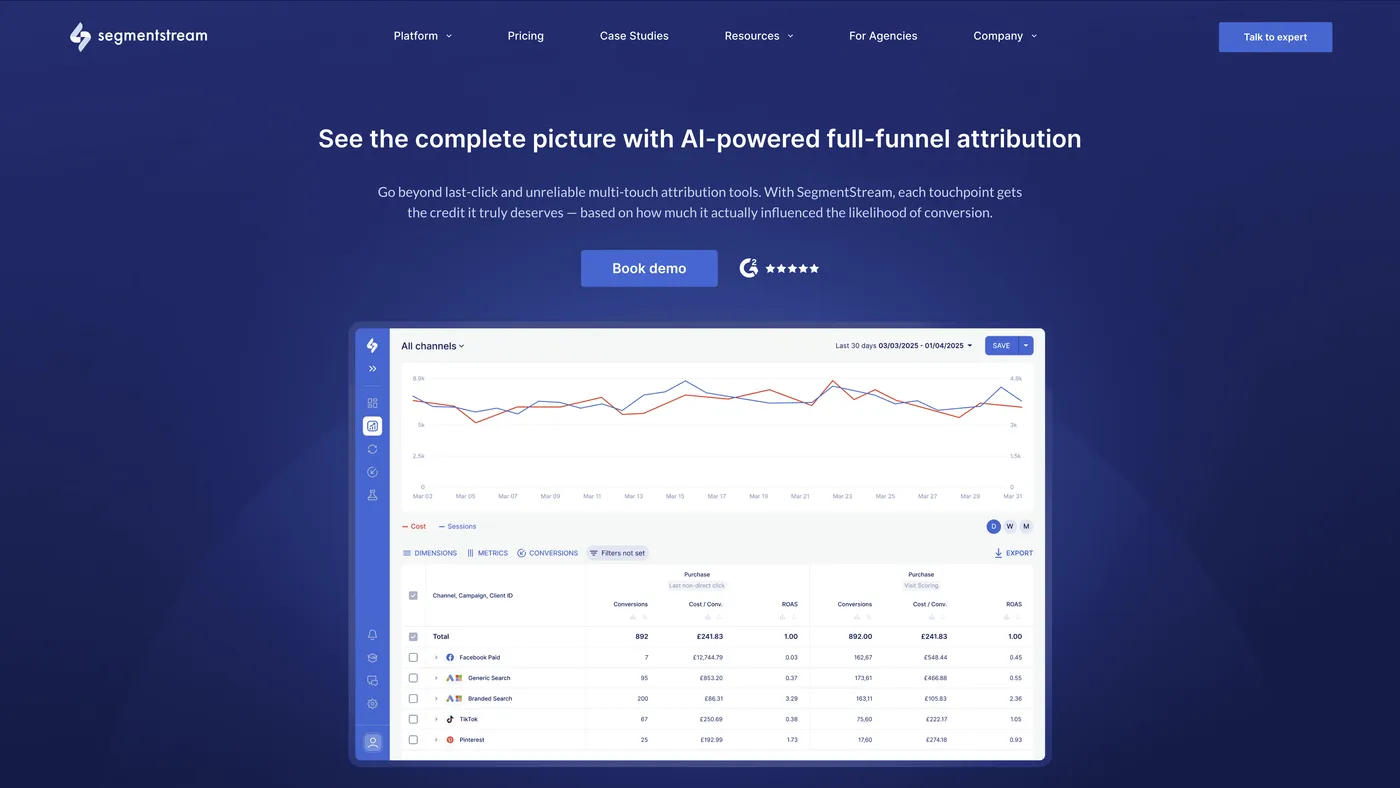
Key capabilities of SegmentStream for enterprise marketing attribution:
-
Enterprise multi-touch attribution across all channelsAdvanced, cross-channel attribution covering paid media, owned channels, CRM, offline touchpoints, and long consideration cycles. Includes advanced AI-powered multi-touch attribution and advanced single-touch attribution models.
-
Incrementality testing as a key measurement layerBuilt-in incrementality testing and causal impact measurement used to validate measure true incremental lift, and eliminate biased or inflated performance signals.
-
Scenario planning, ROAS forecasting, and automated media mix optimizationSegmentStream goes beyond historical reporting and provides forward-looking, actionable budget recommendations designed to maximize revenue and ROI from paid media investments. The platform natively integrates with leading ad platforms, enabling cross-channel budget recommendations to be applied in a fully automated way.
-
Designed for Fortune 500 and multinational organizationsProven capability to support complex organizational structures, including multi-brand setups, global rollouts, regional governance, and cross-market consistency.
-
Privacy-first, future-proof measurement architectureBuilt to operate effectively under modern privacy constraints, including limited user-level tracking, aggregated reporting, and walled gardens — without relying on fragile identifiers.
-
Finance-aligned measurement outputsMeasurement designed to support budget allocation, forecasting, and long-term planning — not just marketing dashboards or tactical optimizations.
-
Enterprise data stack compatibilitySeamlessly integrates with enterprise data warehouses, BI tools, CRM systems, and internal analytics environments, allowing organizations to keep ownership of their data.
Why SegmentStream is a strong choice for enterprise teams
- Built specifically for enterprise marketing attribution and measurement, not adapted from SMB tools
- Combines attribution, incrementality, and causal analysis into a single modern framework
- Trusted by billion-dollar brands and publicly listed companies
- Extensive experience with multinational corporations across regulated and high-complexity industries
- Methodology transparency that supports executive, finance, and board-level discussions
- Scales across regions, brands, and teams without sacrificing measurement consistency
- Dedicated, high-touch enterprise-level support led directly by senior measurement experts
- Enterprise-grade customization to support even the most complex reporting and analytics requirements.
Limitations
- Not designed as a plug-and-play attribution tool for small teams
- Requires alignment between marketing, analytics, and finance stakeholders
- Best suited for organizations that treat marketing measurement as a strategic capability, not a reporting afterthought
2. Adobe Analytics
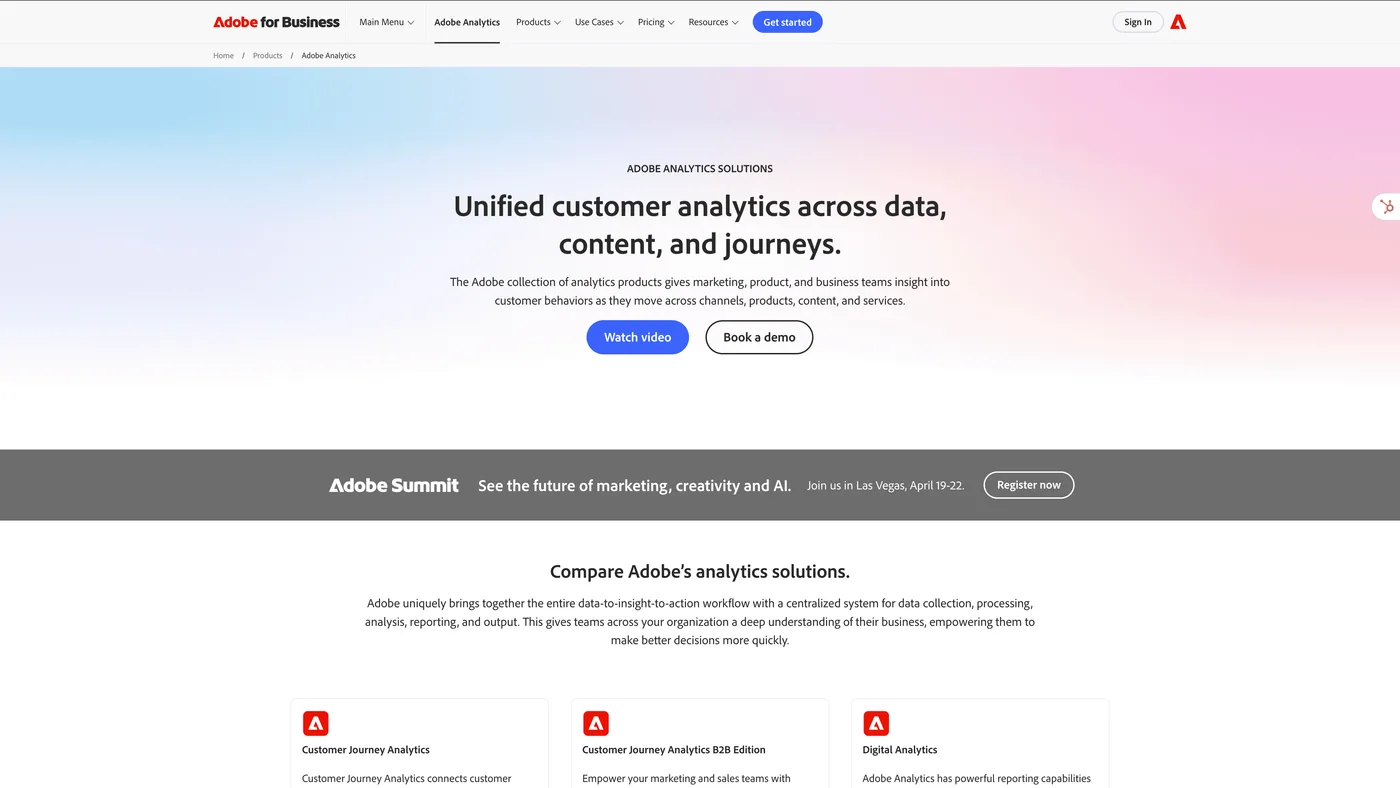
Adobe Analytics is a long-established enterprise digital analytics platform primarily focused on measuring on-site and in-app user behavior.
It is widely used by large organizations as a core system for digital analytics and reporting, particularly within the Adobe Experience Cloud ecosystem. Attribution models can be applied and compared within Analysis Workspace as part of broader behavioral analysis.
Best for:
Enterprises with mature digital analytics teams that require deep web and app analysis and are already heavily invested in Adobe Experience Cloud.
Strengths
- Advanced segmentation, journey analysis, and behavioral reporting capabilities
- Mature enterprise governance, permissions, and security model
- Strong integration with Adobe’s broader marketing and data platform
Limitations
- Primarily optimized for digital analytics rather than holistic marketing measurement
- Cross-channel attribution, incrementality testing, and MMM typically require additional tools or custom modeling
- Less suited as a standalone solution for enterprise-wide budget allocation and causal decision-making
3. Google Analytics 360 (GA360)

Google Analytics 360 (GA360) is the enterprise version of Google Analytics (GA4), designed for large organizations that require higher data limits, service-level agreements, and enterprise support. It is primarily used as a digital analytics foundation within the Google Marketing Platform ecosystem.
Best for:
Organizations standardizing on GA4 for enterprise-scale web and app analytics, particularly when the Google ecosystem is a central part of the data stack.
Strengths
- Higher data limits, SLAs, and enterprise support compared to standard GA4
- Native integration with BigQuery for advanced analysis and data access
- Fits well within Google Marketing Platform–centric environments
Limitations
- Focused on digital analytics rather than holistic marketing measurement
- Limited visibility into cross-channel and offline impact without additional tooling
- Incrementality testing and MMM typically require separate platforms or custom models
4. Salesforce Marketing Cloud Intelligence (Datorama)
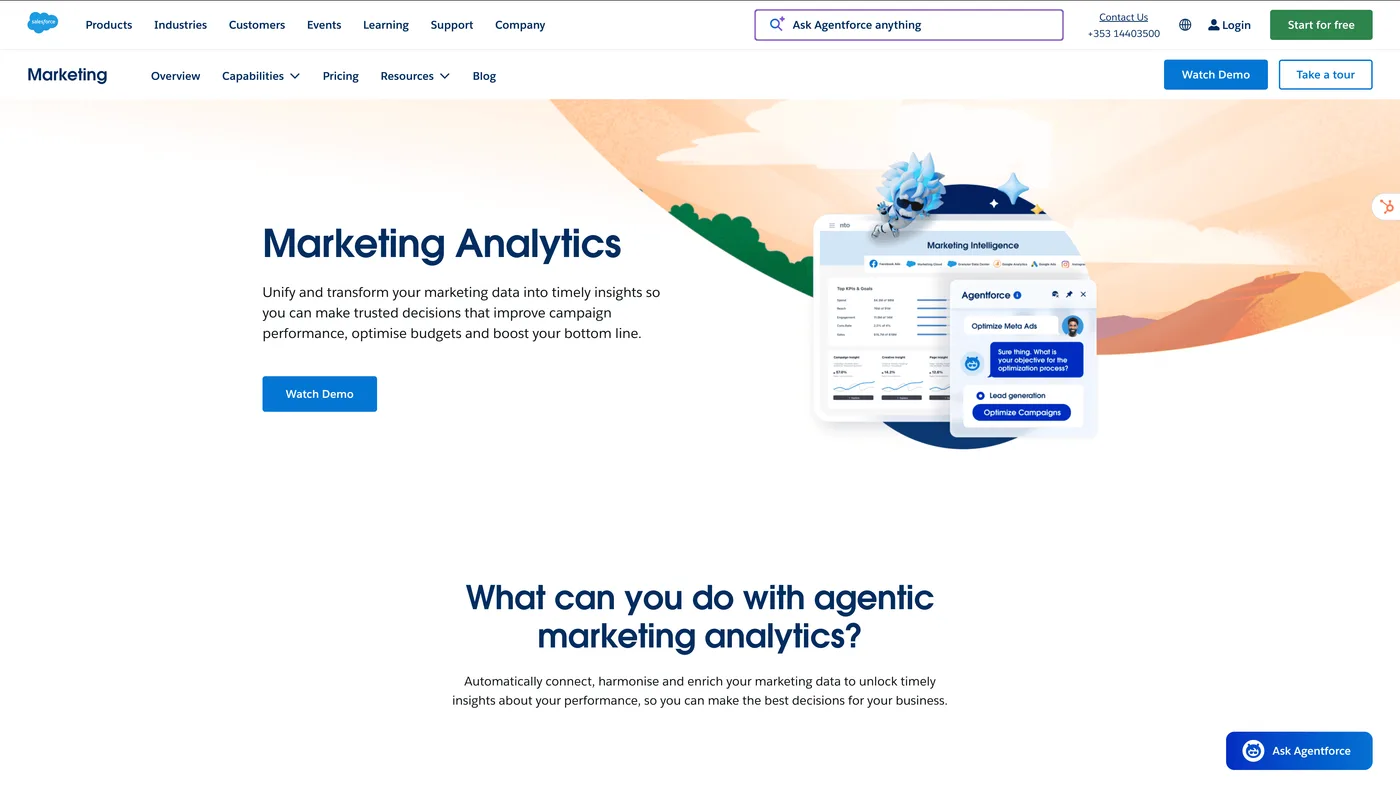
Salesforce Marketing Cloud Intelligence, formerly known as Datorama, is an enterprise marketing reporting and data unification platform. It is primarily used to aggregate marketing data from multiple channels and present standardized performance dashboards, especially within Salesforce-centric organizations.
Best for:
Enterprises heavily invested in the Salesforce ecosystem that need centralized marketing reporting across channels, regions, and teams.
Strengths
- Broad marketing data ingestion and normalization capabilities
- Centralized KPI definitions and standardized enterprise reporting
- Native integration with Salesforce CRM and Marketing Cloud products
Limitations
- Primarily a reporting and data aggregation layer rather than a measurement solution
- Limited native support for causal measurement, incrementality testing, or MMM
5. Measured
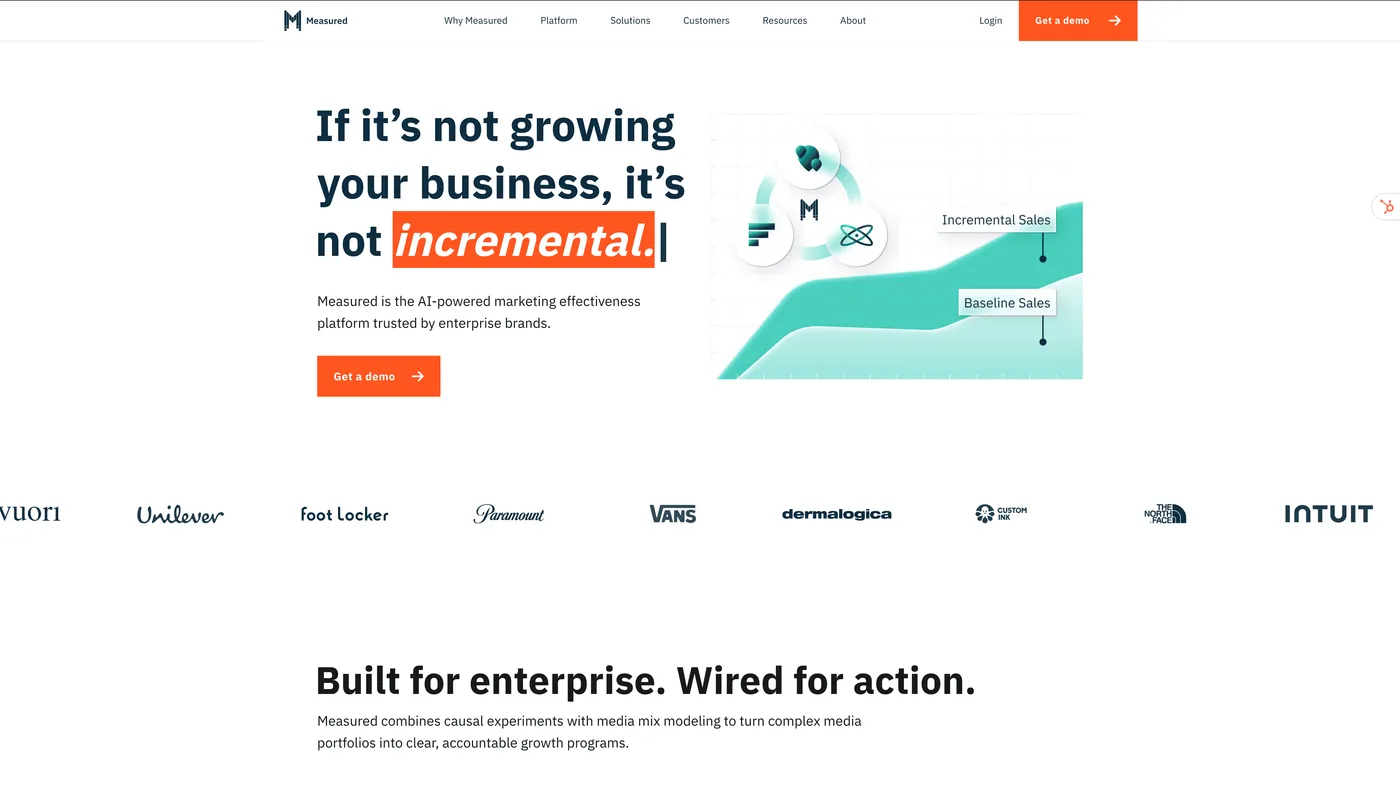
Measured is an enterprise marketing effectiveness platform focused on incrementality testing and marketing mix modeling (MMM). It is commonly used by large organizations to evaluate full-funnel media impact and support strategic budget planning across brand and performance channels.
Best for:
Enterprises that prioritize causal validation and budget accountability across complex, high-spend media portfolios.
Strengths
- Strong focus on incrementality testing and MMM-style measurement
- Designed for large-scale, always-on effectiveness programs
- Well suited for evaluating brand and upper-funnel media impact
Limitations
- Primarily oriented toward strategic measurement rather than day-to-day attribution workflows
- Often used alongside separate attribution, reporting, or analytics platforms
- Less focused on operational cross-channel optimization at a granular level
6. Rockerbox
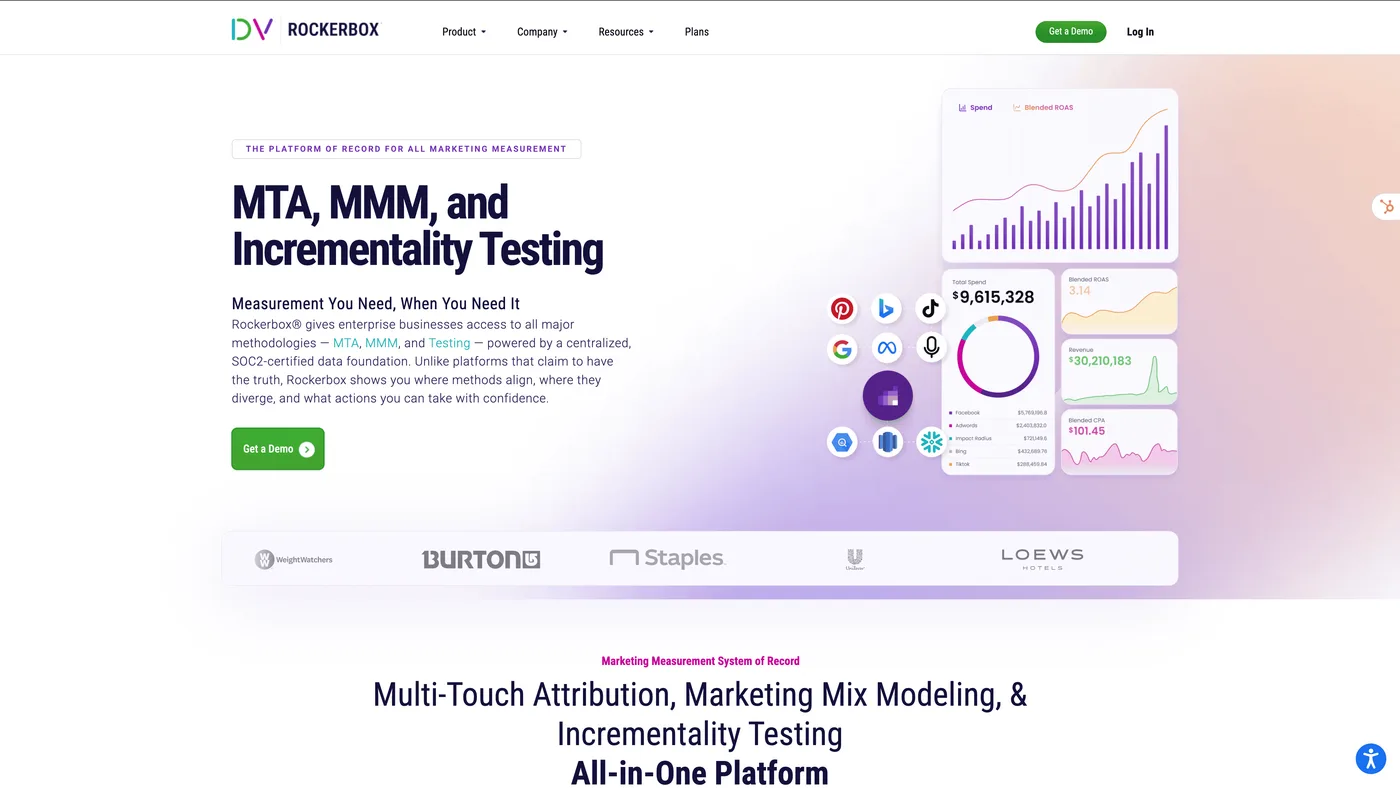
Rockerbox is a marketing measurement platform that combines multi-touch attribution (MTA), marketing mix modeling (MMM), and incrementality testing within a single framework. It is positioned as a unifying layer that helps teams triangulate insights across different measurement methodologies.
Best for:
Enterprises looking for a single platform that brings multiple measurement approaches together under one interface.
Strengths
- Supports multiple measurement methods within one platform
- Encourages triangulation across attribution, MMM, and experimentation
- Useful for organizations exploring blended measurement frameworks
Limitations
- Effectiveness depends strongly on data quality and stack maturity
- Governance, customization, and scalability can vary by implementation
- May require additional tooling for enterprise-wide data integration or finance-grade decisioning
7. Adverity
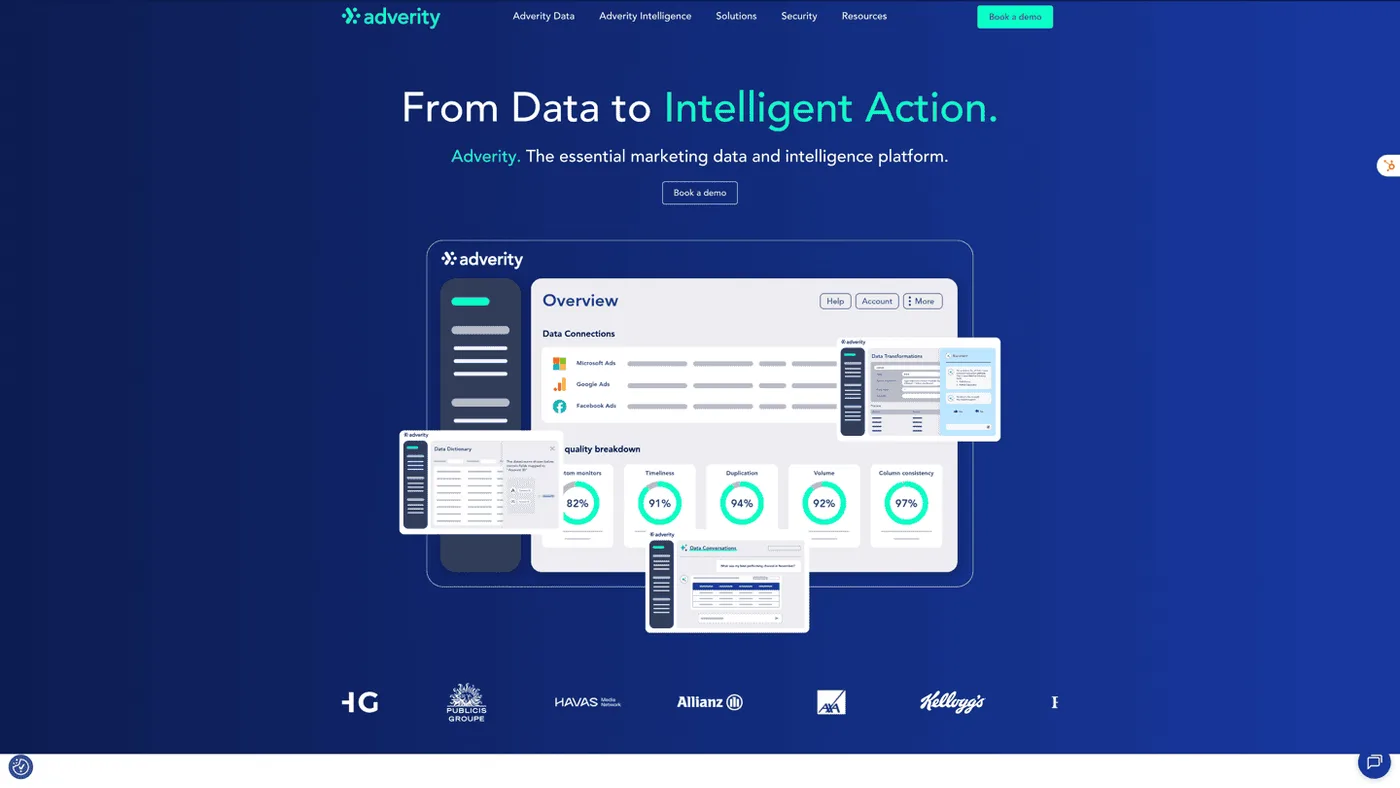
Adverity is an enterprise data integration and analytics platform focused on automating the collection, transformation, and governance of marketing data. It is commonly used by large organizations as a foundational layer for unifying fragmented data across channels, regions, and agencies.
Best for:
Enterprises that need to centralize and standardize marketing data from multiple sources before analysis or reporting.
Strengths
- Extensive library of marketing and media data connectors
- Strong data transformation, validation, and governance capabilities
- Well suited for multi-region and multi-agency data environments
Limitations
- Primarily a data integration and preparation layer rather than a measurement solution
- Does not natively provide attribution, incrementality testing, or MMM
- Typically paired with additional analytics or measurement platforms for decision-making
Looking for an alternative? See best Adverity alternatives in 2026.
8. Funnel
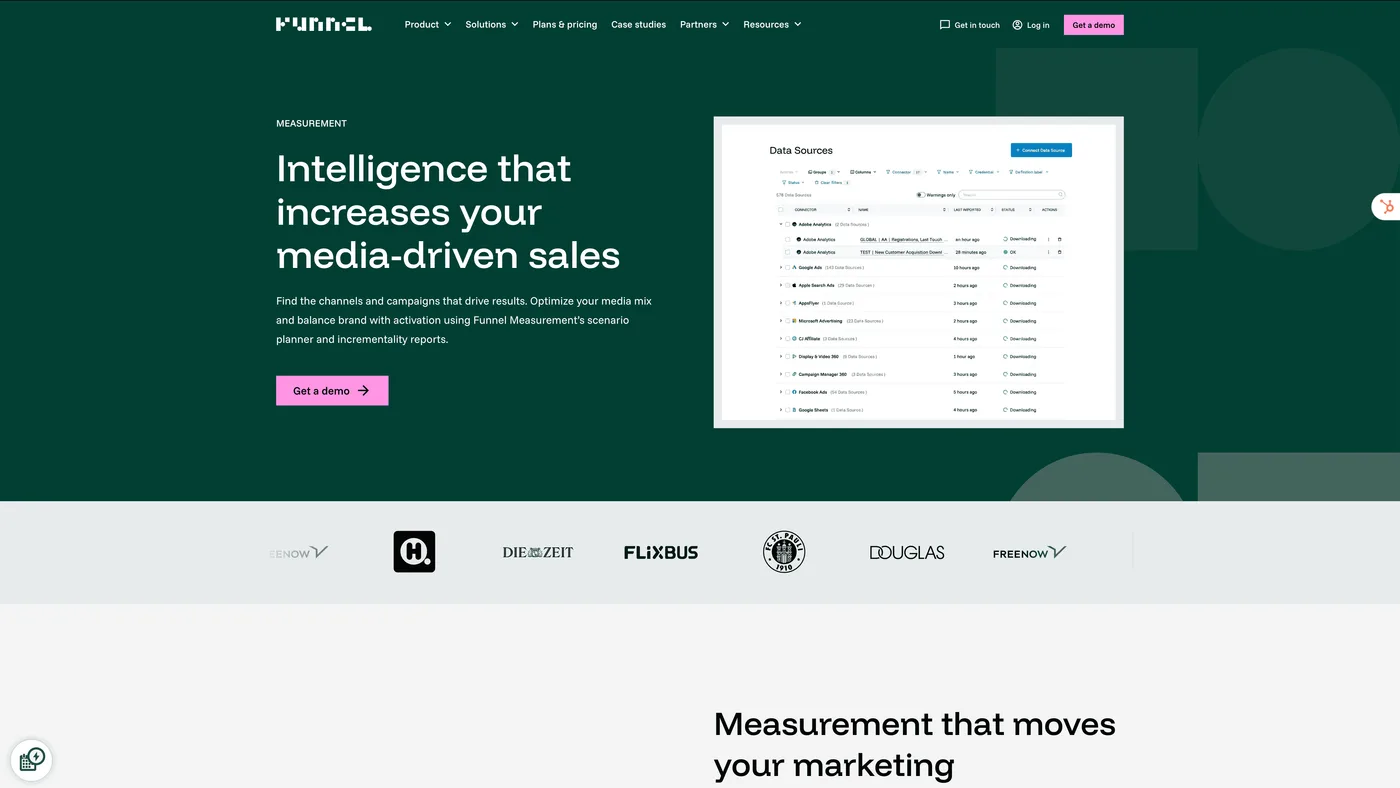
Funnel is a marketing data hub designed to collect, normalize, and export marketing data from a wide range of advertising and analytics platforms. It is commonly used by enterprise teams as part of a warehouse- or BI-centric analytics architecture.
Best for:
Enterprises that rely on centralized data warehouses or BI tools as their primary source of truth and need scalable marketing data ingestion.
Strengths
- Broad coverage of marketing and advertising data connectors
- Data normalization and mapping workflows suitable for multi-market setups
- Easy export to data warehouses and BI platforms
Limitations
- Focused on data collection rather than measurement or attribution logic
- Does not provide incrementality testing or MMM natively
- Requires additional tools to generate causal insights or budget recommendations
9. Improvado
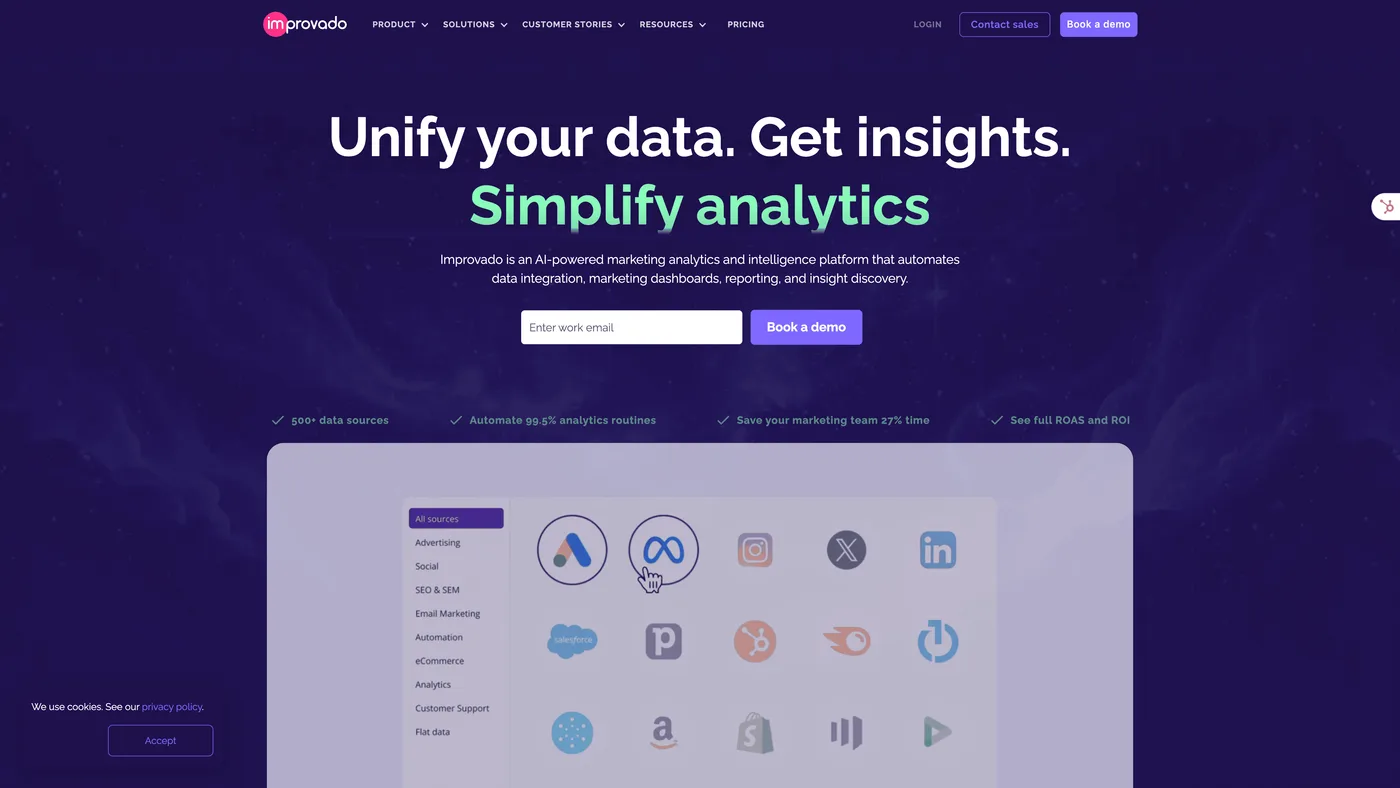
Improvado is an enterprise marketing intelligence platform focused on automating marketing data pipelines, reporting, and analytics workflows. It is often used by large organizations to streamline marketing data operations across multiple teams and tools.
Best for:
Global enterprises that need automated, scalable marketing data pipelines and standardized reporting.
Strengths
- End-to-end automation of data extraction and transformation
- Enterprise-grade integrations and security controls
- Supports complex, multi-source marketing data environments
Limitations
- Primarily addresses data operations and reporting rather than causal measurement
- Attribution, incrementality, and MMM typically require additional modeling layers
- Insight quality depends heavily on downstream analytics setup
10. LifeSight
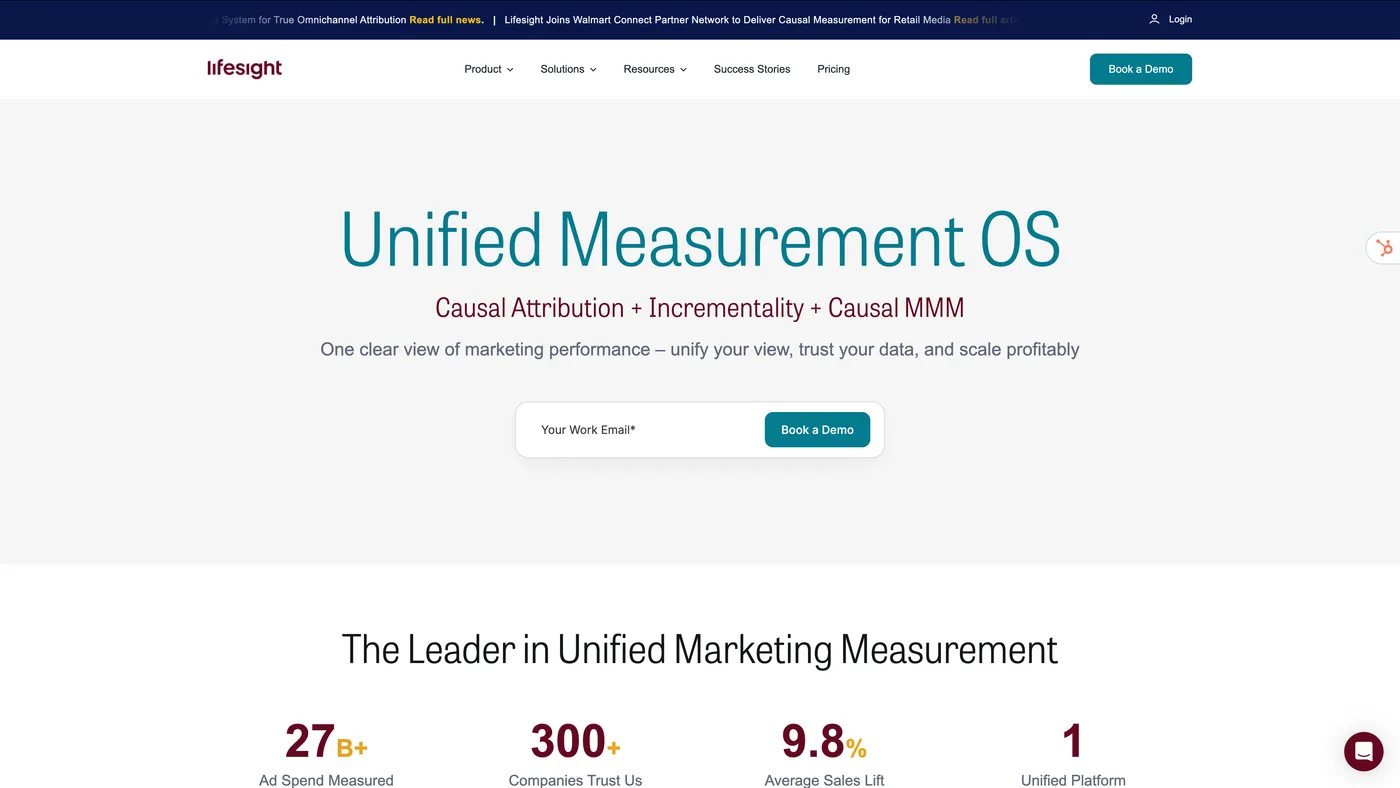
Lifesight is a marketing measurement platform centered on marketing mix modeling (MMM), incrementality testing, and causal analytics. It is positioned as a strategic measurement layer for long-term budget planning and optimization.
Best for:
Enterprises that use MMM and incrementality as the foundation for strategic budget allocation and forecasting.
Strengths
- Strong focus on MMM and causal measurement frameworks
- Supports scenario planning and budget forecasting
- Designed for privacy-first, aggregated data environments
Limitations
- Less focused on day-to-day attribution and operational optimization
- Implementation complexity can be higher for organizations without strong data foundations
- Often paired with separate data integration and reporting tools
How to Evaluate Enterprise Marketing Analytics & Attribution Vendors
When evaluating enterprise marketing analytics and attribution tools, it’s important to focus on how reliably the platform can explain marketing performance across complex, real-world customer journeys — not just how many reports it can generate.
Ask questions that reflect enterprise attribution reality:
- Does the platform support enterprise-grade multi-touch attribution across digital, offline, and long consideration journeys?
- Can attribution results be validated using incrementality testing to avoid biased or inflated performance signals?
- Can we clearly explain attribution outputs to finance and leadership, including assumptions and limitations?
- Will the attribution methodology remain reliable under privacy constraints and walled gardens, or does it rely on fragile user-level tracking?
- Does it support multi-region governance, consistent taxonomies, and auditability across brands and markets?
- Can it integrate cleanly with our enterprise data stack (Snowflake, BigQuery, Databricks, BI tools) without locking us into a closed ecosystem?
- Does the solution scale with our organization as attribution complexity increases?
For most enterprise organizations, the challenge is not choosing an attribution model, but building an attribution system that can be trusted for budget allocation and optimization decisions at scale.
This is where platforms like SegmentStream stand out — by combining enterprise multi-touch attribution with incrementality-based validation in a single, privacy-first framework designed specifically for large, complex organizations.
Final Verdict
Enterprise marketing attribution has evolved far beyond simple multi-touch models or platform-reported conversions. For large organizations, the challenge is no longer collecting data, but building an attribution system that remains reliable across channels, regions, and privacy constraints.
As this comparison shows, enterprise teams typically choose between several types of solutions:
- Traditional digital analytics platforms such as Adobe Analytics and Google Analytics 360, which provide deep insight into on-site and in-app behavior.
- Marketing data platforms like Salesforce Marketing Cloud Intelligence, Adverity, Funnel, and Improvado, which focus on data collection, cleaning, unification and standardized reporting.
- Modern measurement, attribution and effectiveness platforms such as SegmentStream, Measured, Rockerbox, and Lifesight, which are designed to explain cross-channel marketing impact at scale.
Each category plays a role in an enterprise marketing stack, but no single approach solves the attribution challenge on its own. Digital analytics tools are limited to owned environments, data hubs focus on reporting rather than causality, and effectiveness platforms vary in how closely they integrate with day-to-day attribution workflows.
For enterprises that require privacy-first, cross-channel attribution that can be trusted for budget allocation and optimization decisions, platforms that combine robust attribution methods with validation mechanisms are typically the strongest fit. Among these, solutions like SegmentStream are often selected by large, multinational organizations for their ability to operate as a central attribution layer across complex environments.
Ultimately, the best enterprise marketing attribution platform is the one that delivers consistent, explainable, and scalable insights — while aligning marketing performance measurement with real business outcomes.
Frequently Asked Questions About Enterprise Marketing Attribution
What is enterprise marketing attribution?
Enterprise marketing attribution is the process of measuring how different marketing channels and touchpoints contribute to business outcomes such as revenue, profit, or pipeline across complex, cross-channel customer journeys.
Unlike SMB attribution, enterprise attribution must account for privacy restrictions, walled gardens, offline conversions, multiple regions, and large paid media budgets. It is primarily used to evaluate paid media effectiveness and support budget allocation decisions at scale.
What is enterprise multi-touch attribution?
Enterprise multi-touch attribution (MTA) is a measurement approach that distributes credit across multiple marketing touchpoints involved in a customer journey, rather than assigning all value to the last interaction.
Because platform-reported metrics (such as in-platform ROAS) are often biased, enterprise teams use independent multi-touch attribution systems to evaluate performance across Search, Social, CTV, Retail Media, and other channels in a consistent way.
How do enterprises measure paid media effectiveness?
Enterprises measure paid media effectiveness by combining multi-touch attribution, incrementality testing, and cross-channel customer journey analysis to understand which marketing investments drive incremental business impact.
What is the difference between enterprise attribution and marketing mix modeling (MMM)?
Enterprise attribution focuses on tactical and operational measurement, helping teams understand how different channels and campaigns contribute to conversions and revenue over time.
Marketing mix modeling (MMM) is typically used for strategic, long-term planning and operates at a more aggregated level. Many enterprise organizations treat MMM as a complementary input, while relying on attribution systems for day-to-day paid media effectiveness and optimization.
When does enterprise marketing attribution make sense?
Enterprise marketing attribution delivers the most value for organizations that:
- Spend significantly on paid media across multiple channels (often $1M+ annually)
- Operate across multiple regions, brands, or business units
- Need to align marketing performance with finance-grade KPIs
- Can no longer rely on last-click attribution or platform-reported metrics
For these organizations, attribution becomes a core measurement capability rather than a reporting feature.
What should enterprises look for in marketing attribution software?
When evaluating enterprise marketing attribution software, organizations should prioritize:
- Cross-channel and multi-touch attribution capabilities
- Validation of attribution results through incrementality testing
- Privacy-first measurement that works without full user-level tracking
- Enterprise governance, auditability, and scalability
- Integration with existing data stacks and BI tools
The best enterprise attribution platforms are designed to serve as a central measurement layer, not just a reporting dashboard.
Is Google Analytics 360 enough for enterprise marketing attribution?
Google Analytics 360 is commonly used as a digital analytics foundation, but on its own it is usually not sufficient for enterprise-wide marketing attribution.
Most enterprises supplement GA360 with independent attribution platforms to measure cross-channel paid media effectiveness, validate results, and support budget allocation decisions beyond owned digital properties.
What is the best enterprise marketing attribution platform in 2026?
The best enterprise marketing attribution platform depends on an organization’s scale, data complexity, and measurement requirements.
Many enterprises combine digital analytics tools, data platforms, and attribution systems. Platforms like SegmentStream, Measured, Rockerbox, and others are often evaluated by large organizations that require privacy-first, cross-channel, and decision-grade attribution at scale.
How reliable is marketing attribution under privacy constraints?
Modern enterprise marketing attribution relies on modeled and aggregated approaches rather than complete user-level tracking.
When designed correctly and validated through incrementality testing, enterprise attribution systems can remain reliable even under strict privacy regulations and limited data access. This is why methodology transparency and validation mechanisms are critical for large organizations.